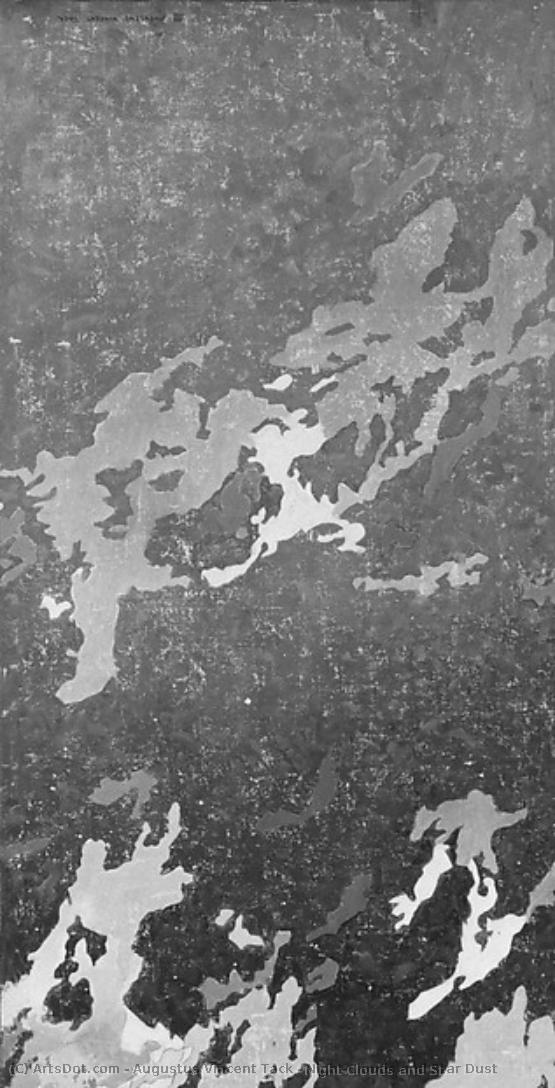
Explore 'Night Clouds & Star Dust' by Augustus Vincent Tack – a pioneering abstract landscape of textured grey & white. A unique piece evoking solitude & timelessness.
Augustus Vincent Tack (1870-1949) was an American painter known for portraits, landscapes & pioneering abstract works exploring spirituality & timelessness. A forerunner to Abstract Expressionism, his art is in major collections like the National Gal
Explore The Metropolitan Museum of Art: 5,000 years of art from around the world! Discover masterpieces, ancient artifacts & immersive exhibitions – a global art destination awaits.
Augustus Vincent Tack: A Pioneer of Spiritual Landscape
Augustus Vincent Tack (1870 – 1949) stands as a singular figure in American art history, recognized primarily for his distinctive blend of realism and abstraction—a stylistic approach that foreshadowed the burgeoning movement of Abstract Expressionism. Born in Pittsburgh, Pennsylvania, Tack’s artistic journey began with formal training at St. Francis Xavier College before he honed his skills at the Art Students League of New York, absorbing influences from luminaries like John La Farge whose studio he frequented. This formative period established a foundation for his subsequent explorations into landscape painting and, crucially, into deeply symbolic representations of nature—a preoccupation that would define much of his oeuvre. He wasn’t merely depicting what he saw; he was striving to convey something far more profound – the spirit of place itself.
Early Career & Influences: Kraushaar Galleries and Artistic Foundations
Tack's debut exhibition at Kraushaar Galleries in 1896 marked the commencement of a prolific artistic career characterized by consistent engagement with prominent institutions. This initial foray into the art world solidified his commitment to capturing the essence of the natural environment, a pursuit that would continue throughout his life and profoundly impact his stylistic evolution. Observing artists like La Farge, Tack internalized techniques emphasizing tonal gradation and atmospheric perspective—elements he skillfully integrated into his own compositions. These influences underscored his belief that art could transcend mere visual representation, communicating intangible emotions and spiritual truths.
The Style of Spiritual Landscape: Texture, Tone, and Symbolic Resonance
Tack’s artistic hallmark was undoubtedly his distinctive style – what critics termed “spiritual landscape.” Unlike Impressionists who sought to capture fleeting moments of light and color, Tack focused on conveying the enduring character of a location. He achieved this remarkable feat through meticulous layering of paint—often applying thick impasto—creating surfaces brimming with textural complexity. Shades of grey dominated his palette, punctuated by subtle whites that evoked distant horizons and illuminated interior recesses. This tonal scheme wasn’t arbitrary; it mirrored geological formations and atmospheric conditions, reflecting Tack's fascination with the forces shaping our planet. More importantly, these landscapes functioned as conduits for contemplation—inviting viewers to consider themes of solitude, resilience, and the sublime beauty inherent in untamed wilderness.
Technique & Material Considerations: Impasto and Composition Panels
The execution of Tack’s paintings demanded considerable technical skill. He favored oil paints applied thickly onto composition panels – a method that maximized textural contrast and ensured durability. The scraping technique—removing excess paint to reveal underlying layers—was particularly prominent, emphasizing the artist's deliberate manipulation of material to achieve expressive effect. This process wasn’t simply about replicating visual appearance; it was about embodying the geological processes he sought to depict—erosion, sedimentation, and weathering—transforming canvas into a tangible representation of time and transformation. Tack’s meticulous attention to detail underscored his conviction that art could communicate not only what is seen but also how it feels – the palpable presence of nature's enduring power.
Legacy & Influence: A Precursor to Abstract Expressionism
Augustus Vincent Tack’s artistic vision anticipated the seismic shift toward Abstract Expressionism, cementing his place as a pivotal figure in American art history. His pioneering exploration of textural abstraction paved the way for artists like Jackson Pollock and Willem de Kooning—who embraced spontaneity and gesture as expressive tools—further propelling the movement's ascendancy. Tack’s unwavering dedication to conveying spiritual depth through landscape painting continues to inspire contemporary artists and collectors alike, demonstrating the enduring relevance of his artistic legacy. His work resides in major collections worldwide, serving as a testament to its profound beauty and intellectual rigor.