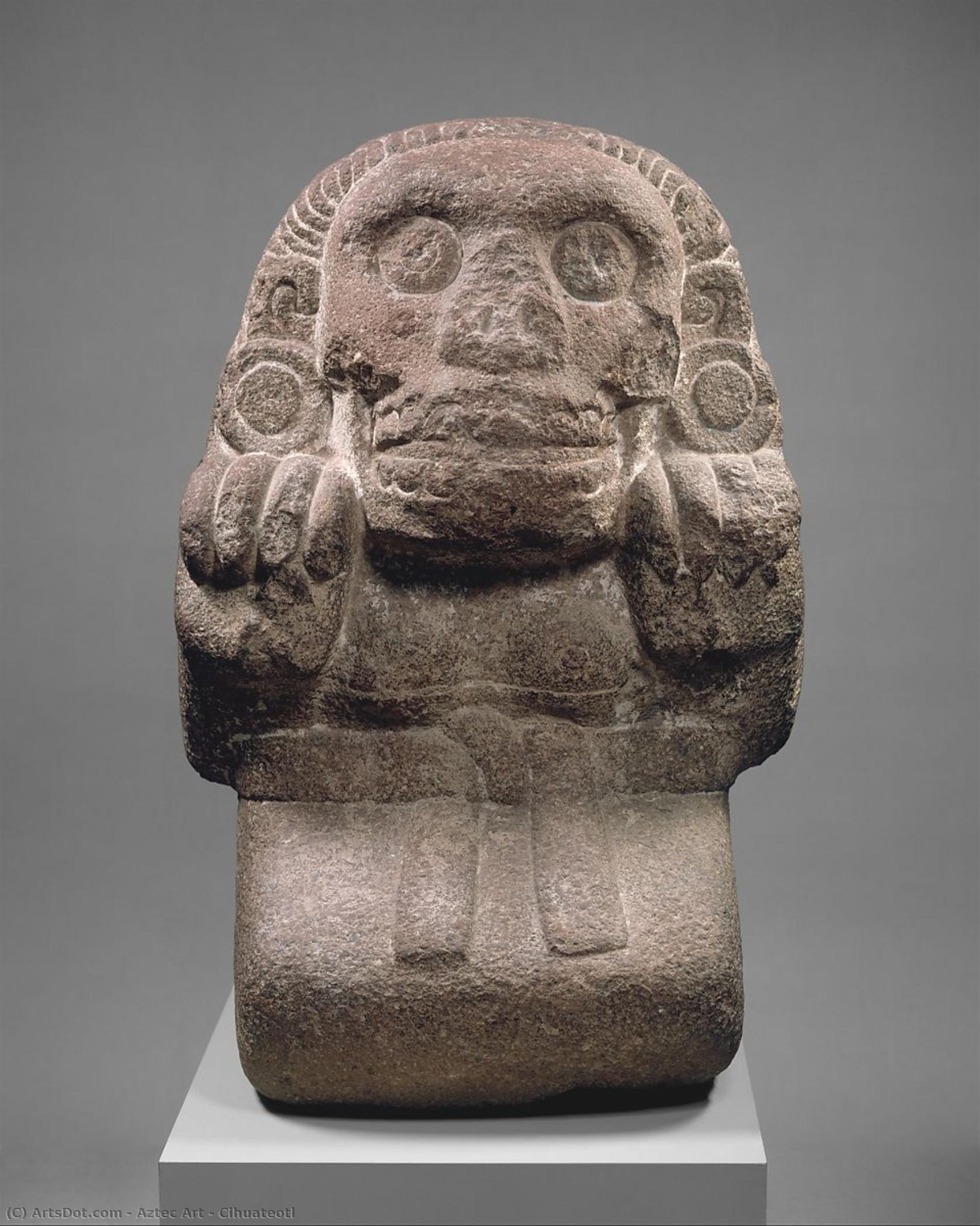
A Glimpse into Aztec Ritual: The Power of Cihuateotl
The stone sculpture known as “Cihuateotl,” a formidable figure emerging from the heart of the Aztec Empire, offers more than just a visual representation; it’s a window into the complex spiritual beliefs and societal structure of one of Mesoamerica's most sophisticated civilizations. Carved in the early 16th century – a poignant moment bridging the pre-Columbian world with Spanish conquest – this piece embodies both the raw power of the Aztec warrior culture and the deeply ingrained reverence for female deities associated with childbirth, death, and the underworld. Its stark geometric style, combined with a surprisingly expressive face, immediately commands attention, inviting viewers to contemplate its layered meanings.
The sculpture’s origins lie within the realm of the Mexica (Aztec), a people who rose from humble beginnings in the Valley of Mexico to establish a vast empire. Their artistic traditions were deeply intertwined with their cosmology – a worldview where the earthly and spiritual realms were inextricably linked. The Cihuateotl, specifically, represents a fascinating intersection of these beliefs. Traditionally, Aztec women who died during childbirth were considered to have transformed into powerful female spirits known as *Cihuateteo*, or “Divine Women.” These weren’t simply vengeful ghosts; they were seen as guardians and protectors, residing in subterranean chambers beneath temples and sacred sites – a practice vividly documented by Spanish chronicler Bernal Díaz del Castillo. The sculpture, therefore, likely served as a conduit to these powerful entities, ensuring their continued influence within the Aztec world.
Form and Technique: A Study in Subtractive Carving
Crafted from reddish-brown volcanic stone – a material readily available in central Mexico – the Cihuateotl exemplifies the masterful subtractive carving techniques employed by Aztec sculptors. This method, involving the meticulous removal of material to reveal the desired form, is evident in the sculpture’s rough, textured surface and its carefully defined features. Note the deliberate simplification of the face; the large, circular eyes and open mouth convey a sense of both intensity and vulnerability, while the exposed teeth hint at the creature's primal nature. The elongated skull shape, characteristic of many Aztec figures, is not merely stylistic – it’s believed to reflect an idealized representation of human form, imbued with spiritual significance.
The sculpture’s low-relief style—where figures are sculpted into the surface rather than projecting outwards—further emphasizes its monumental presence. This technique, combined with the figure's imposing size and powerful stance, creates a sense of overwhelming authority. The hands, prominently displayed and clutching symbolic offerings or perhaps representations of captured enemies, reinforce this impression of strength and dominion. The careful attention to detail in the claws, suggesting a predatory nature, adds another layer of complexity to the sculpture’s narrative.
Symbolism and Context: Echoes of Aztec Belief
Beyond its aesthetic qualities, the Cihuateotl is rich in symbolic meaning. The figure's posture – seated on clawed feet, with hands raised as if ready for action – speaks to the dual nature of Aztec spirituality: a blend of warfare and ritual. The presence of offerings suggests a connection to fertility rites and the veneration of deities associated with childbirth and abundance. Furthermore, the sculpture’s association with subterranean chambers—the *Cihuatlampa*—underscores its role as a guardian spirit, protecting sacred spaces from harm. The glyph inscribed on her head – “1 House” – indicates that she was destined to descend on the fifth day of the Aztec calendar, further solidifying her connection to specific rituals and beliefs.
Considering the sculpture’s creation during the tumultuous period of Spanish conquest, it offers a poignant reminder of the clash between two vastly different cultures. The Aztecs were systematically dismantled by the Spanish, their temples destroyed, and their religious practices suppressed. Yet, fragments of their artistic legacy—like the Cihuateotl—continue to resonate today, providing invaluable insights into their complex worldview and enduring cultural significance. Reproductions of this powerful piece offer a tangible connection to this remarkable civilization, allowing us to contemplate its mysteries and appreciate the artistry of the Aztec Empire.