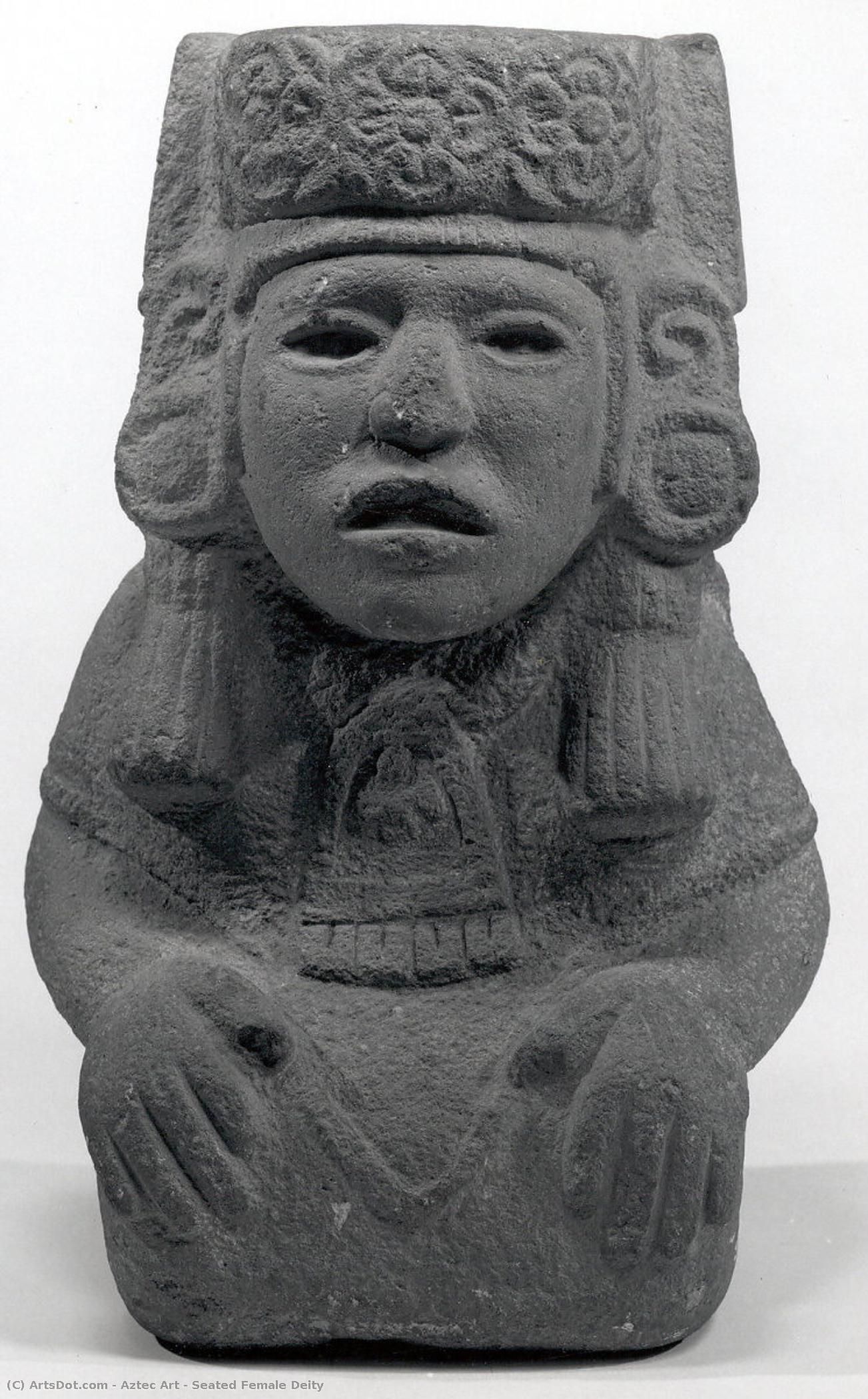
Seated Female Deity: A Reflection of Aztec Spirituality
The image presents a grayscale photograph of an Aztec sculpture depicting a seated female deity. The sculpture is rendered in a dark stone material and exhibits a stylized, somewhat severe aesthetic characteristic of Aztec art. It’s a testament to the enduring legacy of a civilization that sought to capture divine essence through meticulous craftsmanship.
- Subject Matter: The artwork portrays a female deity—likely representing Isis or Venus—a figure central to Aztec cosmology and religious beliefs. Her serene posture embodies tranquility and wisdom, reflecting the Aztecs’ profound reverence for spiritual contemplation.
- Style & Medium: The sculpture exemplifies Aztec artistic style – highly formalized, geometric, and symbolic. Crafted from basalt (likely basalt or similar volcanic rock), it demonstrates exceptional precision in carving to create a durable and enduring object.
- Composition: Centered on the figure, with the deity occupying most of the frame, the composition prioritizes symmetry and formality. The frontal view emphasizes visual balance and directs attention directly to the sculpture’s countenance.
Technique & Material Considerations
The artist's mastery lies in manipulating basalt—a volcanic rock known for its durability and textural qualities—to achieve remarkable detail. Skilled artisans employed chisels and hammers, painstakingly shaping the stone to convey intricate patterns and contours. The dark hue of the basalt contributes to the sculpture’s solemn atmosphere, mirroring the seriousness of Aztec religious rituals. Careful polishing brought out subtle surface variations, enhancing the visual impact and conveying a sense of timelessness.
Symbolism & Iconography
The headdress—a prominent feature of the sculpture—is laden with symbolic significance. Geometric shapes dominate its ornamentation, representing cosmic order and divine harmony. The deity’s facial expression conveys solemnity and contemplation, embodying Aztec ideals of spiritual enlightenment. These visual cues communicate profound religious beliefs about creation myths and the role of goddesses in maintaining balance within the universe.
Historical Context & Artistic Influence
Created during the Postclassic period (c.900-1580 CE), “Seated Female Deity” stands as a remarkable achievement amidst the artistic traditions of Mesoamerica. Influenced by earlier civilizations like the Olmecs and Teotihuacan, Aztec art sought to express spiritual truths through stylized representations—a deliberate departure from naturalistic depictions. Its enduring presence in museums worldwide underscores its significance as a symbol of Aztec culture and artistic prowess.
Emotional Impact & Artistic Legacy
Viewing “Seated Female Deity” evokes contemplation and admiration for the artistry of the Aztec Empire. The sculpture’s austere beauty transcends time, inviting viewers to consider the profound spiritual values that underpinned Aztec society—values rooted in reverence for nature, meticulous craftsmanship, and a belief in the interconnectedness of all things. It remains an inspiring example of how art can communicate complex ideas and emotions with enduring power.