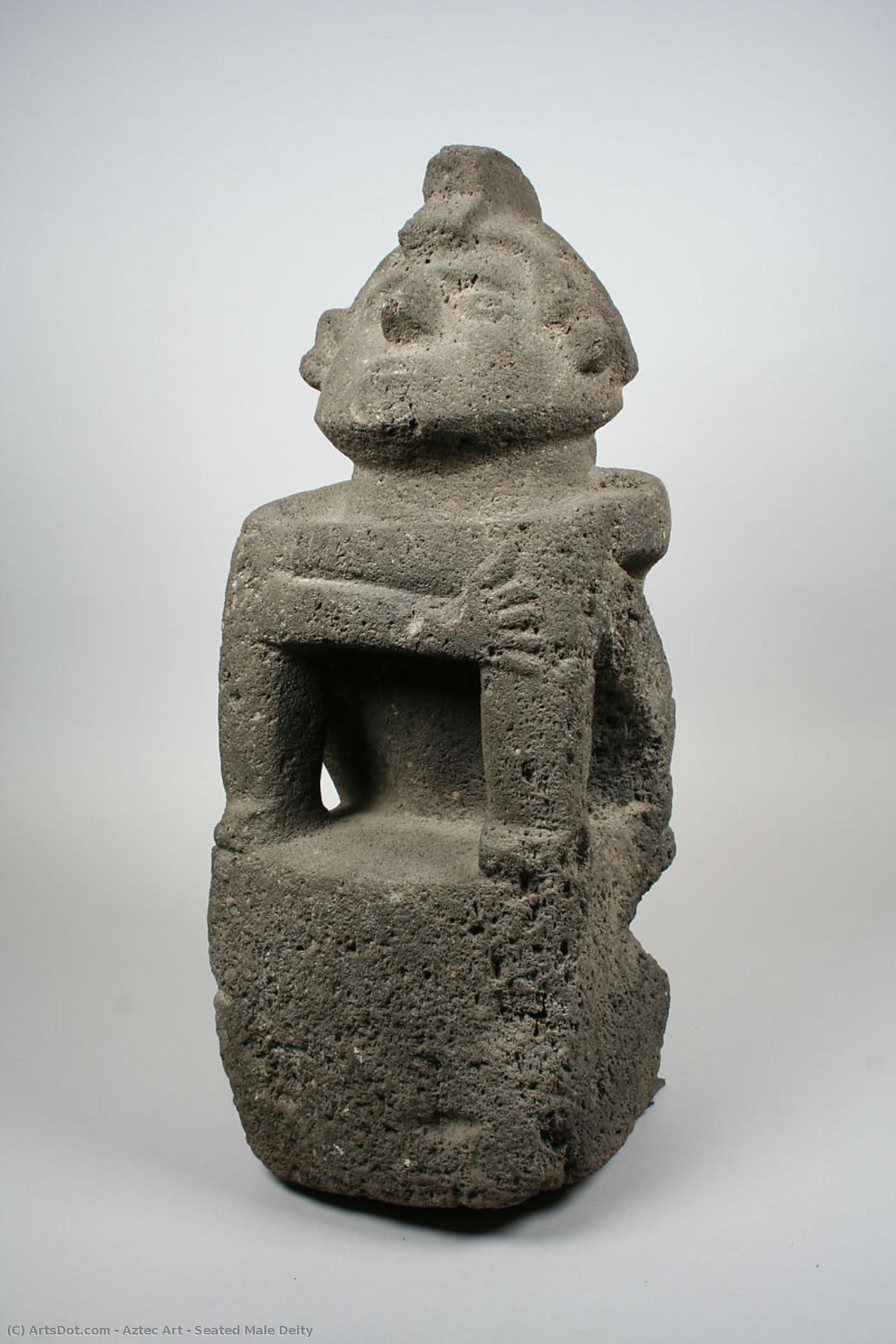
A Silent Majesty: Unveiling the Seated Male Deity
Before us stands a testament to the profound artistry and spiritual depth of the Aztec Empire – a weathered stone sculpture known as the “Seated Male Deity,” or more accurately, *Teonachalchi* (a title often associated with deities embodying both earthly and divine qualities). Dating back to the early 16th century, this piece isn’t merely a representation of a figure; it's a window into a complex cosmology, a reflection of Aztec beliefs about power, fertility, and the interconnectedness of humanity and the cosmos. The sculpture, likely carved from basalt – a volcanic rock prized for its durability and ability to hold detail – possesses an immediate gravitas, a quiet authority that speaks volumes despite its stoic stillness.
Its origins lie within the heart of Tenochtitlan, the magnificent capital built on an island in Lake Texcoco. The Aztecs, or Mexica as they called themselves, were masters of engineering and urban planning, yet their artistic expression was equally remarkable. This sculpture embodies that duality – a sophisticated understanding of form combined with a deep reverence for the spiritual world. The deliberate simplicity of the pose—seated, attentive, holding a maize bundle—is deceptively powerful. It’s not an action scene; it's a moment of contemplation, inviting viewers to connect with the deity on a fundamental level.
Decoding Symbolism: Maize, Power, and Divine Presence
The most striking element is undoubtedly the figure’s hands. He cradles a bundle of maize – *huauhtli* in Nahuatl – a symbol profoundly central to Aztec life. Maize wasn't just sustenance; it represented abundance, fertility, and the very foundation of their society. Holding this offering suggests a connection to agricultural cycles, the promise of prosperity, and perhaps even a role as a mediator between the earthly realm and the divine. The presence of the maize bundle elevates the figure beyond a simple representation of a human being; he embodies the life-giving force of nature itself.
Furthermore, the seated posture is significant. It’s a position associated with authority, wisdom, and contemplation – qualities often attributed to deities in Mesoamerican cultures. The stylized headwear, reminiscent of a feathered headdress, further reinforces this impression, hinting at divine status and connection to the upper world. The overall composition—balanced, symmetrical, and imbued with a sense of serenity—reflects the Aztec belief in cosmic harmony and the importance of maintaining equilibrium within oneself and the universe.
Craftsmanship and Technique: Echoes of Ancient Skill
While we can’t know the exact tools used by the artisans who created this sculpture, it's clear that they possessed exceptional skill and a deep understanding of stone carving. The surface is remarkably smooth in places, suggesting careful polishing – a technique likely employed to enhance the figure’s form and bring out the natural texture of the basalt. The lines are clean yet subtly expressive, conveying both strength and grace. Notice the meticulous detail in the facial features—a hint of serenity in the eyes, a dignified expression on the lips.
The sculpture's weathered appearance is not a sign of decay but rather a testament to its age and the passage of time. The subtle variations in color – ranging from deep grays to lighter browns – are the result of exposure to the elements over centuries, adding layers of visual interest and reinforcing the sense that this piece has witnessed countless events and held silent vigil within the heart of Aztec civilization. The texture itself—rough and granular—grounds the sculpture in its material reality, reminding us of the human hands that shaped it.
A Legacy Endures: Connecting with a Lost World
The “Seated Male Deity” is more than just an artwork; it’s a tangible link to a lost world – a window into the beliefs, values, and artistic achievements of the Aztec Empire. Its enduring power lies in its ability to evoke a sense of wonder, mystery, and connection to something larger than ourselves. Reproductions of this piece offer a unique opportunity to bring a touch of ancient Mexico into our homes, inviting us to contemplate the wisdom and artistry of a civilization that continues to fascinate and inspire.