The Weight of Ancestors: An Exploration of the Aztec Skull Pendant
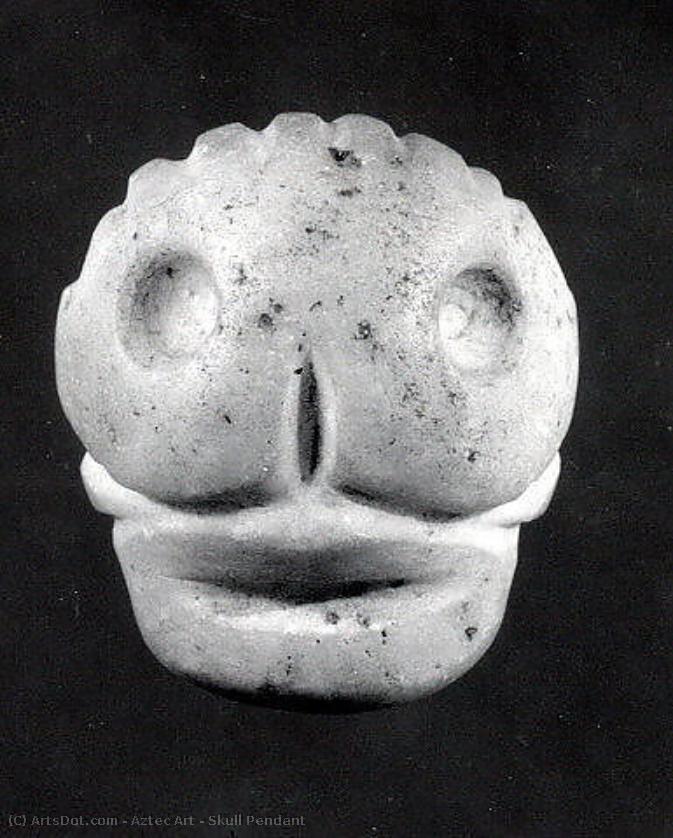
Gazing upon this black and white photograph, one is immediately drawn to the stark simplicity and profound symbolism of the Aztec skull pendant. More than a mere decorative object, it’s a window into a complex culture grappling with themes of death, remembrance, and the cyclical nature of existence – a potent visual echo of an empire both magnificent and tragically ephemeral. The image itself, meticulously rendered in grayscale, captures not just the physical form of the artifact but also the solemnity associated with its origins. The deep black background serves to amplify the pendant’s contours, emphasizing the intricate carvings that speak volumes about Aztec artistry and belief.
- Material & Technique: The pendant is believed to be crafted from a durable stone – perhaps jade or obsidian – showcasing the skill of Aztec artisans. The photographic process, likely utilizing traditional techniques, subtly captures the texture of the material, revealing minute imperfections that hint at its age and the hands that shaped it.
- Form & Detail: The stylized skull is instantly recognizable as a representation of *Mictecacihuatl*, the “Lady of the Dead,” a powerful goddess presiding over the underworld. The simplified features – the prominent nasal cavity, the carefully rendered eye sockets – are not intended to be realistic but rather symbolic, conveying an essence rather than a likeness.
- Composition & Lighting: The central framing draws the viewer’s attention directly to the pendant, creating a sense of intimacy and reverence. The directional lighting highlights the carving details while casting subtle shadows that lend depth and dimensionality to the image.
Echoes of Tenochtitlan: Historical Context and Aztec Ritual
To truly appreciate this pendant, it’s essential to understand its place within the broader context of Aztec society. The Aztecs, who flourished in central Mexico from roughly 1345 to 1521, were deeply preoccupied with death and the afterlife. Their religion centered on a complex pantheon of gods, including Huitzilopochtli, the god of war and sun, and Coatlicue, the goddess of earth and fertility – both frequently depicted in association with skulls. This pendant wouldn’t have been worn casually; it was likely employed as an amulet or offered during rituals honoring deceased ancestors, a tangible link to those who had passed beyond the veil.
The Aztecs believed that the souls of the dead continued to influence the living, and maintaining a strong connection with ancestors through remembrance and offerings was paramount. Skulls themselves held significant symbolic weight – representing both mortality and regeneration. They were often used in elaborate ceremonies involving human sacrifice, intended to appease the gods and ensure the continuation of the cosmos. While the specific purpose of this particular pendant remains open to interpretation, it undoubtedly served as a powerful reminder of these fundamental beliefs.
Symbolism & Emotional Resonance: A Dialogue with Mortality
Beyond its historical context, the skull pendant possesses a potent emotional resonance. The stark simplicity of the form, combined with the grayscale palette, evokes a sense of melancholy and contemplation. It’s not a celebratory image; rather, it invites reflection on the inevitability of death and the enduring power of memory. The Aztec reverence for ancestors is palpable – this object isn't simply a representation of death but a testament to the importance of honoring those who came before.
Consider the deliberate choice of grayscale. Color would have been far less prevalent in Aztec art, emphasizing the symbolic weight of each element. The absence of vibrant hues forces us to focus on form, texture, and the underlying narrative embedded within the carving. The pendant becomes a conduit for connecting with a distant past, prompting questions about our own mortality and the legacies we leave behind.
A Legacy in Stone: Reproduction & Artistic Interpretation
Reproductions of this remarkable artifact offer a unique opportunity to bring a piece of Aztec artistry into your home or collection. When selecting a reproduction, consider the materials used – a high-quality print on archival paper will ensure that the image retains its clarity and vibrancy for years to come. The detail and accuracy of the reproduction are also crucial; look for an artist who has meticulously studied the original artifact and captured its essence with sensitivity and respect.
More than just a decorative object, this skull pendant represents a profound cultural legacy – a testament to the ingenuity, spirituality, and artistic skill of the Aztec people. It’s a powerful reminder that even in death, memory endures, and that our connection to those who came before shapes our own identities.