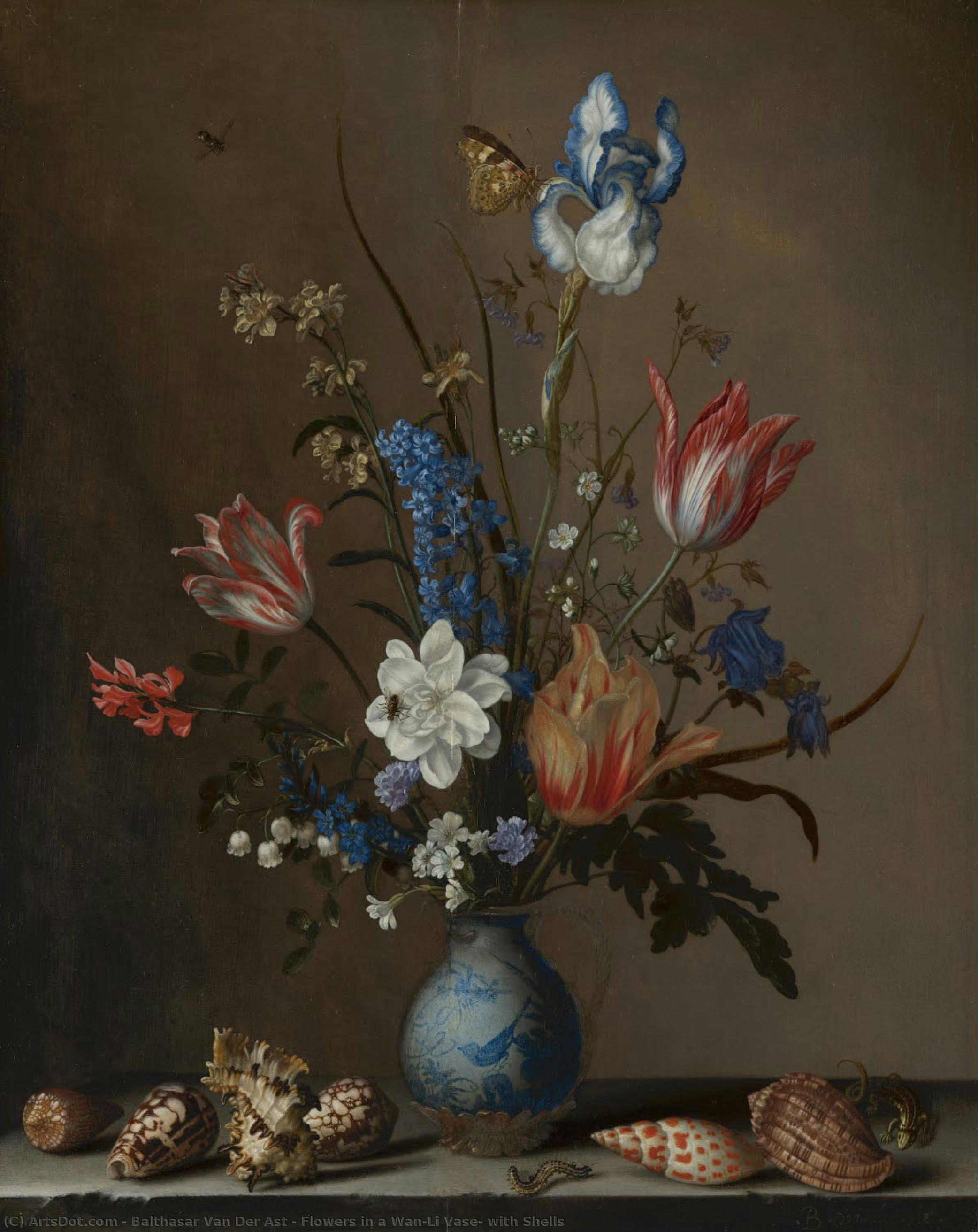
Admire Van der Ast’s ‘Flowers in a Wan-Li Vase,’ a stunning 1650 Dutch Golden Age still life. Explore intricate details, rich colors & symbolic beauty within this exquisite Baroque masterpiece.
Balthasar van der Ast (1593-1657) was a Dutch Golden Age painter renowned for exquisite still lifes of flowers, fruit & pioneering shell paintings. Explore his detailed works featuring insects and lizards – a key figure in 17th-century art!
Mauritshuis
(The Hague, Netherlands)
Discover Dutch Golden Age masterpieces at Mauritshuis! Explore Vermeer’s *Girl with a Pearl Earring* & Rembrandt’s drama in this intimate palace of art. A unique, compact experience awaits!
A Symphony in Porcelain and Petals: Balthasar van der Ast’s “Flowers in a Wan-Li Vase”
Balthasar van der Ast's "Flowers in a Wan-Li Vase, with Shells," painted circa 1640-1650, isn’t merely a still life; it’s a meticulously crafted meditation on beauty, wealth, and the fleeting nature of time. Within its richly layered composition resides a microcosm of the Dutch Golden Age – a testament to burgeoning scientific curiosity, refined artistic skill, and an enduring fascination with the natural world. The painting immediately draws the eye into a dense arrangement of blossoms, each rendered with astonishing detail, seemingly bursting forth from a delicate blue Wan-Li vase, a prized possession indicative of considerable affluence. It’s a scene that whispers of opulent Dutch households and the burgeoning trade networks connecting Europe to the exotic East.
The Art of Observation: Technique and Style
Van der Ast was a master of capturing the subtle nuances of texture and light, and this piece exemplifies his signature style. He employed a technique known as *chiaroscuro*, skillfully manipulating shadows and highlights to create an illusion of three-dimensionality that is remarkably convincing. The velvety petals of roses, the delicate veins of leaves, and the rough surface of the seashells are all rendered with painstaking precision – each brushstroke contributing to the overall sense of realism. Notice how he doesn’t simply paint *of* flowers; he paints *as* flowers, capturing their very essence. The use of layering is particularly noteworthy; colors build upon one another, creating a luminous depth that seems to invite the viewer into the scene. This wasn't just about replicating what was seen; it was about conveying the *experience* of observing nature – its vibrancy, its complexity, and its inherent beauty.
Symbolism Woven Within: Flowers, Shells, and Wealth
Beyond its technical brilliance, “Flowers in a Wan-Li Vase” is laden with symbolic meaning. The inclusion of various flower species—roses, tulips, anemones, and more—represents the changing seasons and the abundance of nature. The prominent red tulip, particularly striking, was a symbol of wealth and status during this period, its vibrant hue mirroring the prosperity enjoyed by the Dutch Republic. The delicate shells scattered beneath the vase are not merely decorative; they evoke themes of mortality and the passage of time – reminders that even the most beautiful things eventually fade away. The butterfly resting on one of the blooms adds a touch of ephemeral grace, suggesting the fleeting nature of beauty itself.
A Window into a World: Historical Context
To fully appreciate this painting, it’s crucial to understand its historical context. The Dutch Golden Age (roughly 1588-1702) was a period of unprecedented economic prosperity and artistic innovation. The rise of the merchant class fueled an insatiable appetite for luxury goods – particularly porcelain from China – and fostered a growing interest in scientific observation. Van der Ast, along with other artists of his time, embraced this spirit of inquiry, meticulously documenting the natural world through their art. The painting reflects not only artistic skill but also the intellectual curiosity that characterized the era—a desire to understand and represent the complexities of nature with unparalleled accuracy. It’s a snapshot of a society deeply engaged with both beauty and knowledge.
Capturing the Essence: Reproductions and Inspiration
Today, high-quality reproductions of “Flowers in a Wan-Li Vase” are available, allowing art lovers to bring this exquisite masterpiece into their homes. Whether you’re drawn to its rich colors, intricate details, or profound symbolism, this painting continues to captivate viewers centuries after it was created. Consider how the composition—the dense arrangement of flowers within the elegant vase—can inform interior design choices, creating a space that is both luxurious and inviting. The painting's masterful use of light and shadow serves as a reminder of the power of art to transform our perception of the world around us.