A Glimpse into the Golden Age: The Soul of a Gentleman
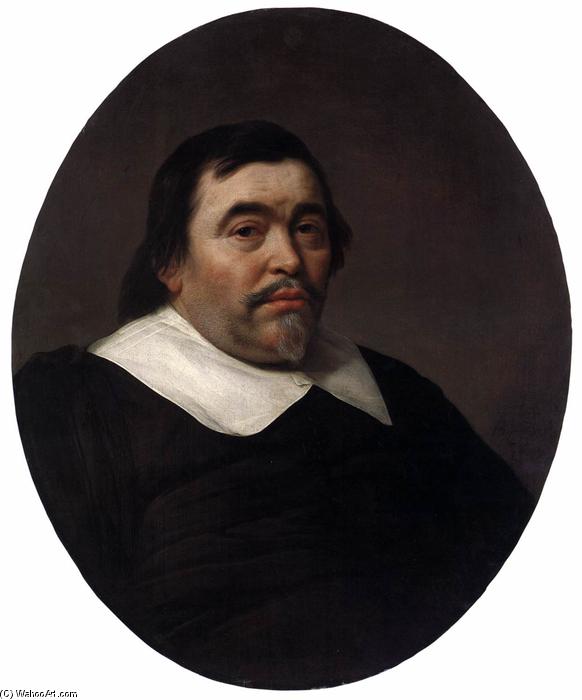
In the heart of seventeenth-century Amsterdam, a city pulsating with the energy of global commerce and maritime triumph, Bartholomeus van der Helst captured more than just faces; he captured the very essence of an era. His 1647 masterpiece, Portrait of a Man, serves as a breathtaking window into the Dutch Golden Age, offering a profound encounter with a figure of quiet authority. The subject, a middle-aged gentleman, meets the viewer’s gaze with an unwavering composure that suggests both intelligence and a deep, contemplative nature. There is an undeniable gravity to his presence, a sense of dignified resolve that transcends the mere recording of a likeness. Through Van der Helst’s lens, we do not simply see a man; we witness the embodiment of the civic virtue and social stability that defined the burgeoning merchant class of the Netherlands.
The painting is a masterclass in Baroque realism, a style where the artist seeks to elevate reality through meticulous execution rather than through overt fantasy. Van der Helost employs a technique characterized by extraordinary precision, where every thread of the subject's richly embroidered doublet and the heavy folds of his cloak are rendered with palpable texture. The artist’s ability to manipulate light is nothing short of spellbinding; soft, diffused illumination dances across the contours of the man's face, casting subtle shadows that lend a three-dimensional volume to his features. This careful interplay of light and shadow—the chiaroscuro influence—not only defines the physical form but also deep much deeper into the psychological landscape, highlighting the subtle lines around the eyes that speak of experience and wisdom.
The Art of Detail and the Elegance of Form
For the discerning collector or interior designer, this portrait offers a sophisticated interplay of texture and tone that can anchor any classical space. The composition is elegantly contained within an oval frame, a convention of the period that lends a sense of formal grandeur and timelessness to the work. This framing focuses the eye inward, stripping away distractions to concentrate entirely on the subject's character. The background, a muted and neutral grey-white, acts as a silent stage, ensuring that the rich color saturation of the man’s attire—the deep blacks, subtle creams, and intricate embroidery—remains the focal point of the visual narrative.
Beyond its technical brilliance, the painting carries an emotional weight that is both solemn and inspiring. There is a certain "perfect prose" to this portraiture, as described by the critic Henry James, where the lack of unnecessary flourish allows the true character of the sitter to shine through with unmitigated verity. To possess a reproduction of such a work is to invite a piece of history into one's environment—a piece that celebrates the enduring values of dignity, strength, and the quiet power of a life well-lived. It is an ideal selection for those seeking to infuse their interiors with a sense of historical depth, academic prestige, and the unmistakable luster of the Dutch Golden Age.