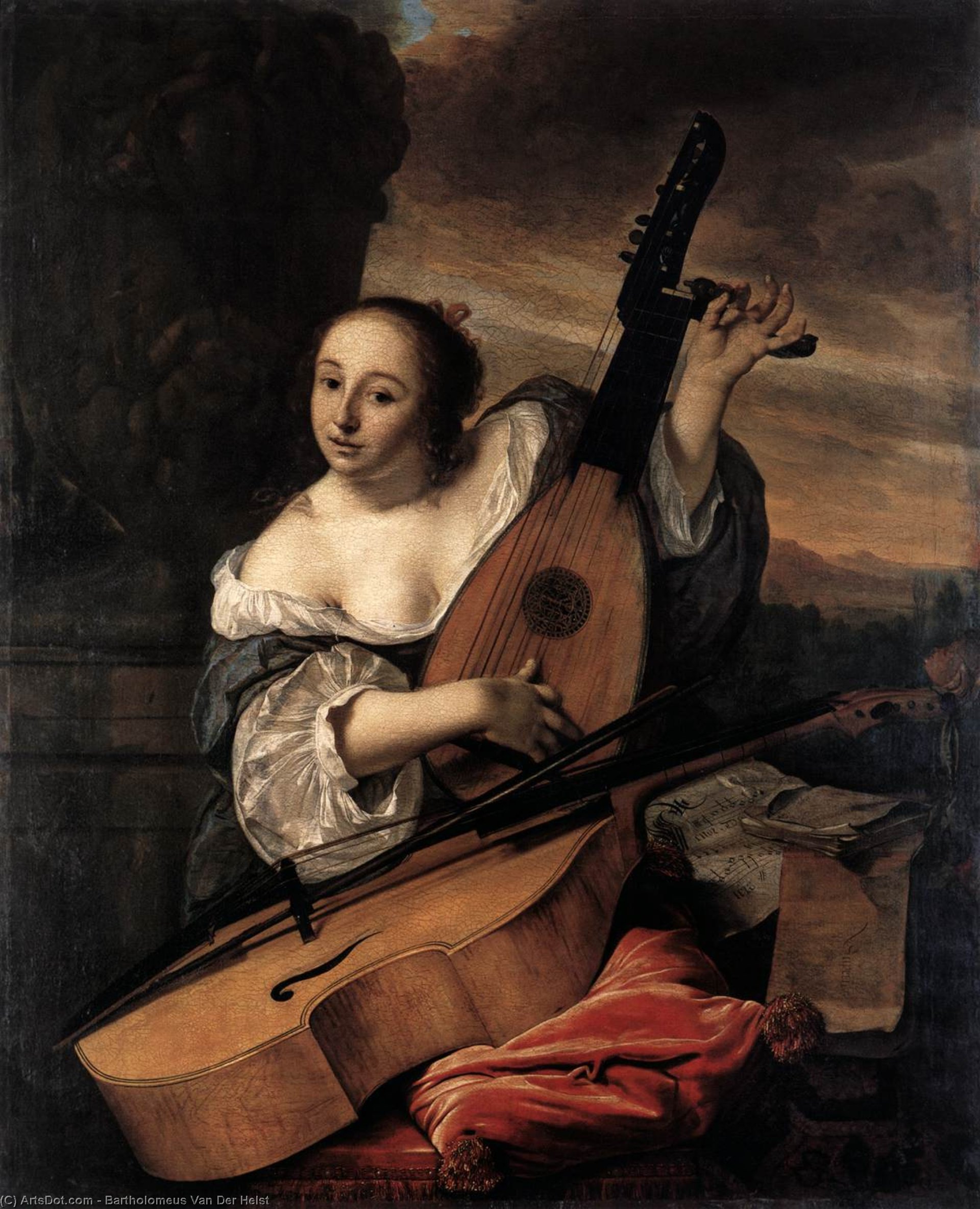
Bartholomeus van der Helst’s ‘The Musician’ (1662) captures Dutch Golden Age elegance. A serene portrait of a lute player, rich with detail and subtle eroticism, reflects Amsterdam's aristocratic spirit. Own a stunning reproduction today!
A Portrait of Musical Grace: Bartholomeus van der Helst’s “The Musician”
Bartholomeus van der Helst's "The Musician," completed in 1662, stands as a quintessential emblem of the Dutch Golden Age—a period characterized by unparalleled artistic flourishing and economic prosperity. More than just a depiction of a woman playing the lute, this painting delves into themes of refinement, contemplation, and subtle eroticism, reflecting the intellectual currents of its time and cementing van der Helst’s reputation as one of Amsterdam's most celebrated portraitists. The artwork resides within the Metropolitan Museum of Art’s collection (Accession Number: EP73.2.R), where it continues to captivate viewers with its masterful execution and evocative atmosphere.
- Subject Matter & Composition: At first glance, “The Musician” presents a serene tableau—a woman seated gracefully before a lute, her gaze directed outwards towards the viewer. This deliberate positioning invites engagement, establishing an intimate connection between subject and observer. The inclusion of a second figure in the background adds depth to the scene, hinting at a domestic setting and subtly enriching the narrative complexity.
- Style & Technique: Van der Helst’s signature style is characterized by its clarity and precision—a hallmark of Baroque portraiture aimed at conveying dignity and status. Employing oil paint on canvas with meticulous layering techniques, he achieves remarkable tonal gradations and textural nuances. The artist skillfully captures the luminescence of candlelight illuminating the woman's face and hands, emphasizing her beauty and poise.
Historical Context: Reflecting Amsterdam’s Aristocratic Spirit
Painted during the height of Amsterdam’s Golden Age, “The Musician” embodies the values championed by the city’s elite—intellectual curiosity, artistic patronage, and an appreciation for refined leisure. The lute itself was a symbol of musical sophistication and erudition, representing not merely entertainment but also intellectual cultivation. Furthermore, the presence of a book suggests an association with humanist ideals and scholarly pursuits – common aspirations within the aristocratic circles that supported artists like van der Helst.
- Symbolism: Beyond its immediate visual appeal, “The Musician” carries symbolic weight. The lute’s delicate strings symbolize harmony and balance—concepts central to Baroque aesthetics. The woman's gaze outward conveys introspection and contemplation, hinting at a deeper psychological dimension beyond mere physical beauty.
- Influence & Comparisons: Art historians like Walter Liedtke have noted parallels between van der Helst’s work and that of contemporaries such as Gerrit van Honthorst and Ferdinand Bol. Notably, Liedtke posits that “The Musician” may have been influenced by earlier depictions of lute players—a stylistic trend indicative of the broader artistic dialogue occurring during the period.
Emotional Impact & Artistic Legacy
“The Musician” transcends its formal portrait conventions to evoke a profound sense of serenity and grace. The artist’s masterful use of light and shadow creates an atmosphere of intimacy, drawing viewers into the woman's contemplative gaze. It is precisely this ability to convey emotion—albeit subtly—that distinguishes van der Helst’s oeuvre from more overtly dramatic styles prevalent at the time. Today, reproductions of “The Musician” continue to inspire interior designers and art enthusiasts alike, serving as a testament to the enduring power of Baroque artistry.