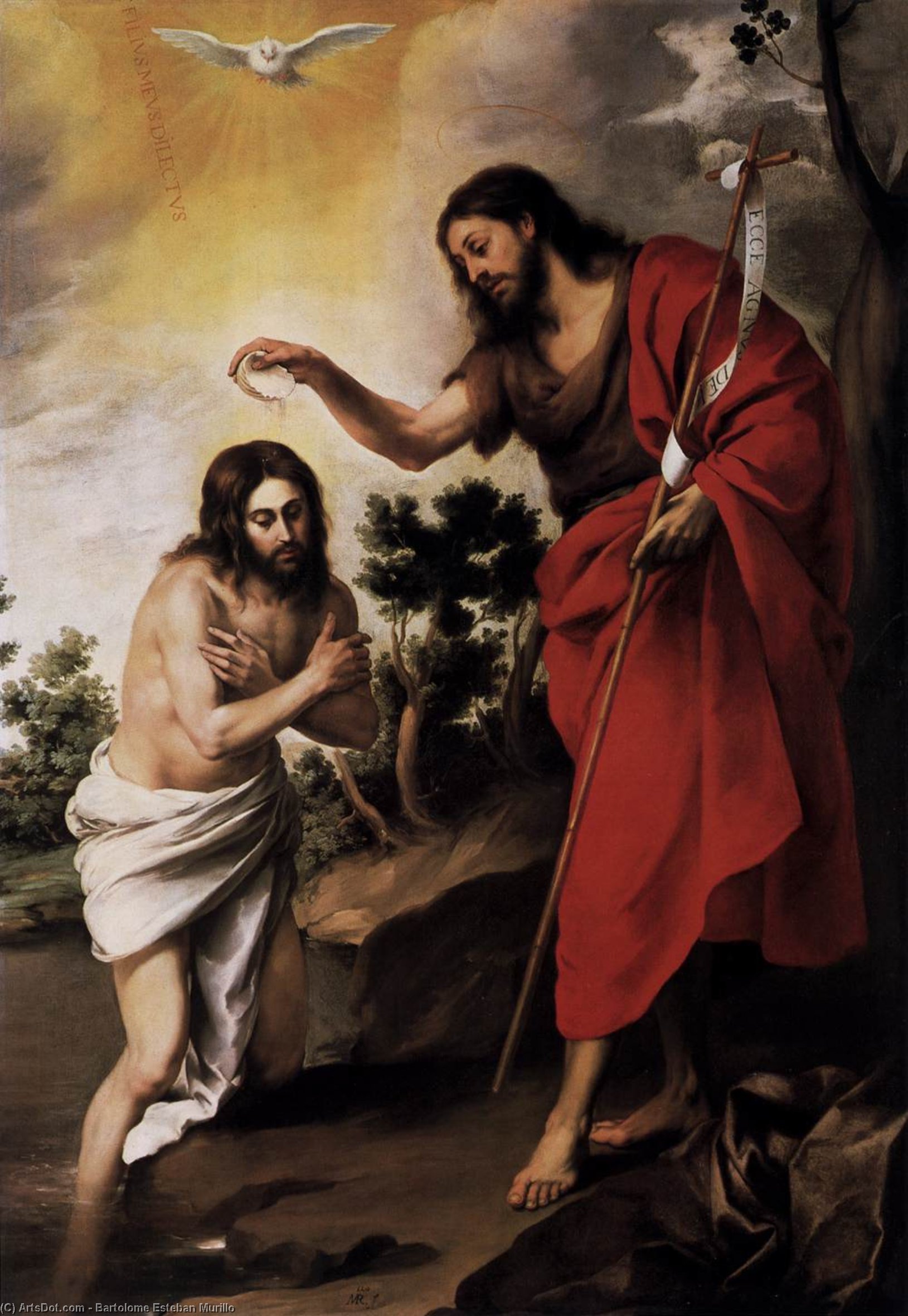
The
Baptism of Christ is a stunning oil on canvas painting created by the renowned Spanish artist
Bartolome Esteban Murillo in 1665. This beautiful piece of art is a perfect representation of the Baroque style, characterized by its use of contrast, movement, and deep color. The painting measures 233 x 160 cm and is a significant work in the history of painting.
The Painting's Composition
The
Baptism of Christ depicts the moment when Jesus is being baptized by John the Baptist in the Jordan River. The two main figures are positioned on either side of the canvas, with Jesus standing on the left and John the Baptist on the right. The painting also features a group of people watching the baptism, as well as a bird flying above the scene, adding an element of nature to the religious setting. The use of light in the painting is also noteworthy, with the artist employing techniques such as chiaroscuro to create a sense of depth and volume.
Artistic Style and Influences
Bartolome Esteban Murillo's work was influenced by the
Galleria Nazionale d'Arte Antica (Italy), where he was exposed to the works of other prominent artists. His style is characterized by its use of color and light, which are evident in his other works, such as
The Good Shepherd Child and
St. Rodriguez. For more information on
Bartolome Esteban Murillo's style and influences, visit the
ArtsDot.com page dedicated to his work.
Key Features of the Painting
Some key features of the
Baptism of Christ include:
- The use of symbolism, with the dove and cross representing Christianity
- The employment of chiaroscuro to create a sense of depth and volume
- The beautiful depiction of light and its effects on the scene
For more information on the history of painting and the use of light in art, visit
Wikipedia's page on the History of Painting and
Light in Painting.
The
Baptism of Christ is a stunning example of Baroque art, with its use of contrast, movement, and deep color. As a masterpiece of
Bartolome Esteban Murillo, it continues to inspire and awe art lovers to this day.