The Enigma of Mortality in Murillo's Gaze
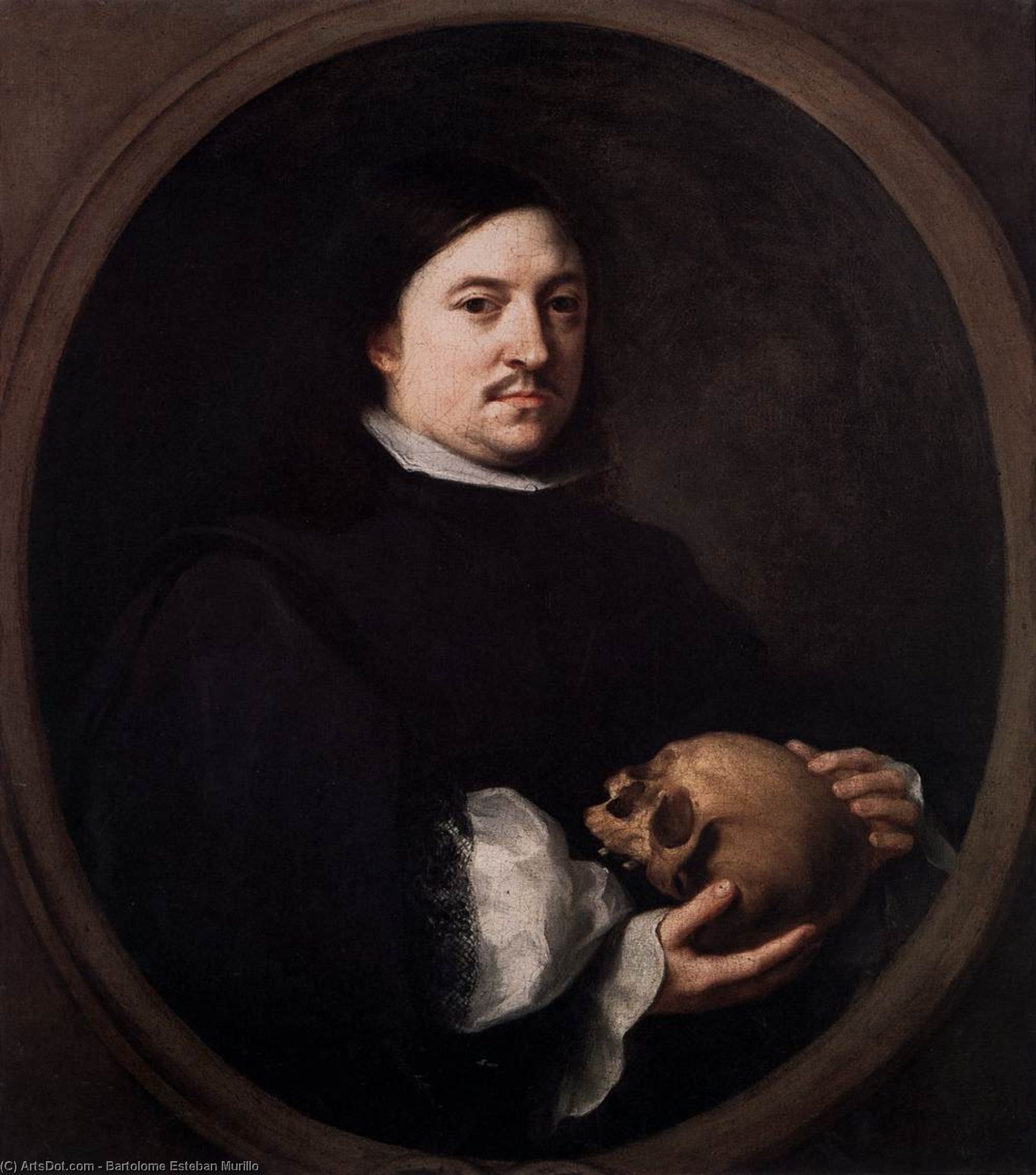
To stand before the Portrait of Nicolas Omasur is to confront not merely a likeness, but a profound meditation on the human condition itself. Painted by the master Spanish hand of Bartolomé Esteban Murillo in 1672, this oil on canvas pulses with the dramatic energy characteristic of the Baroque era. The subject, portrayed with an air of studied sophistication—evident in his crisp white collar and neatly trimmed mustache—holds a skull as if it were a personal confidant. This juxtaposition of refined earthly appearance against the stark reminder of skeletal decay creates an immediate, arresting tension that draws the viewer into its depths. Murillo does not simply paint a man; he captures a moment suspended between vanity and ultimate truth.
Mastery of Light and Shadow: A Baroque Spectacle
Technically, the painting is a breathtaking display of chiaroscuro. Murillo wields light with an almost supernatural precision. Observe how the illumination catches the contours of the man's face and the pristine white of his attire, allowing them to emerge dramatically from the surrounding, deeper shadows. This masterful contrast does more than just define form; it heightens the emotional stakes of the portrait. The background recedes into mystery, forcing our entire focus onto the interplay between the subject’s gaze, the reflective surface of the mirror, and the object held in his hand. It is a visual symphony where light itself becomes an active participant in the narrative.
Symbolism: Confronting Vanitas
At the heart of this compelling work lies the potent symbolism of Vanitas. The skull is the universal, undeniable memento mori—a stark whisper concerning the transience of life and the certainty of death. By placing this symbol so prominently in the foreground, Murillo compels us to look past the fashionable suit and the mirror's reflection toward something more eternal. It suggests that beneath the veneer of social standing and outward composure lies the shared vulnerability of all humankind. This theme resonated deeply within the Counter-Reformation art world, inviting contemplation on salvation and the fleeting nature of earthly pleasures.
Bringing History Home: Owning a Masterpiece
For those who wish to integrate such profound artistry into their own living spaces, reproductions of this work offer an unparalleled opportunity. Imagine the dramatic interplay of light and shadow from 1672 gracing your walls. The Portrait of Nicolas Omasur, with its rich texture and narrative weight, serves not just as decoration, but as a philosophical anchor for any room. It speaks to collectors, designers, and art lovers alike who appreciate the depth of Baroque drama and the enduring power of human introspection. To own this piece is to invite a conversation about life's ultimate meaning into your daily routine.