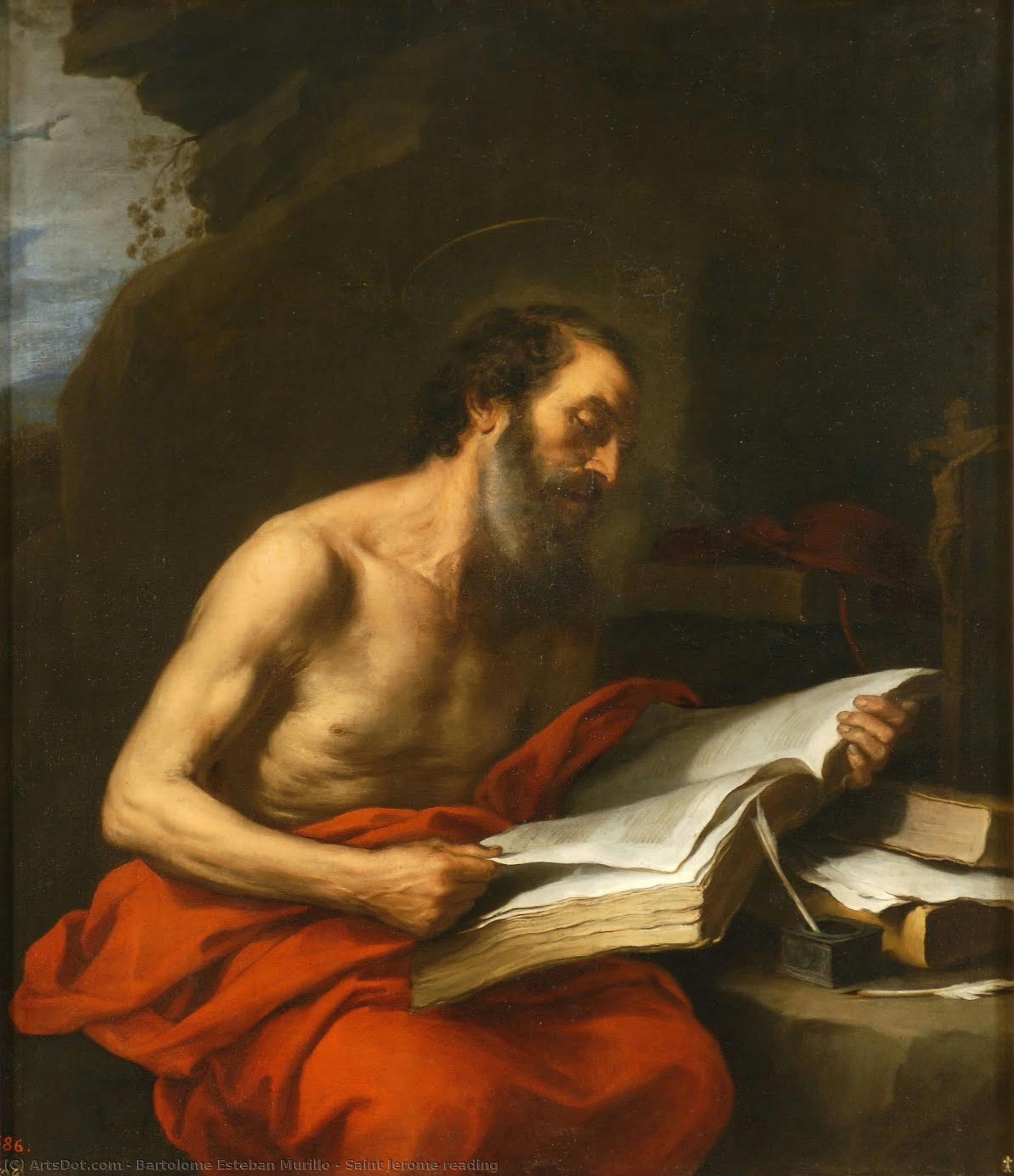
Bartolomé Esteban Murillo’s serene Saint Jerome reading embodies the contemplative spirit of Seville’s Baroque era, capturing a moment of profound devotion amidst a warmly lit interior adorned with books—a timeless masterpiece to admire or collect.
Bartolomé Esteban Murillo (1618-1682) was a celebrated Spanish Baroque painter known for his luminous religious scenes, tender genre paintings, and idealized depictions of everyday life in Seville.
Explore Biblioteca Museu Víctor Balaguer, Vilanova i la Geltrú – Catalonia’s oldest cultural institution! Admire stunning Catalan art & literature housed in a Neo-Egyptian temple, celebrating Balaguer's vision.
A Portrait of Solitude and Faith: Exploring Bartolomé Esteban Murillo’s Saint Jerome Reading
Saint Jerome reading by Bartolomé Esteban Murillo is more than just a depiction of a biblical figure; it's an embodiment of the contemplative spirit that defined Seville during the Baroque era. Painted in 1652, this serene scene captures Saint Jerome—the patron saint of scholars and hermits—absorbed in his devotion as he pores over a book amidst a humble interior setting. The painting’s enduring appeal lies not only in its masterful execution but also in its profound exploration of themes central to Catholic piety and humanist thought.
Style and Technique: Murillo's Delicate Luminosity
Murillo’s signature style is characterized by an extraordinary softness and luminosity—a technique he honed throughout his prolific career. Unlike the dramatic chiaroscuro favored by Caravaggio, Murillo employs a subtle gradation of light and shadow to create an atmosphere of diffused warmth. This masterful manipulation of tonal values lends the composition an ethereal quality, emphasizing Jerome’s face and hands with radiant illumination while maintaining a muted palette for the surrounding room. The artist skillfully utilizes glazing—thin layers of translucent paint applied over subsequent coats—to achieve remarkable depth and vibrancy without resorting to harsh contrasts. This technique is particularly evident in the depiction of the fireplace glow and the textures of the book pages, contributing significantly to the painting’s tactile richness.
Historical Context: Seville Under Habsburg Rule
The artwork emerges from a period of significant cultural and religious transformation within Spain—the reign of Philip IV and the height of Habsburg dominion. The Catholic Church exerted considerable influence on artistic patronage during this time, commissioning works that reinforced doctrinal beliefs and glorified God’s glory. Murillo's Saint Jerome reading reflects this prevailing aesthetic sensibility, aligning with the broader trend toward idealized representations of saints and biblical narratives. Furthermore, Seville itself was experiencing a resurgence as a commercial hub and artistic center, attracting artists from across Europe and fostering an environment conducive to innovation—albeit within established conventions.
Symbolism: Inner Reflection and Intellectual Pursuit
Beyond its technical brilliance, Saint Jerome reading is laden with symbolic significance. Jerome’s posture—seated on the ground, illuminated by candlelight—represents humility and detachment from worldly concerns, prioritizing spiritual contemplation over material possessions. The book symbolizes knowledge and divine revelation, embodying Jerome's unwavering commitment to scholarly pursuits as a means of achieving communion with God. The fireplace serves as a visual metaphor for inner warmth and illumination, mirroring the saint’s radiant countenance and suggesting that true enlightenment originates from within. Murillo’s careful composition reinforces these ideas, inviting viewers to contemplate the importance of piety and intellectual rigor.
Emotional Impact: A Balm for the Soul
Ultimately, Saint Jerome reading transcends mere visual representation; it evokes a powerful emotional response. The painting's tranquil atmosphere fosters a sense of serenity and introspection—a welcome respite from the anxieties of daily life. Murillo’s depiction of Jerome’s focused gaze communicates unwavering devotion and conveys an impression of profound inner peace. This artwork continues to resonate with audiences today because it speaks to universal human aspirations for spiritual solace and intellectual fulfillment, cementing its place as a masterpiece of Baroque art.