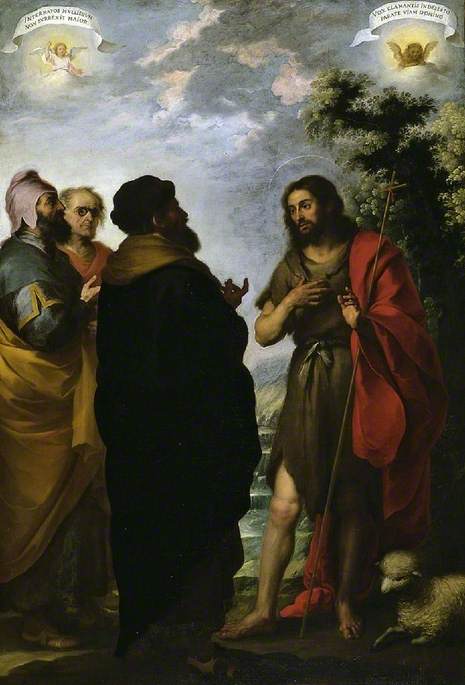
Saint John the Baptist with the Scribes and Pharisees: A Study in Light and Serenity
Saint John the Baptist with the Scribes and Pharisees by Bartolomé Esteban Murillo (1617–1682), c.1655, from The Fitzwilliam Museum stands as a quintessential example of Baroque painting—a movement characterized by dramatic contrasts of light and shadow, opulent ornamentation, and an emphasis on religious piety. Created during Seville’s Golden Age, this masterpiece embodies the artistic spirit of its time while simultaneously conveying profound spiritual contemplation.
- Subject Matter: The scene depicts Saint John the Baptist in a tranquil landscape setting, surrounded by two scribes who attentively listen to his sermon. This juxtaposition highlights the importance of biblical scripture and the pursuit of knowledge within the religious framework of 17th-century Spain.
- Style: Murillo’s style is distinctly Baroque, prioritizing idealized beauty and emotional expression over realistic representation. The figures are rendered with smooth contours and subtle shading—techniques that contribute to a sense of ethereal calm and serenity.
- Technique: Employing oil paint on canvas, Murillo utilized layering and glazing methods to achieve luminous colors and create depth within the composition. Light emanates from an unseen source, bathing the figures in a soft glow and emphasizing their dignified postures.
Historical Context: Seville’s Religious Landscape
The painting emerged during a period of intense religious fervor in Seville—a city deeply rooted in Catholicism and governed by the Habsburg monarchy. Murillo's patrons were often aristocratic families committed to upholding Catholic dogma, influencing his artistic choices. The depiction of Saint John aligns perfectly with the prevailing moral sensibilities of the era, reflecting a desire for spiritual upliftment and adherence to Christian virtues.
Symbolism: Light as Divine Revelation
The pervasive use of light is not merely decorative; it functions symbolically—representing divine illumination and enlightenment. Murillo skillfully directs the viewer’s gaze toward Saint John's face, highlighting his serene expression and conveying a sense of spiritual contemplation. The landscape serves as a backdrop for this inner journey, symbolizing God’s benevolent presence amidst earthly concerns.
Emotional Impact: Tranquility and Reverence
Ultimately, Saint John the Baptist with the Scribes and Pharisees succeeds in evoking feelings of tranquility, reverence, and profound spiritual contemplation. Murillo's masterful handling of light and color—combined with his meticulous attention to detail—creates an image that transcends mere visual representation, inviting viewers into a realm of contemplative beauty. It remains a testament to the enduring power of art to communicate complex theological ideas in accessible and emotionally resonant terms.
Provenance & Legacy
The painting’s journey through history began with its acquisition by Nathan Wetherall from the Fitzwilliam Museum, reflecting the growing appreciation for Baroque art during the Victorian period. Subsequent sales solidified its place within prominent collections—demonstrating its lasting significance as a cornerstone of Spanish artistic heritage. Today, reproductions of Murillo's Saint John continue to inspire artists and collectors alike, cementing his reputation as one of Spain’s most beloved painters.