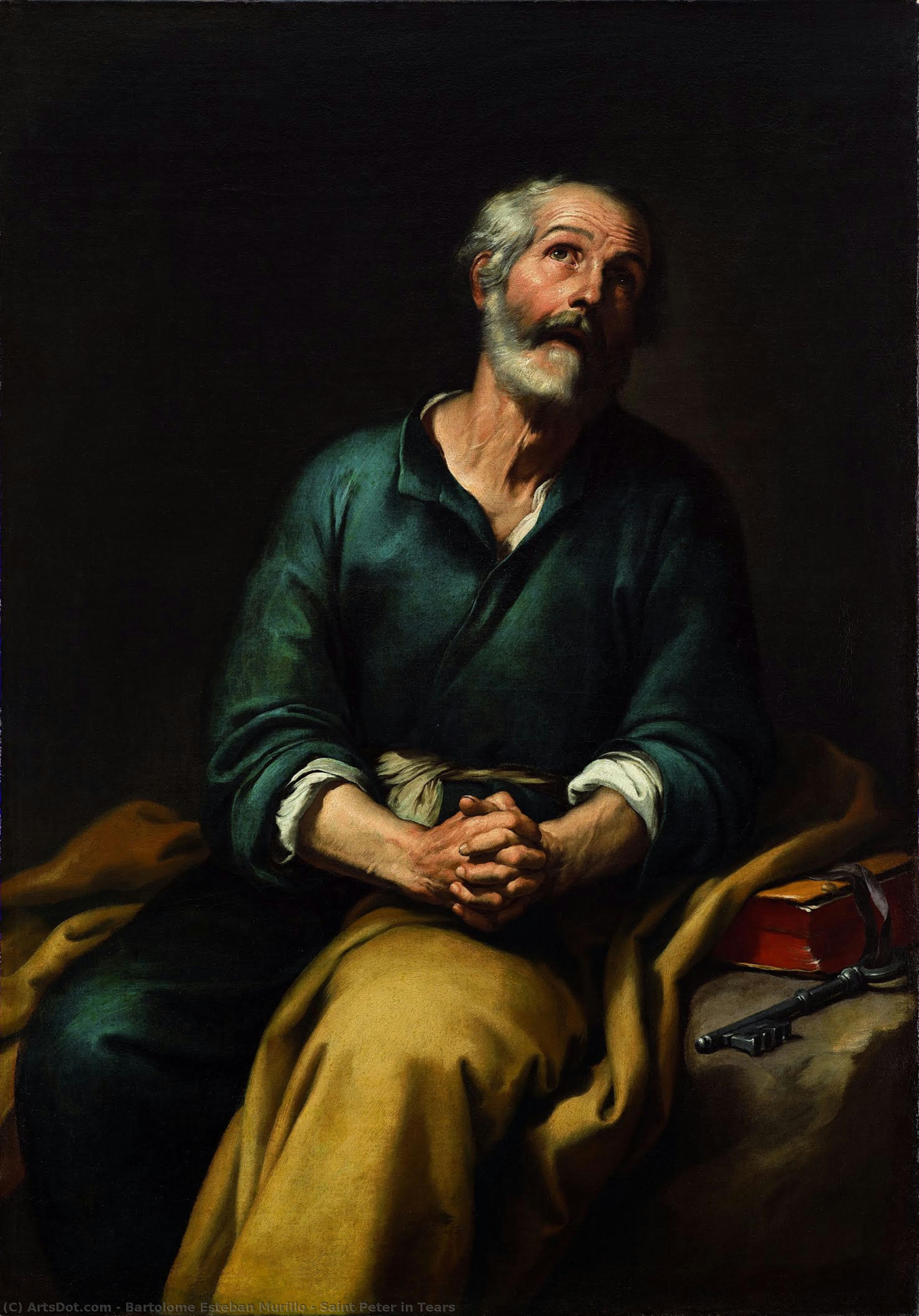
The Heart of Sorrow – Bartolomé Esteban Murillo’s Saint Peter
Bartolomé Esteban Murillo's “Saint Peter in Tears” isn’t merely a depiction of a biblical scene; it’s a profound exploration of remorse, humility, and the enduring power of repentance. Painted around 1650-1655 during Seville’s golden age of Baroque art, this oil on canvas work transcends its religious subject matter to resonate with universal human emotions. Murillo, a master of capturing the essence of everyday life alongside profound spiritual themes, here presents us with an elderly figure – traditionally identified as Saint Peter – consumed by grief and regret. The painting immediately draws the viewer in with its masterful use of chiaroscuro, a dramatic technique employing stark contrasts between light and shadow that sculpts the subject’s face and hands, emphasizing his vulnerability and drawing our attention to the palpable sorrow etched upon his features.
- Composition: The figure is positioned slightly off-center, creating an intimate and deeply personal connection with the viewer. The simplicity of the background – a dark, undefined space – serves only to heighten the drama surrounding Peter’s emotional state.
- Color Palette: Murillo employs a predominantly dark palette of deep blues, greens, and browns, punctuated by warm yellows and golds that highlight key elements like Peter's hands clasped in prayer and the subtle glow of his face. This restrained use of color amplifies the painting’s somber mood.
- Brushwork: Noticeable brushstrokes contribute to a sense of texture and weight, particularly in the folds of Peter’s robe and beard – details that speak to Murillo's meticulous attention to realism and his ability to convey both physical presence and emotional depth.
A Testament to Penance: Historical Context
To understand “Saint Peter in Tears,” we must consider the religious climate of 17th-century Spain, a period dominated by the Counter-Reformation. The Catholic Church was actively seeking ways to combat the spread of Protestantism and reaffirm its authority. The episode depicted – Peter’s denial of Christ three times before the rooster crowed – became a potent symbol of human fallibility and the necessity of repentance. Murillo, deeply embedded in this cultural context, skillfully utilized this narrative to convey a powerful message about faith, forgiveness, and the importance of seeking redemption. The painting reflects the prevailing theological emphasis on confession and the sacrament of penance, which were central to Catholic practice at the time.
The image of Peter’s tears was particularly resonant during this era, serving as a visual reminder of the potential for even the most revered figures to succumb to human weakness. It underscored the Church's teachings on humility and the ongoing struggle against sin.
Symbolism: Keys, Books, and the Weight of Repentance
Beyond the central figure’s grief, “Saint Peter in Tears” is rich with symbolic elements. The keys he holds represent his authority as the first Pope and his role as gatekeeper to heaven – a potent reminder of the responsibilities associated with leadership and faith. The open book symbolizes his role as an apostle and author of two epistles within the New Testament, underscoring his importance in spreading Christ’s teachings. Most significantly, Peter's clasped hands, positioned prominently in the foreground, are a clear visual representation of humility and supplication – a gesture of profound remorse and a plea for divine mercy. The very posture of his body conveys the weight of his past sins and the burden of seeking forgiveness.
The Legacy of Murillo: A Master of Emotion
Bartolomé Esteban Murillo’s “Saint Peter in Tears” stands as a testament to his extraordinary talent for capturing human emotion with remarkable realism and sensitivity. His ability to imbue religious subjects with profound psychological depth, combined with his masterful technical skills, cemented his place as one of the most celebrated artists of the Spanish Baroque period. Reproductions of this powerful work continue to resonate with viewers today, offering a timeless meditation on faith, repentance, and the enduring human capacity for both sorrow and redemption. It’s a painting that invites contemplation, prompting us to reflect on our own struggles and the importance of seeking forgiveness – a truly remarkable achievement in art.