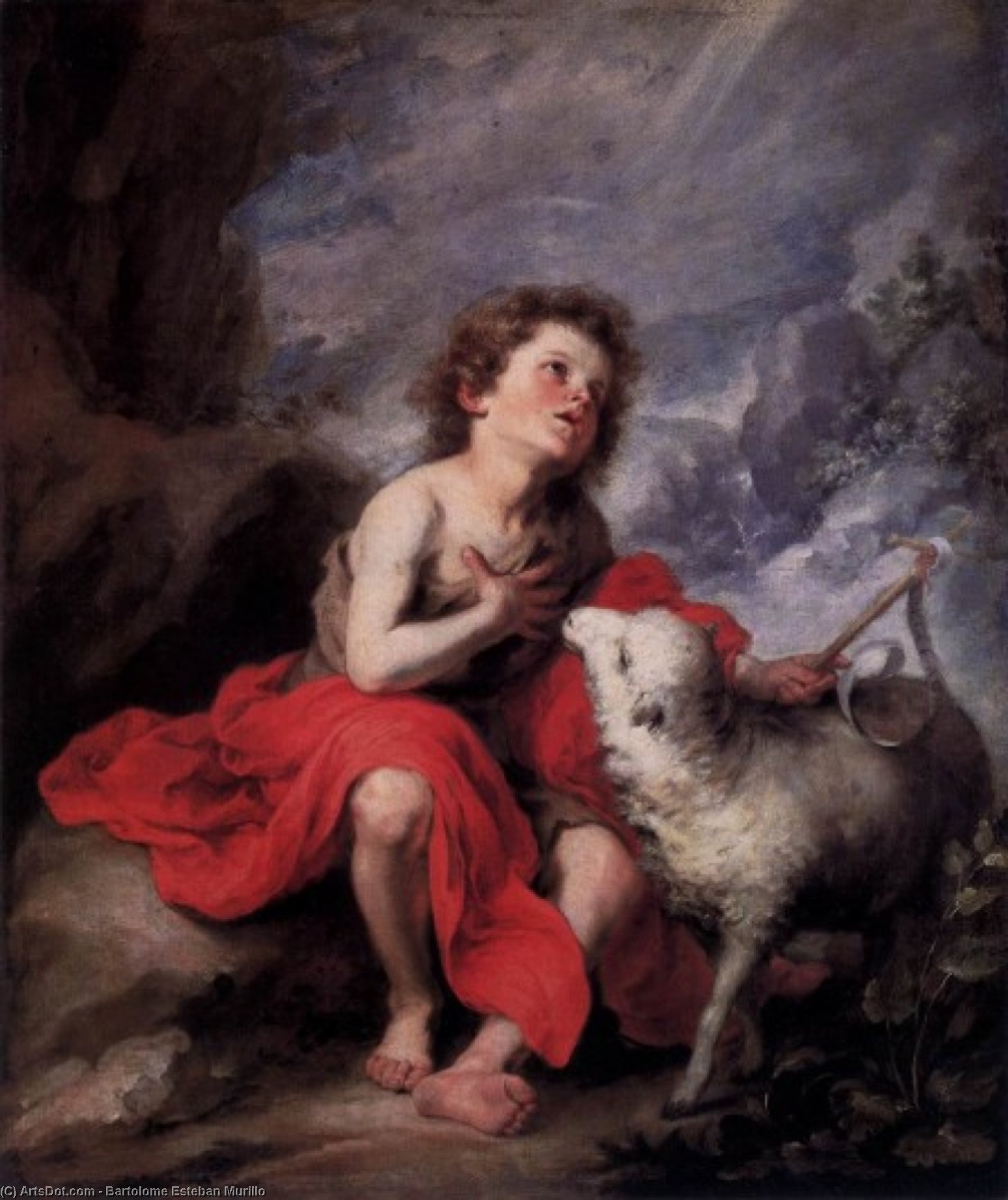
Batolomé Esteban Murillo’s serene St. John the Baptist as a Child embodies Baroque elegance—a captivating portrait bathed in light and shadow—perfect for art enthusiasts seeking timeless beauty and a glimpse into Spanish artistic history.
Bartolomé Esteban Murillo (1618-1682) was a celebrated Spanish Baroque painter known for his luminous religious scenes, tender genre paintings, and idealized depictions of everyday life in Seville.
A Portrait of Innocence: Exploring Bartolomé Esteban Murillo’s St. John the Baptist as a Child
Bartolomé Esteban Murillo's “St. John the Baptist as a Child,” painted in 1665, transcends mere depiction; it embodies the very essence of Baroque idealism—a masterful distillation of piety and pastoral beauty that continues to resonate with audiences centuries later. This oil on canvas masterpiece resides within the Galleria Corsini in Rome, offering visitors a glimpse into a hidden gem of Italian art alongside its broader European counterparts from the sixteenth and seventeenth centuries. Its quiet contemplation speaks volumes about Murillo’s profound understanding of human emotion and his unwavering commitment to capturing fleeting moments of grace.
Subject Matter and Composition
The painting presents a tender tableau: a young boy, believed to be Saint John the Baptist, seated upon weathered rocks amidst a verdant landscape populated by trees—a deliberate echo of biblical imagery celebrating the innocence and purity associated with childhood. Before him rests a sheep, symbolizing humility and pastoral virtue – elements frequently employed in Baroque art to convey moral lessons and spiritual contemplation. Murillo’s compositional choices prioritize serenity and balance; the boy dominates the frame, positioned centrally against the backdrop of nature, drawing the viewer's eye into this serene scene. The subtle diagonal lines created by the rocks contribute to a sense of dynamism within the stillness of the composition.
Stylistic Influences and Technique
Murillo’s style is undeniably rooted in the Baroque tradition, yet he distinguishes himself through an exceptional sensitivity to light and shadow—a technique perfected during his formative years under Juan del Castillo. Like Murillo's celebrated “The Good Shepherd Child,” this painting utilizes chiaroscuro – dramatic contrasts between illumination and darkness – to sculpt form and imbue the scene with palpable emotion. The artist meticulously renders textures, from the rough stone beneath the boy’s feet to the fleece of the sheep, demonstrating a remarkable command of artistic craft. Furthermore, Murillo's influence extends beyond his immediate stylistic peers; he shares similarities with Diego Velázquez’s “Prince Baltasar Carlos with the Count-Duke of Olivares,” showcasing a similar preoccupation with capturing psychological realism alongside formal elegance.
Symbolism and Spiritual Significance
Beyond its aesthetic beauty, "St. John the Baptist as a Child" carries considerable symbolic weight. The boy represents Christ himself at infancy—a pivotal moment in Christian theology signifying divine humility and foreshadowing redemption. The sheep serves as an emblem of innocence and meekness, mirroring Saint John’s prophetic role as herald of Jesus's arrival. Murillo skillfully employs these symbols to elevate the painting beyond a simple portrait; it becomes a meditation on faith, virtue, and the transformative power of childhood—themes central to Baroque spirituality.
Emotional Impact and Legacy
The painting’s enduring appeal lies in its ability to evoke feelings of compassion and tranquility. Murillo achieves this through masterful use of color – muted hues dominate the palette, creating an atmosphere of understated grandeur. The boy's gaze is direct yet gentle, conveying a profound sense of inner peace—a characteristic that distinguishes Baroque art from earlier Renaissance styles. “St. John the Baptist as a Child” remains a testament to Murillo’s artistic genius and his unwavering dedication to portraying human emotion with exquisite subtlety. Its presence in Galleria Corsini ensures its continued appreciation by discerning collectors and interior designers alike, offering a timeless glimpse into the heart of Baroque artistry.