The
Bartolome Esteban Murillo painting,
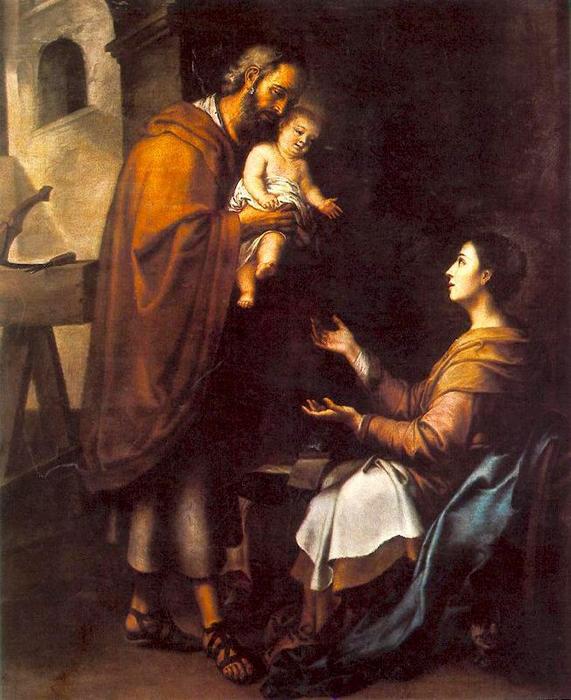
The Holy Family, is a stunning example of Baroque art. Created in 1660, this oil on canvas piece measures 186 x 155 cm and is a beautiful representation of the Holy Family. The scene takes place in a dark room, which adds to the dramatic atmosphere of the painting.
Composition and Symbolism
The composition of
The Holy Family is characterized by a sense of intimacy and warmth. Mary holds her child Jesus while Joseph stands nearby, creating a sense of protection and love. The presence of an older woman in the background adds to the sense of family and community. The use of light and shadow in the painting creates a sense of depth and dimensionality, drawing the viewer's eye to the central figures.
Key elements of the painting include the chair and bench in the room, as well as the book on the floor. These objects add to the sense of everyday life and domesticity, while also symbolizing the importance of faith and learning. The
Molinari Pradelli Collection in Bologna, Italy, features a range of artworks that showcase the use of light and shadow in painting, including works by
Bartolome Esteban Murillo.
Artistic Style and Technique
Murillo's use of
chiaroscuro and
tenebrism creates a dramatic and emotionally charged atmosphere in
The Holy Family. The painting is characterized by strong contrasts between light and dark, which adds to the sense of depth and dimensionality. This technique was commonly used in Baroque art to create a sense of drama and tension. For more information on Murillo's style and technique, visit
/art/list/?Filter=8EWCQD-Bartolome-Esteban-Murillo-The-Holy-Family.
The
Metropolitan Museum of Art in New York features a range of artworks that showcase the use of light and shadow in painting, including works by
Bartolome Esteban Murillo. For more information on the museum's collection, visit
/art/list/?Filter=8XZQUC-Master-Of-The-Codex-Of-Saint-George-The-Crucifixion.