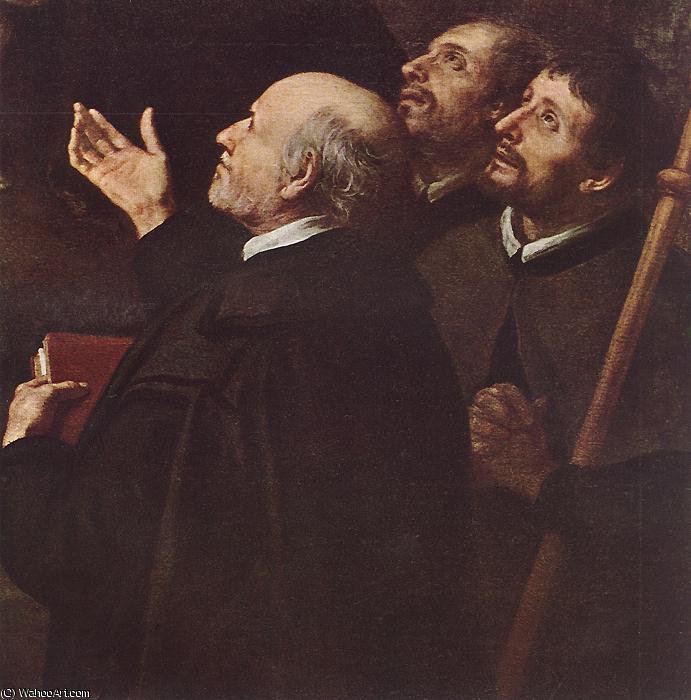
A Scene of Divine Charity: Murillo’s *The Infant Jesus Distributing Bread to Pilgrims* (Detail)
This exquisite detail from Bartolomé Esteban Murillo's *The Infant Jesus Distributing Bread to Pilgrims* offers a poignant glimpse into a Baroque masterpiece renowned for its tender depiction of faith and compassion. While this fragment focuses on figures reacting to the divine act, understanding the full composition reveals the profound narrative at play – the young Christ, miraculously providing sustenance to a gathering of impoverished pilgrims.
Baroque Sensibility & Murillo’s Style
Murillo, born in Seville in 1618, was a leading figure of the Spanish Baroque period. His style evolved throughout his career, moving from early influences of realism – seen in artists like Zurbarán and Ribera – towards a more graceful and emotionally resonant aesthetic. This detail exemplifies Murillo’s mature style: characterized by
soft modeling, luminous tones, and an emphasis on the humanity of religious figures. The use of *chiaroscuro* (the dramatic contrast between light and dark) isn't as stark as in earlier Baroque works; instead, Murillo employs a gentler approach, creating a sense of warmth and accessibility.
Subject & Symbolism
The scene depicts the moment when the Infant Jesus, accompanied by Mary and Joseph, miraculously distributes bread to a group of pilgrims – representing the poor and marginalized. This act is not merely one of physical sustenance; it’s a powerful symbol of
spiritual nourishment and divine grace. The raised hands of the figures in this detail convey awe, gratitude, and acceptance of God's provision. The inclusion of books suggests learning and faith, while the cross subtly reinforces the Christian narrative. It is important to note that Murillo often depicted scenes of everyday life alongside religious subjects, imbuing his sacred works with a relatable human quality.
Historical Context & Artistic Legacy
Seville in the 17th century was a vibrant center of artistic and religious activity, deeply influenced by the Counter-Reformation. Murillo’s work responded to this climate, aiming to inspire piety and devotion through emotionally engaging imagery. He became incredibly popular during his lifetime and beyond, with his paintings widely collected and reproduced. His influence can be seen in subsequent generations of Spanish artists, and his works continue to captivate audiences today. The full painting was originally commissioned for the church of San Francisco in Seville, later moving to its current location at the Iglesia de Jesus Grande in Murcia, Spain.
Emotional Impact & Interior Design Considerations
This detail, even isolated from the complete work, evokes a sense of
hope, compassion, and spiritual upliftment. The figures’ expressions are deeply moving, inviting viewers to contemplate themes of charity, faith, and human connection. As an element in interior design, a high-quality reproduction of this artwork would lend a touch of classical elegance and contemplative serenity to any space. Its muted tones and gentle composition make it particularly well-suited for bedrooms, libraries, or meditation rooms. The detail’s focus on the figures allows it to function as a compelling focal point, sparking conversation and inspiring reflection.
Further Exploration
- Consider pairing this artwork with neutral color palettes and natural materials to enhance its calming effect.
- Explore other works by Murillo to appreciate the breadth of his artistic vision.
- Research the historical context of 17th-century Seville to gain a deeper understanding of the painting’s cultural significance.