A Glimpse into Andalusian Daily Life
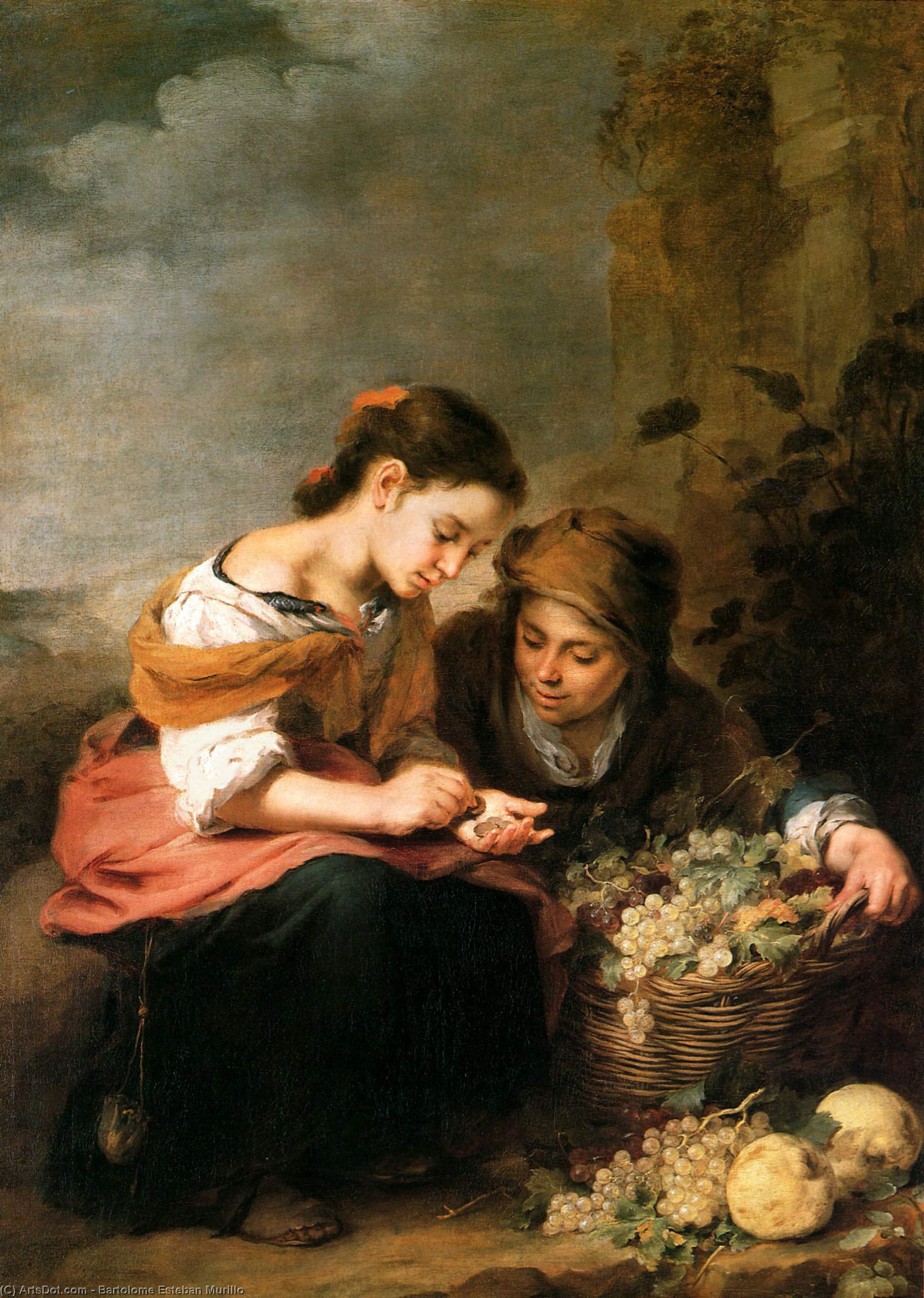
This captivating scene, The Little Fruit-Seller, transports the viewer directly into the sun-drenched marketplace of 17th-century Seville. Murillo has masterfully captured a moment of quiet commerce, an intimate tableau featuring two women engaged in the simple yet profound act of exchange. The air seems thick with the scent of ripe fruit and the murmur of daily transactions. One woman, the vendor, presents her bounty—a vibrant assortment of apples and oranges spilling from woven baskets. Scattered amongst the goods are more apples, their varied hues catching the light, suggesting a careful selection process or perhaps just the natural abundance of the harvest. The second figure leans in, her attention focused intently on the wares, creating a palpable sense of connection between buyer and seller.
Mastery of Baroque Light and Form
Bartolomé Esteban Murillo’s technique here is nothing short of breathtaking. Characteristic of his later period work, the painting glows with an almost ethereal light that seems to emanate from the fruit itself. He possesses a remarkable ability to render textures—the smooth waxy skin of an apple contrasting beautifully with the rough weave of the basket and the delicate folds of their garments. The composition is deceptively simple; it draws the eye across the figures and then allows it to rest on the rich, saturated colors of the produce. This handling of light, a hallmark of Spanish Baroque painting, gives the scene both immediacy and timeless grace.
Symbolism of Abundance and Community
Beyond the mere depiction of fruit sales, this artwork resonates with deeper symbolic currents. The fruit itself has long been a potent symbol in art—representing fertility, life's sweetness, and the bounty of nature. In the context of Murillo’s work, it speaks to the enduring rhythm of community life and sustenance. The interaction between the two women is not just about commerce; it suggests mutual reliance, the gentle choreography of human connection that underpins society. It invites us to pause our modern rush and appreciate the value found in simple, shared moments.
An Heirloom for the Modern Collector
Owning a reproduction of The Little Fruit-Seller is acquiring more than just decoration; it is curating a piece of history imbued with Andalusian warmth. For the art lover, it offers an unparalleled study in genre painting and Baroque naturalism. For the interior designer, its soft palette—punctuated by jewel tones from the fruit—provides a focal point that speaks volumes about cultivated taste without overwhelming a space. It brings the gentle narrative of old Seville into your contemporary home, serving as a perpetual reminder of beauty found in everyday rituals.