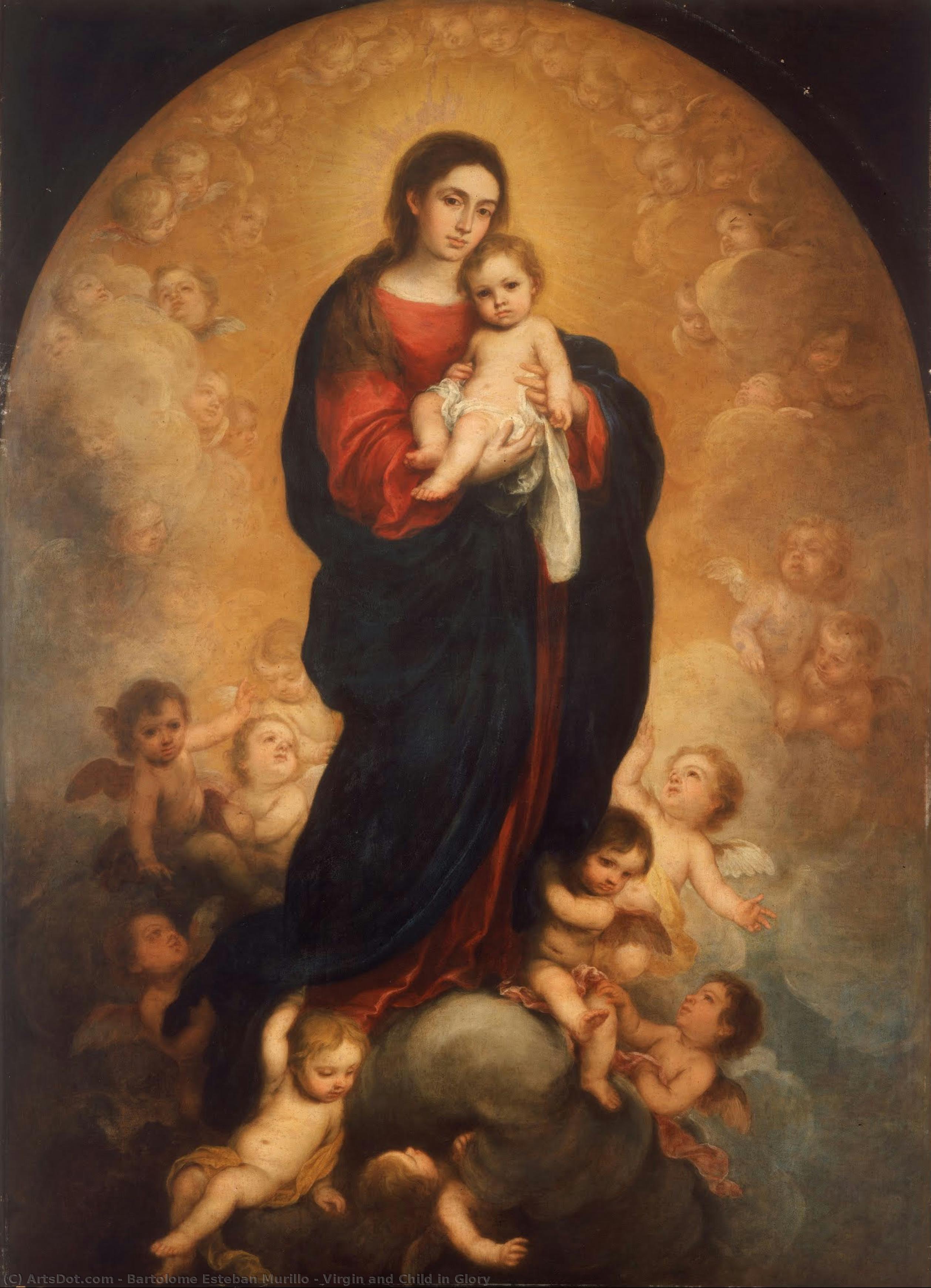
A Vision Illuminated: Murillo’s Virgin and Child
Bartolomé Esteban Murillo's “Virgin and Child in Glory,” completed in 1673, stands as a cornerstone of Baroque art—a testament to Seville’s artistic prowess during its zenith. More than merely depicting religious iconography, the painting embodies a profound spiritual contemplation, capturing the essence of Andalusian piety and foreshadowing stylistic developments that would resonate throughout Europe.
- Subject Matter: The artwork portrays Mary cradling Jesus Christ in her arms, an image deeply rooted in Christian tradition representing purity, compassion, and divine grace.
- Style & Technique: Murillo’s signature style is characterized by its serene stillness and luminous palette—a deliberate departure from the dramatic chiaroscuro favored by Caravaggio. He employs a soft, diffused light that bathes the figures in an ethereal glow, creating an atmosphere of tranquility and reverence.
- Material & Medium: Executed primarily in oil paint on canvas, Murillo utilized meticulous layering techniques to achieve remarkable textural detail—particularly evident in the drapery folds and the delicate features of the Virgin Mary and Child Jesus.
Historical Context: Seville’s Artistic Renaissance
The painting emerged during a period of significant cultural transformation in Spain, fueled by papal patronage and burgeoning mercantile activity. Seville, as the wealthiest port city in Europe, served as a crucible for artistic innovation—drawing inspiration from Italian Baroque masters while maintaining its own distinctive Andalusian sensibility. Murillo’s work reflects this dynamic interplay between tradition and experimentation.
- Religious Influence: The Habsburg monarchy actively promoted Catholicism throughout its dominions, commissioning monumental artworks intended to inspire piety and reinforce royal authority.
- Patronage & Commission: “Virgin and Child in Glory” was commissioned for the Archbishop of Seville’s palace chapel—a prestigious honor that underscored Murillo's reputation as one of Spain’s foremost artists.
Symbolism & Emotional Resonance
Beyond its formal beauty, the painting is laden with symbolic significance. The Virgin Mary’s posture exudes maternal tenderness and unwavering devotion—a visual embodiment of Christian virtues. The cherubs flanking the figures convey angelic guardianship and symbolize divine grace. Murillo skillfully captures not only the outward appearance but also the inner emotional state of his subjects, conveying a sense of profound serenity and spiritual contemplation.
- Light & Shadow: Murillo’s masterful use of light—particularly the subtle luminescence emanating from the left-hand corner—creates an illusionistic depth that draws viewers into the scene.
- Color Palette: Predominantly shades of brown, red, and gold contribute to the painting's aged patina—suggesting a timeless quality and evoking associations with royal splendor and spiritual devotion.
Legacy & Influence
"Virgin and Child in Glory" profoundly impacted subsequent artistic movements—anticipating the stylistic refinements of Rococo art and establishing Murillo as an enduring icon of Baroque idealism. Its serene beauty continues to inspire collectors and interior designers alike, offering a glimpse into the spiritual heart of seventeenth-century Spain.