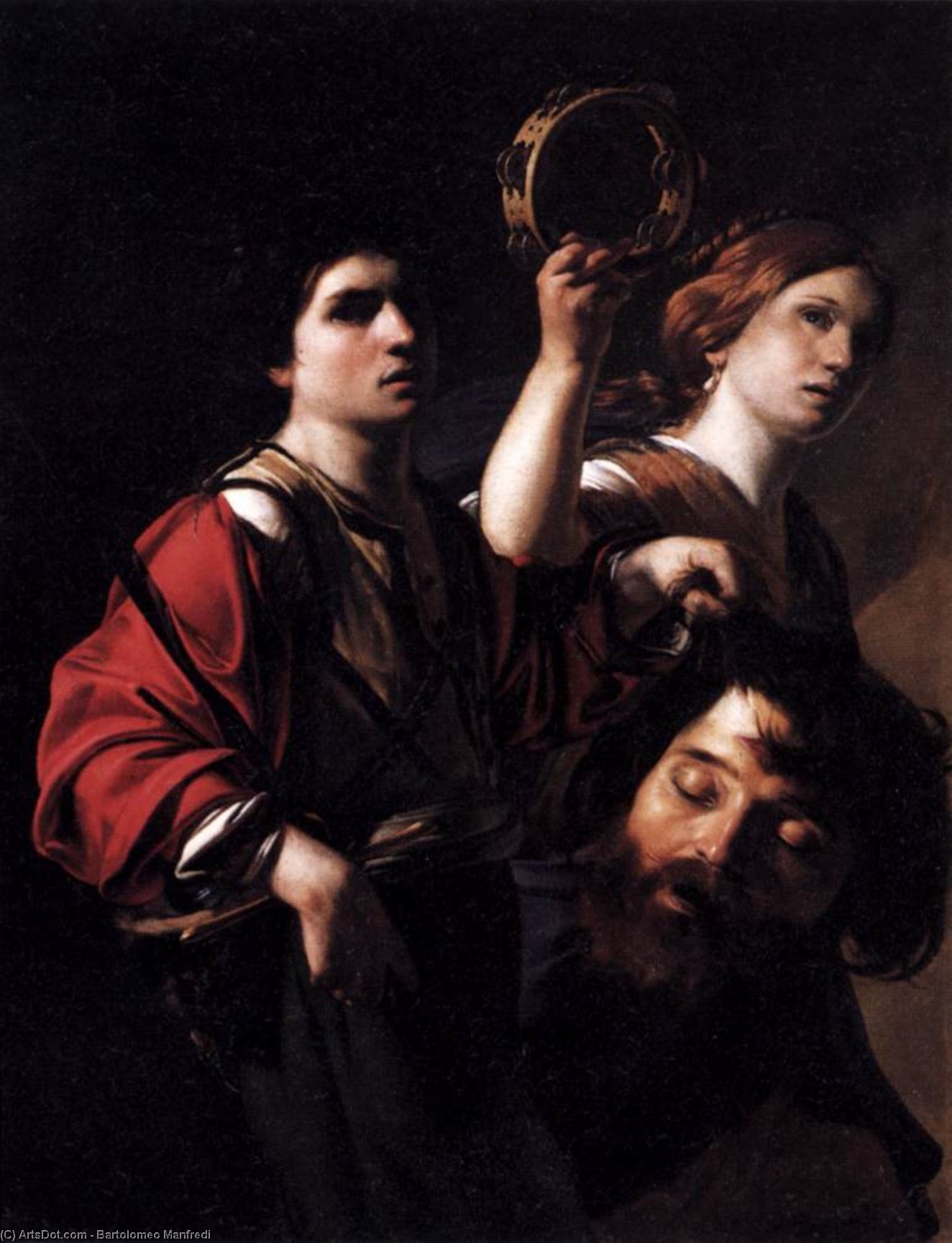
The Triumph of David: A Baroque Masterpiece by Bartolomeo Manfredi
Bartolomeo Manfredi’s “The Triumph of David,” painted circa 1615, is not merely a depiction of biblical heroism; it's a vibrant distillation of the burgeoning Baroque aesthetic and a testament to Caravaggio’s profound influence. This arresting scene, housed within the Louvre Museum in Paris, captures a pivotal moment – the young King David holding aloft the severed head of Goliath, a symbol of audacious victory against overwhelming odds. More than just a historical narrative, Manfredi's painting pulsates with dramatic energy and psychological depth, inviting viewers into a world saturated with light, shadow, and potent emotion.
Manfredi’s artistic lineage is inextricably linked to Michelangelo Merisi da Caravaggio, the revolutionary painter who redefined Italian art in the early 17th century. Caravaggio's signature technique of *chiaroscuro* – the dramatic contrast between light and dark – dominates “The Triumph of David.” Manfredi masterfully employs this device, bathing the scene in a theatrical spotlight that focuses intensely on David’s face and the gruesome trophy he carries. The surrounding figures are rendered with a softer, more muted palette, creating an immediate sense of drama and emphasizing David's central role as the triumphant hero. The artist’s use of tenebrism – a particularly intense form of chiaroscuro – amplifies the emotional impact, drawing our gaze directly to the key elements of the composition.
A Study in Baroque Drama and Symbolism
Beyond its technical brilliance, “The Triumph of David” is rich in symbolic meaning. The severed head of Goliath isn’t simply a representation of military victory; it's a potent emblem of divine justice and the subjugation of evil. David’s youthful appearance, coupled with his confident posture and the regal crown he wears, underscores the idea that strength and righteousness can emerge from unexpected sources. The women surrounding him – rendered in exquisite detail – aren’t passive observers but active participants in the celebration, their gestures of joy and admiration amplifying David's achievement. The composition itself is carefully constructed to guide the viewer’s eye, leading them through a dynamic narrative that culminates in the dramatic focal point: David holding aloft the head of his vanquished foe.
Historical Context and Caravaggio’s Legacy
To understand Manfredi's work fully, it’s crucial to recognize the artistic climate of 17th-century Italy. Following Caravaggio’s untimely death in 1610, a wave of artists – known collectively as the *Caravaggisti* – sought to emulate his revolutionary style. Manfredi emerged as one of the most prominent figures within this movement, inheriting and expanding upon Caravaggio's innovations. He was particularly adept at capturing the raw emotion and psychological intensity that characterized Caravaggio’s paintings, while also developing his own distinctive artistic voice. Manfredi’s influence extended far beyond Italy; his work profoundly impacted artists in France and the Netherlands, shaping the course of Baroque painting across Europe.
The Emotional Resonance of a Timeless Masterpiece
“The Triumph of David” transcends its historical context to resonate with viewers on a deeply emotional level. The painting’s dramatic lighting, dynamic composition, and powerful symbolism combine to create an experience that is both visually stunning and intellectually stimulating. It speaks to themes of courage, triumph over adversity, and the enduring power of faith. The image evokes a sense of awe and wonder, reminding us of the timeless appeal of heroic narratives and the transformative potential of art. Reproductions of this masterpiece offer a remarkable opportunity to bring this dramatic scene into any space, injecting it with a touch of Baroque grandeur and historical significance.
Additional Research: