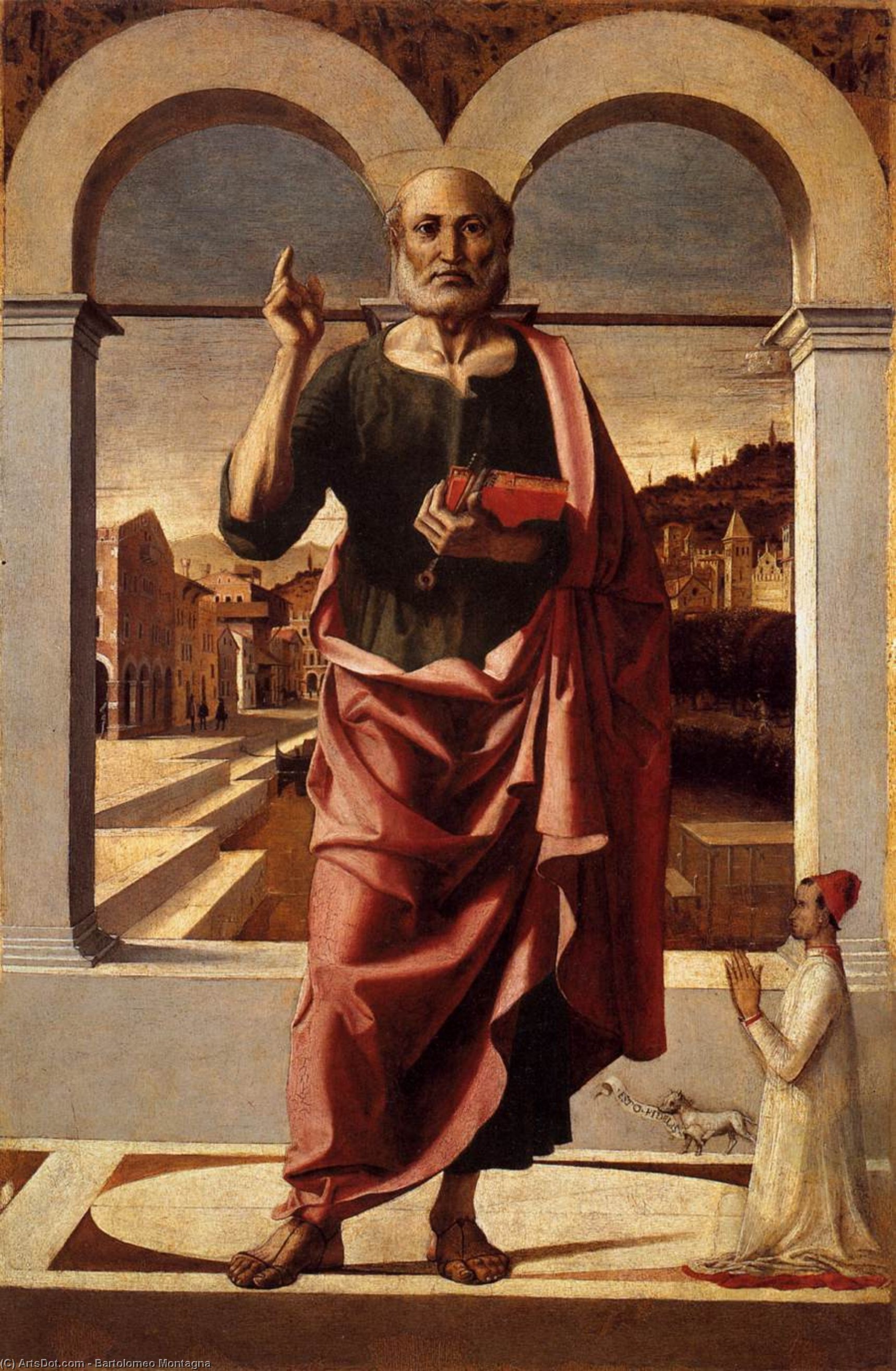
Discover Bartolomeo Montagna, a Renaissance master famed for his serene Madonnas & eccentric marble architecture. Explore his Venetian works from the 15th/16th centuries.
Explore Venetian art's evolution at the Gallerie dell’Accademia! Discover masterpieces by Bellini, Titian & Canaletto in Venice’s historic Scuola della Carità. A stunning journey through 500 years of artistic brilliance.
Bartolomeo Montagna’s St Peter Blessing and Donor: A Venetian Vision of Faith
The painting “St Peter Blessing and Donor” by Bartolomeo Montagna, completed in 1505, stands as a cornerstone of the Vicenza School's artistic output during the High Renaissance—a testament to Venetian artistic prowess and imbued with profound spiritual significance. More than just a portrait, it’s an exquisitely crafted depiction of piety and patronage, reflecting the fervent devotion prevalent within the Catholic Church at the time and showcasing Montagna’s masterful command of sculptural form.
Subject Matter and Composition
At its core lies Saint Peter himself—the revered first Pope—presented in serene repose as he bestows blessings upon a kneeling supplicant. The figure of St. Peter dominates the canvas, positioned centrally with his right hand outstretched in benediction while holding a book aloft – a symbol of divine scripture and papal authority. Beneath him kneels an unnamed man, presumably representing a wealthy donor who commissioned the artwork, embodying humility before God’s grace. Two additional figures flank the central scene: one standing on the left, possibly symbolizing justice or vigilance, and another positioned on the right, offering support and conveying compassion. Montagna skillfully arranges these elements within a richly ornamented archway adorned with columns—a deliberate architectural device that lends depth and grandeur to the composition, mirroring the monumental churches of Venice during this period.
Style and Technique: Sculptural Form in Paint
Montagna’s distinctive style is characterized by an unparalleled sensitivity to sculptural form—a hallmark of Venetian painting influenced by Andrea Mantegna and Giovanni Bellini. He achieves this illusionistic effect through meticulous modeling and shading, creating a palpable sense of volume that transcends the limitations of pigment alone. The artist employs oil paint on panel, utilizing glazing techniques to build up layers of color with remarkable subtlety and precision. This painstaking process allows for nuanced tonal variations—particularly evident in St Peter’s drapery—that capture the texture and luminosity of marble, mirroring the architectural grandeur of Venetian palaces and churches. Montagna's meticulous attention to detail is palpable throughout the artwork, elevating it beyond mere representation into a powerful expression of artistic virtuosity.
Historical Context: Venice and Papal Patronage
The painting emerged during a period of immense cultural flourishing in Venice—a city firmly entrenched as the spiritual capital of Christendom and a beacon of humanist ideals. The Venetian Republic actively fostered artistic innovation, attracting talent from across Europe and commissioning monumental artworks to glorify God and commemorate important events. St Peter Blessing and Donor exemplifies this patronage ethos, commissioned by a prominent Venetian noble family who sought to honor Saint Peter’s role as protector of the papacy—a gesture reflecting the deep religious convictions of the era. The artwork speaks to the broader cultural preoccupation with portraying saints in idealized form, aligning seamlessly with the artistic conventions of the High Renaissance and cementing Montagna's place within Venetian art history.
Symbolism: Light, Gesture, and Divine Grace
Beyond its formal beauty, “St Peter Blessing and Donor” is laden with symbolic meaning. The gesture of blessing—performed by St Peter—represents divine grace and spiritual benediction, conveying the transformative power of faith. The book symbolizes sacred scripture—the source of papal authority and moral guidance—underscoring the importance of theological contemplation. Furthermore, the kneeling donor embodies humility before God’s majesty, acknowledging his dependence on divine providence. Montagna's masterful use of light—particularly diffused illumination—creates an atmosphere of serenity and reverence, emphasizing the spiritual essence of the scene. The overall composition reinforces this symbolic narrative, inviting viewers to contemplate themes of piety, devotion, and papal sanctity.
Emotional Impact: Tranquility and Reverence
The painting’s enduring appeal lies in its ability to evoke a profound sense of tranquility and reverence—qualities that resonate deeply with audiences even today. Montagna's masterful rendering of human form captures the dignity and solemnity of religious devotion, transporting viewers back to Renaissance Venice. The artwork’s harmonious balance and refined aesthetic qualities serve as an inspiration for interior designers seeking to create spaces imbued with spiritual warmth and artistic beauty—a testament to Bartolomeo Montagna’s legacy as one of Venetian art's most influential masters.