A Divine Encounter with the Eternal
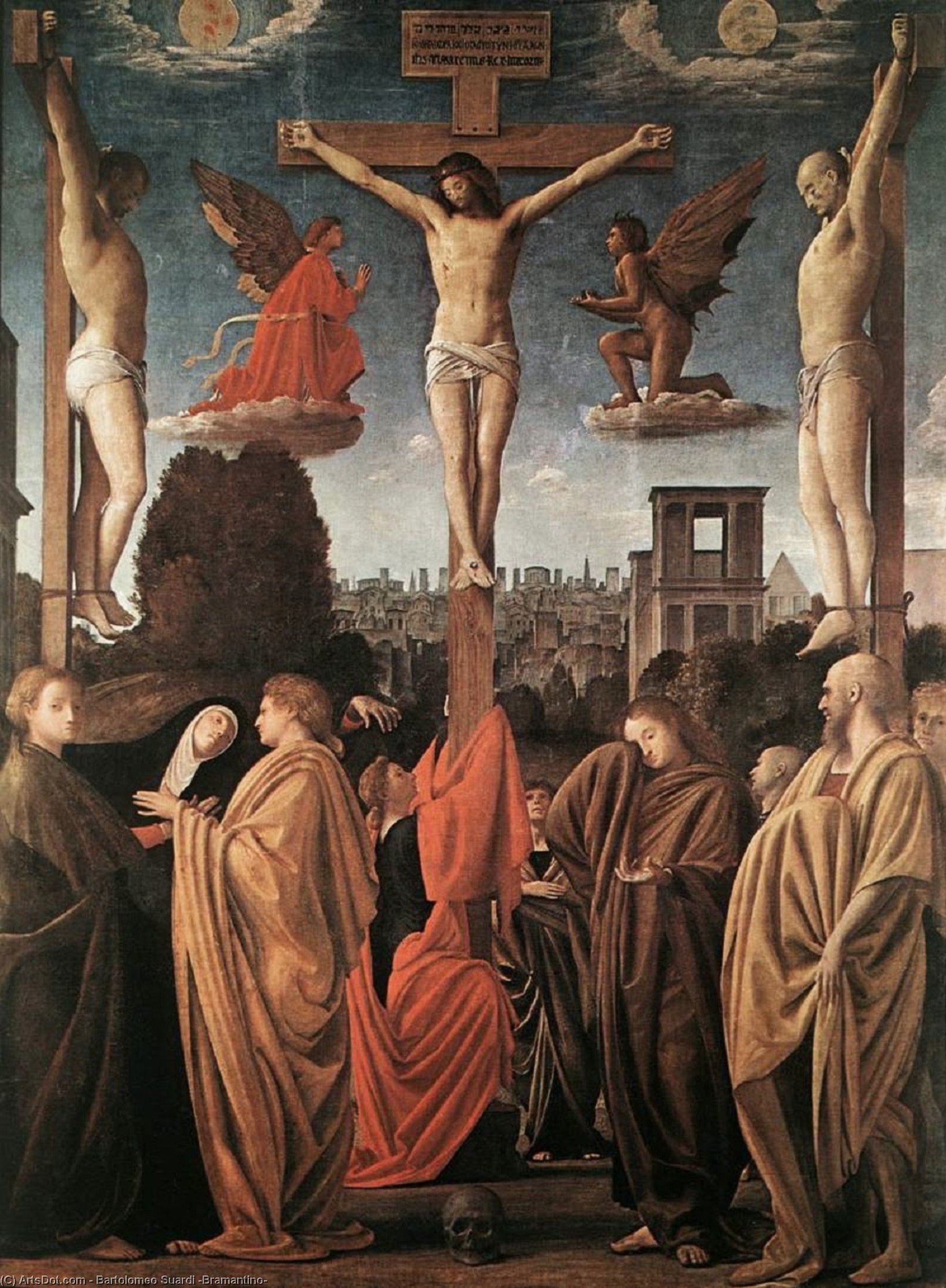
In the hallowed halls of the Pinacoteca di Brera in Milan, there exists a window into the profound spiritual intensity of the High Renaissance: Bartolomeo Suardi’s Crucifixion. Painted in 1515, this monumental oil masterpiece transcends mere religious iconography to become a visceral experience of human suffering and divine grace. As one gazes upon the vast 372 x 270 cm canvas, the viewer is immediately drawn into a world where the boundaries between the earthly and the celestial blur. The central figure of Christ, suspended between heaven and earth, serves as the emotional anchor for a composition that is as much about the weight of mortality as it is about the promise of redemption.
The painting’s atmosphere is one of solemnity and quiet grandeur. Bramantino, a master of serene classicism, employs a sophisticated use of light and shadow to sculpt the figures with an almost architectural precision. The soft, diffused lighting casts gentle shadows across the faces of the mourners, highlighting their grief while maintaining a sense of tranquil dignity. This technique creates a remarkable three-dimensionality, making the central tragedy feel present and tangible. Above the cross, the appearance of cherubs holding the "INRI" banner introduces a celestial lightness that balances the heavy, somber tones of the landscape below, suggesting that even in the depths of death, there is an unfolding divine plan.
The Language of Symbolism and Renaissance Mastery
Every element within this composition has been meticulously placed to weave a complex narrative of faith. The background, featuring a detailed cityscape under a brooding, cloudy sky, provides a sense of scale and historical grounding, reminding the observer that this cosmic event is rooted in human history. At the base of the cross, the inclusion of a skull serves as a poignant memento mori—a stark reminder of the inevability of death—yet it sits in dialogue with the surrounding figures whose expressions of devotion and sorrow offer a profound study in human emotion. The artist’s ability to render realistic textures, from the heavy folds of period clothing to the smooth, polished surfaces of the architectural elements, demonstrates a technical virtuosity that was unparalleled in the Milanese school.
For the discerning collector or interior designer, this work offers more than just aesthetic beauty; it provides a focal point of immense intellectual and emotional depth. The cool palette of muted browns, deep blues, and subtle reds allows the painting to integrate seamlessly into sophisticated environments, whether in a classical study or a contemporary gallery setting. A high-quality reproduction of this masterpiece allows one to bring the contemplative spirit of the Italian Renaissance into a modern home, serving as a constant source of inspiration and a testament to the enduring power of sacred art. To own such a piece is to possess a fragment of history, a silent yet powerful storyteller that continues to captivate the soul centuries after its creation.