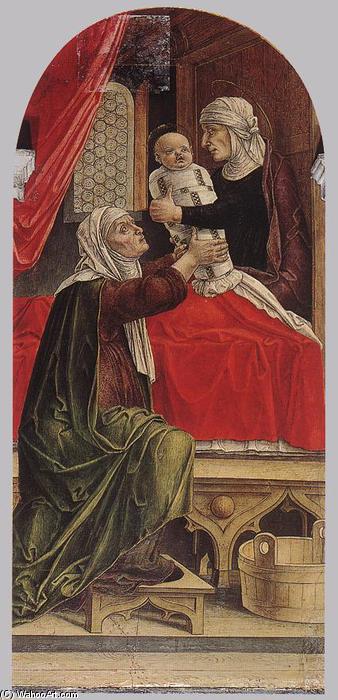
The
Bartolomeo Vivarini painting,
The Birth of Mary, is a stunning example of late Gothic art. Created in 1473, this tempera on wood panel piece measures 104 x 50 cm and is housed at the
Santa Maria Formosa museum in Venice, Italy. This artwork showcases Vivarini's skill in capturing intimate moments from biblical narratives.
Composition and Style
The painting depicts a serene scene of the Virgin Mary's birth, with Saint Anne, her mother, lying on a bed, surrounded by attendants and a figure holding the newborn Mary. The composition is characterized by a sense of harmony and balance, with the use of earth tones and gold accents adding to the overall richness of the piece. Vivarini's attention to detail and mastery of tempera technique are evident in the intricate folds of the clothing and the subtle expressions on the figures' faces.
Key elements of the painting include:
- The central figure of Saint Anne, who is the focal point of the composition
- The use of symbolism, such as the red cloth draped over the bed, which represents royalty and divine birth
- The serene expressions on the figures' faces, which convey a sense of reverence and awe
Artistic Significance
The
Birth of Mary is a significant work in Vivarini's oeuvre, demonstrating his ability to create emotionally charged and visually stunning paintings. This piece is also notable for its representation of a pivotal moment in Christian theology, highlighting the importance of the Virgin Mary's birth. For more information on
Bartolomeo Vivarini and his works, visit
Bartolomeo Vivarini: The Birth of Mary. To explore more artworks from the
Santa Maria Formosa museum, see
The Museum Santa Maria Formosa (Venice, Italy).
The
Conversano Polyptych, another notable work by Vivarini, can be found at the
Gallerie dell'Accademia in Venice. For more information on this piece, visit
Conversano Polyptych.