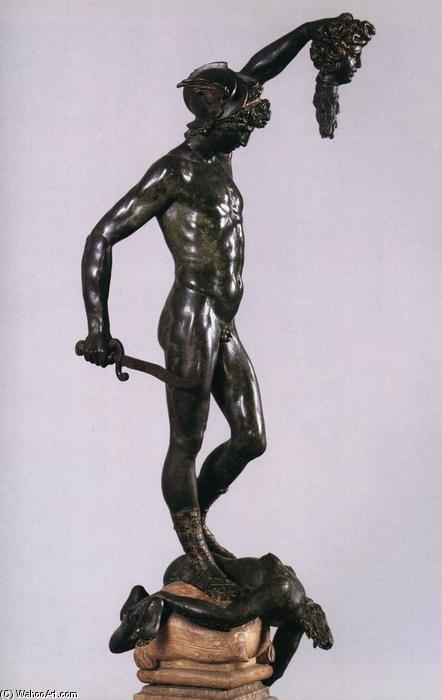
Benvenuto Cellini’s “Perseus with the Head of Medusa”: A Masterpiece of Mannerist Drama
Benvenuto Cellini's bronze sculpture of Perseus with the Head of Medusa, completed around 1545-1554 for Duke Cosimo I de’ Medici in Florence, is far more than a mere depiction of a mythological hero. It’s a profound statement on skill, ambition, and the very nature of artistic creation—a testament to Cellini's extraordinary talent and his audacious embrace of the Mannerist style. Standing nearly four feet tall, this imposing figure commands attention not just for its scale but for the sheer dynamism and emotional intensity it conveys. The sculpture isn’t simply a narrative illustration; it’s an embodiment of triumph over terror, a celebration of human ingenuity, and a subtle commentary on the artist's own journey to mastery.
The story behind the piece is intrinsically linked to Cellini’s tumultuous life. He had spent years working in the service of King Francis I of France, honing his skills in the opulent courts of Paris. Returning to Florence, he sought patronage from Duke Cosimo, a powerful and discerning collector who recognized Cellini's genius. The commission for “Perseus” was a deliberate challenge—a chance for Cellini to demonstrate not only his technical prowess but also his ability to infuse a classical narrative with deeply personal expression. The sculpture’s creation coincided with a period of intense political intrigue in Florence, and the work itself can be interpreted as a metaphor for Cellini's own struggles against adversity and his relentless pursuit of artistic recognition.
A Study in Mannerist Drama: Form and Emotion
Cellini’s “Perseus” is a quintessential example of Mannerism—a style characterized by elongated forms, exaggerated poses, dramatic lighting, and an intense focus on emotional expression. Unlike the idealized beauty favored during the High Renaissance, Cellini deliberately departs from classical proportions, creating a figure that is both powerfully muscular and subtly unsettling. Perseus’s stance is not one of heroic repose; he's caught in a moment of decisive action, his body coiled with tension as he raises the severed Medusa’s head aloft. The sculpture isn’t about capturing a static image but rather conveying the *feeling* of victory—the raw energy and almost violent exertion required to overcome such a formidable foe.
The artist's masterful use of bronze allows for incredible detail, from the intricate folds of Perseus’s armor to the glistening sheen of his helmet. The texture is remarkably realistic, lending weight and physicality to the figure. Notice particularly the expressive details on Medusa’s face—her eyes wide with terror, her mouth frozen in a silent scream. Cellini doesn't shy away from depicting the horror of the scene; he forces the viewer to confront the monstrous nature of his adversary. The dramatic lighting, achieved through careful manipulation of the bronze surface, further enhances the sculpture’s emotional impact, casting deep shadows that accentuate the figure’s musculature and heighten the sense of drama.
Symbolism and Interpretation: Beyond Myth
While rooted in Greek mythology, “Perseus” is rich with symbolic meaning. The severed head of Medusa represents not just a vanquished monster but also the triumph over fear and darkness. The winged helmet, bestowed upon Perseus by Athena, symbolizes divine guidance and protection—a reminder that even the most daunting challenges can be overcome with wisdom and courage. The act of holding the head aloft is particularly significant; it’s a gesture of both victory and vulnerability—a recognition that even the greatest hero must confront the consequences of his actions.
Furthermore, the sculpture can be interpreted as an allegory for Cellini's own artistic journey. He was known for his self-aggrandizing autobiography, in which he frequently emphasized his own exceptional talent and skill. “Perseus” is a visual manifestation of this ego—a declaration of mastery achieved through relentless dedication and unwavering ambition. The sculpture’s placement within the Loggia dei Lanzi in Florence served as a deliberate statement of pride, showcasing Cellini's work to the public and asserting his position among the city's leading artists.
A Legacy of Dramatic Power
Benvenuto Cellini’s “Perseus with the Head of Medusa” remains one of the most compelling and emotionally resonant sculptures of the Renaissance. Its dramatic composition, masterful technique, and profound symbolism continue to captivate viewers centuries after its creation. Reproductions capture a fraction of the original's power, but the sculpture’s ability to evoke a visceral response—a sense of awe, terror, and ultimately, admiration—is unparalleled. It stands as a testament to Cellini’s genius and a powerful reminder of the enduring allure of classical mythology.