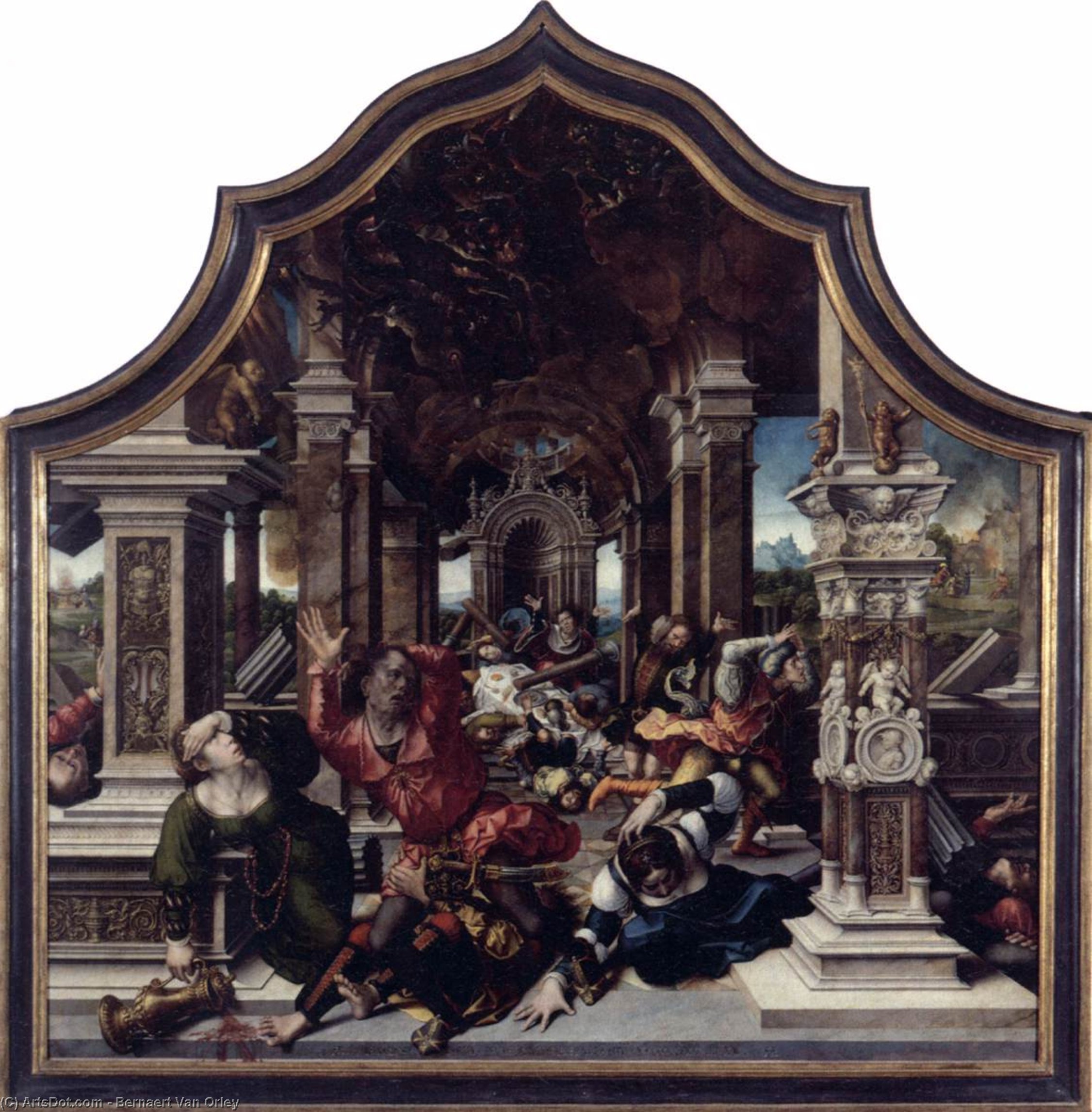
Triptych of Virtue of Patience – A Masterpiece of Northern Renaissance Symbolism
Bernard van Orley’s “Triptych of Virtue of Patience,” completed in 1521, stands as a testament to the artistic fervor of the High Renaissance and its embrace of classical ideals within the context of Northern European sensibilities. Commissioned by Margaret of Austria, regent of the Low Countries, this monumental artwork exemplifies the meticulous craftsmanship characteristic of Orley’s oeuvre and offers profound insights into humanist thought during a pivotal period in European history.
Subject Matter and Narrative
The triptych delves into two biblical narratives – Job’s unwavering faith amidst suffering and Lazarus’ parable – serving as allegorical representations of the virtues of patience and humility. The central panel depicts Job kneeling before God, symbolizing acceptance of divine providence despite adversity. Surrounding him are figures embodying compassion and charity, highlighting the importance of empathy and selfless devotion.
Style and Technique: A Fusion of Tradition
Orley’s style blends Flemish artistic conventions with influences from Italian Renaissance art, resulting in a richly ornamented visual language. Executed on oak wood using oil paint, the artwork showcases intricate detailing achieved through stucco modeling – a technique pioneered by Giovanni da Udine – demonstrating Orley's mastery of sculptural illusionism. The artist skillfully employs foreshortening and perspective to create depth and dynamism within the composition.
Historical Context: Renaissance Humanism in Flanders
“Triptych of Virtue of Patience” emerged during a transformative era marked by the rediscovery of classical antiquity and the burgeoning humanist movement. Margaret of Austria’s patronage reflects the broader cultural landscape of the time, where intellectual curiosity and artistic innovation flourished alongside religious piety. The triptych embodies the Renaissance preoccupation with moral virtue and its aspiration to elevate human experience through contemplation of divine grace.
Symbolism: Layers of Meaning
The artwork is replete with symbolic imagery – the red clothing worn by Job and his companions signifies courage and righteousness; the clock on the wall underscores the passage of time and the inevitability of mortality. The meticulous rendering of architectural elements, such as the ornate piers supporting the central panel’s pavilion, reflects the revival of classical architectural forms championed by artists like Andrea Palladio.
Emotional Impact: A Reflection of Spiritual Resilience
"Triptych of Virtue of Patience" transcends mere visual representation; it communicates a powerful message about resilience and faith in the face of hardship. The artist’s deliberate use of chiaroscuro – dramatic contrasts between light and shadow – enhances the emotional intensity of the scene, inviting viewers to contemplate the profound significance of enduring suffering with unwavering devotion.