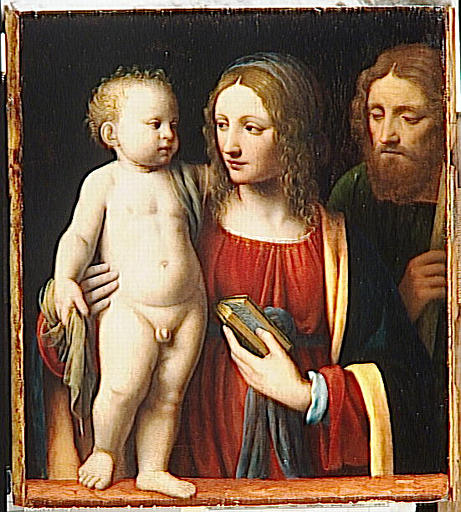
Experience Bernardino Luini's 'La Sainte Famille,' a serene Renaissance masterpiece depicting the Holy Family with exquisite detail and warm colors. A timeless work of art.
Bernardino Luini (c. 1480-1532): North Italian Renaissance painter deeply influenced by Leonardo da Vinci. Discover his graceful 'Luinesque' figures, delicate sfumato technique & stunning frescoes!
Explore the Louvre Museum in Paris! Home to iconic masterpieces like the Mona Lisa & Venus de Milo, journey through art history from ancient Egypt to Renaissance icons. Plan your visit today!
La Sainte Famille: A Window into Renaissance Devotion
Bernardino Luini’s “La Sainte Famille,” a masterpiece of Lombard Renaissance art, isn't merely a depiction of the Holy Family; it’s an intimate tableau brimming with serene grace and profound symbolic weight. Painted around 1510-1515 in Milan, during the artist’s prolific period working under Leonardo da Vinci’s influence, this oil on panel offers a rare glimpse into the devotional practices and artistic sensibilities of the era. The painting immediately draws the viewer in with its remarkably humanistic portrayal of Christ, Mary, and Joseph – figures rendered not as divine icons but as a family bound by love and tenderness. Luini masterfully captures a moment of quiet intimacy, suggesting a private prayer or reflection within the heart of their sacred life. The composition, rooted in classical pyramidal structure, provides stability while simultaneously directing the eye towards the central figure of the Christ Child, radiating an almost palpable sense of innocence and divine presence.
A Symphony of Color and Texture
Luini’s technical prowess is immediately evident in his masterful manipulation of color and texture. The palette is dominated by warm, earthy tones – rich browns, deep reds, and subtle ochres – creating a feeling of warmth and domesticity. Mary's vibrant red robe, adorned with delicate gold embroidery, draws attention to her role as the Virgin Mother, while Joseph’s more subdued attire speaks to his paternal strength and quiet dignity. The Christ Child is rendered in pale, luminous tones, almost ethereally beautiful, emphasizing his vulnerability and divine nature. Crucially, Luini employs a technique known as *sfumato*, subtly blurring lines and edges – a hallmark of Leonardo's influence – to create an atmosphere of hazy intimacy and emotional depth. He achieves this through meticulous layering of thin glazes of oil paint, building up the forms gradually to achieve remarkable luminosity and tactile realism. The textures are equally compelling; you can almost feel the softness of Mary’s hair, the weight of Joseph’s garment, and the smooth skin of the infant Christ.
Symbolism Woven into Every Detail
Beyond its aesthetic beauty, “La Sainte Famille” is rich in symbolic meaning. Mary's gesture – holding a book open before her – is a deliberate reference to her role as the vessel through which God became incarnate, echoing the biblical account of Mary receiving the annunciation. Joseph’s posture, looking towards the family with protective concern, symbolizes his paternal role and guardianship. The Christ Child himself, positioned at the apex of the pyramidal composition, embodies divine grace and innocence. The setting, though deliberately simple and undefined – a suggestion of a domestic interior rather than a specific location – reinforces the painting's focus on the intimate relationship between family members and their devotion to God. Even the inclusion of the infant John the Baptist, held by Mary’s arm, subtly foreshadows Christ’s future role as the forerunner.
Historical Context and Artistic Legacy
Luini’s work emerged during a period of immense artistic innovation in Milan, fueled by the patronage of powerful families like the Sforza and the influence of Leonardo da Vinci. His style, often described as “Luinesque,” is characterized by its elongated figures, gentle expressions, and remarkable attention to detail – qualities that distinguish his art from the more rigid conventions of earlier Renaissance painting. He was a key figure in the decoration of the Oratory of San Bernardino, a significant commission that showcased his skills and cemented his reputation. “La Sainte Famille” is now part of the collection at the Louvre Museum, a testament to its enduring artistic value and historical significance. It stands as a poignant reminder of the power of art to capture not only visual beauty but also profound spiritual truths.
A Timeless Masterpiece for Reflection and Inspiration
"La Sainte Famille" transcends mere representation; it’s an invitation to contemplate themes of faith, family, and divine grace. Its quiet intimacy, masterful technique, and rich symbolism continue to resonate with viewers centuries after its creation. Whether admired as a work of art or studied as a window into the Renaissance spirit, this painting remains a powerful testament to Bernardino Luini's genius and a timeless treasure for those who appreciate the beauty and depth of human expression.