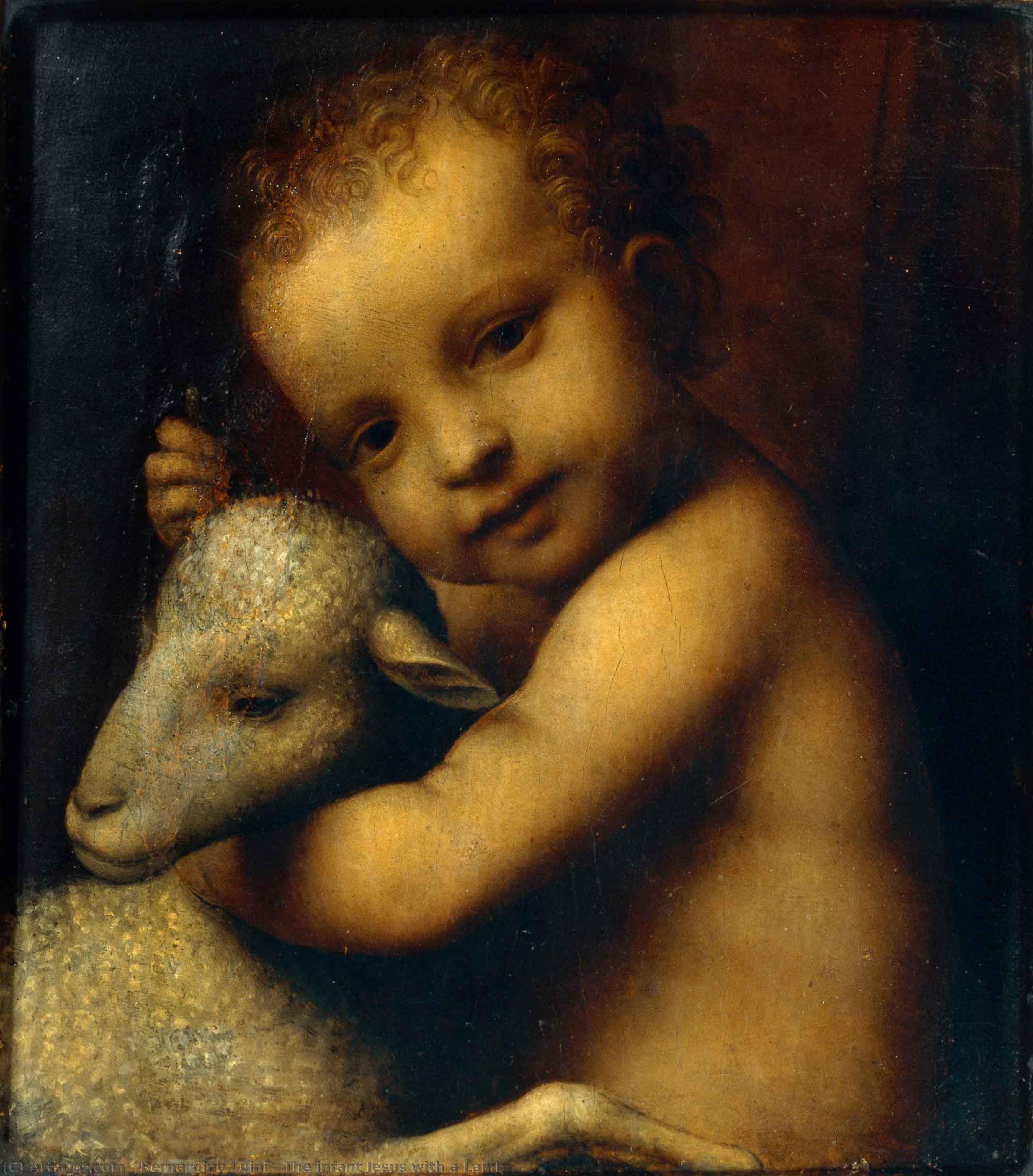
A Tender Vision: Bernardino Luini’s “The Infant Jesus with a Lamb”
Bernardino Luini's "The Infant Jesus with a Lamb," painted around 1525, isn’t merely a depiction of a biblical scene; it’s an immersion into the serene heart of the High Renaissance. This small panel, housed within the Biblioteca Ambrosiana in Milan, radiates a quiet power—a testament to Luini's extraordinary ability to imbue even the simplest subject matter with profound emotional resonance and technical mastery. It’s a work that speaks not just to religious devotion but also to the universal themes of innocence, protection, and divine grace.
Luini, a student deeply influenced by Leonardo da Vinci, possessed a unique gift for capturing fleeting expressions and subtle gestures. Unlike the often-rigid formality of his contemporaries, Luini’s figures possess an almost palpable humanity. Here, the infant Jesus is rendered with remarkable tenderness—his face a study in peaceful contemplation, his tiny hands gently cradling the lamb. The artist avoids overt theatricality, instead favoring a directness and intimacy that draws the viewer into this sacred moment. This deliberate restraint elevates the painting beyond simple illustration, transforming it into a deeply affecting meditation on faith.
The Language of Symbolism
Every element within the composition is laden with symbolic weight. The lamb itself—a recurring motif in Christian iconography—represents Christ as the “Lamb of God,” sacrificed for humanity’s salvation. Its presence underscores Jesus' role as a protector and shepherd, guiding his flock towards eternal life. The crown adorning the infant’s head isn’t merely decorative; it signifies his divine status, hinting at the future glory that awaits him. The background, deliberately muted and undefined, serves to focus entirely on the central figures, creating an atmosphere of contemplative stillness.
Furthermore, Luini's masterful use of *sfumato*, a technique perfected by Leonardo, subtly blurs the edges of forms and creates a hazy, atmospheric effect. This softens the image, lending it a dreamlike quality—as if we’ve stumbled upon a secret, sacred space. The delicate modeling of the figures, combined with the subtle gradations of light and shadow, imbue the scene with an almost tangible sense of warmth and serenity.
A Masterclass in Technique
Luini's technical skill is undeniable. He employed tempera on panel, a medium that allowed for meticulous detail and vibrant colors—though muted here to enhance the painting’s contemplative mood. Notice the incredibly fine rendering of the lamb’s fleece, the delicate folds of the baby’s garments, and the subtle play of light across Jesus' face. These details aren’t merely decorative; they demonstrate Luini’s deep understanding of anatomy and his ability to translate three-dimensional forms onto a two-dimensional surface.
The painting’s composition is remarkably balanced—a testament to Luini’s careful planning. The figures are arranged in a pyramidal structure, creating a sense of stability and harmony. This compositional clarity further enhances the painting's impact, allowing the viewer’s eye to effortlessly navigate the scene and fully appreciate its beauty and significance.
A Legacy of Grace
“The Infant Jesus with a Lamb” stands as a poignant reminder of the enduring power of faith and the profound beauty that can be found in even the simplest of scenes. It’s a work that transcends time, offering viewers a glimpse into the heart of Christian belief and inviting them to contemplate the timeless themes of innocence, protection, and divine love. Reproductions capture only a fraction of the original's magic, but offer an accessible way to bring this Renaissance treasure into your home or studio.