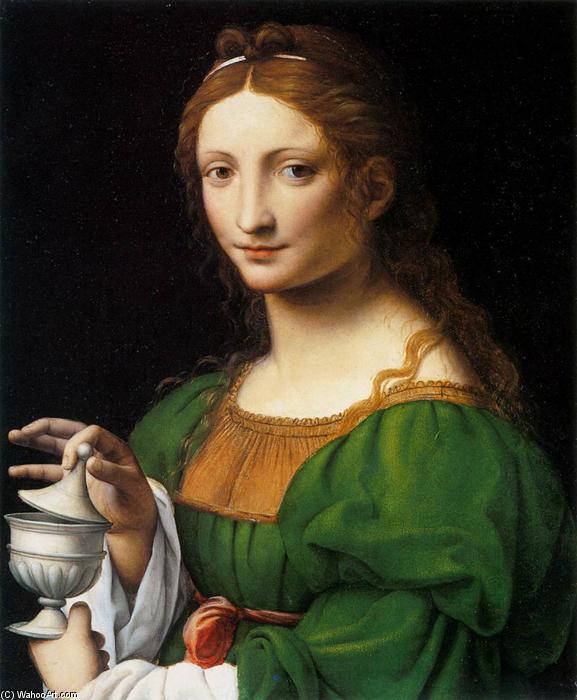
The Magdalen by Bernardino Luini
Bernardino Luini, a name resonating softly within the annals of Italian Renaissance painting, emerged from the picturesque region surrounding Lake Maggiore around 1480. Born in Runo, a small *frazione* near Dumenza, his early life remains shrouded in some mystery, yet it’s clear that destiny propelled him towards Milan, the vibrant artistic heartland of northern Italy. By 1500, he had relocated with his father, poised to absorb the burgeoning creative energy of the city. While accounts vary regarding his initial training—some credit Giovan Stefano Scotto, others Ambrogio Bergognone—a more profound influence was undoubtedly on the horizon: Leonardo da Vinci. The precise nature of their relationship remains debated, but it’s widely believed Luini worked directly under the master, a formative experience that would indelibly shape his artistic trajectory. This apprenticeship wasn't merely technical; it was an immersion into a world steeped in observation and anatomical precision—a cornerstone of Leonardo’s revolutionary approach to portraying human form.
- Subject Matter: The painting depicts Mary Magdalene, portrayed with serene dignity amidst the aftermath of Christ’s crucifixion. Luini meticulously captures her sorrowful gaze and posture, conveying a profound sense of grief and contemplation.
- Style: Luini's style is characterized by its graceful figures—known as “Luinesque”—characterized by elongated eyes and delicately rendered drapery. This aesthetic aligns seamlessly with the prevailing humanist ideals of the Renaissance, prioritizing human emotion and beauty above rigid formalism.
- Technique: Employing oil paint on panel, Luini skillfully utilized *sfumato*, Leonardo’s technique of blurring contours to create atmospheric depth and soften edges. This masterful blending of colors contributes significantly to the painting's ethereal quality and enhances its expressive power.
Historical Context
Painted circa 1520, “The Magdalen” emerged during a period of intense artistic innovation in Milan—a city under the patronage of Federico Borromeo, Bishop of Pavia and ardent supporter of humanist scholarship. Luini’s work reflects the broader cultural currents of the time, mirroring the Renaissance fascination with biblical narratives and exploring themes of faith, compassion, and spiritual redemption. The painting stands as a testament to Luini's ability to distill complex emotions into visually arresting compositions—a hallmark of his artistic legacy.
Symbolism
The composition itself is laden with symbolic significance. Mary Magdalene’s posture embodies humility and penitence, reflecting her role as a repentant sinner forgiven by Christ. The muted palette—dominated by greens and browns—evokes the desolate landscape surrounding Jerusalem at the crucifixion, underscoring the painting's solemn atmosphere. Furthermore, Luini’s meticulous attention to detail—particularly in rendering Magdalene’s facial expression—demonstrates his commitment to conveying psychological realism—a departure from earlier artistic conventions.
Emotional Impact
“The Magdalen” transcends mere visual representation; it evokes a powerful emotional response in the viewer. The painting's serene beauty juxtaposed with its poignant depiction of sorrow creates a compelling tension that invites contemplation and introspection. Luini’s masterful execution captures the essence of human suffering—transforming grief into an enduring symbol of compassion and spiritual grace. It remains a timeless masterpiece, resonating across centuries with its profound artistic merit and emotional depth.