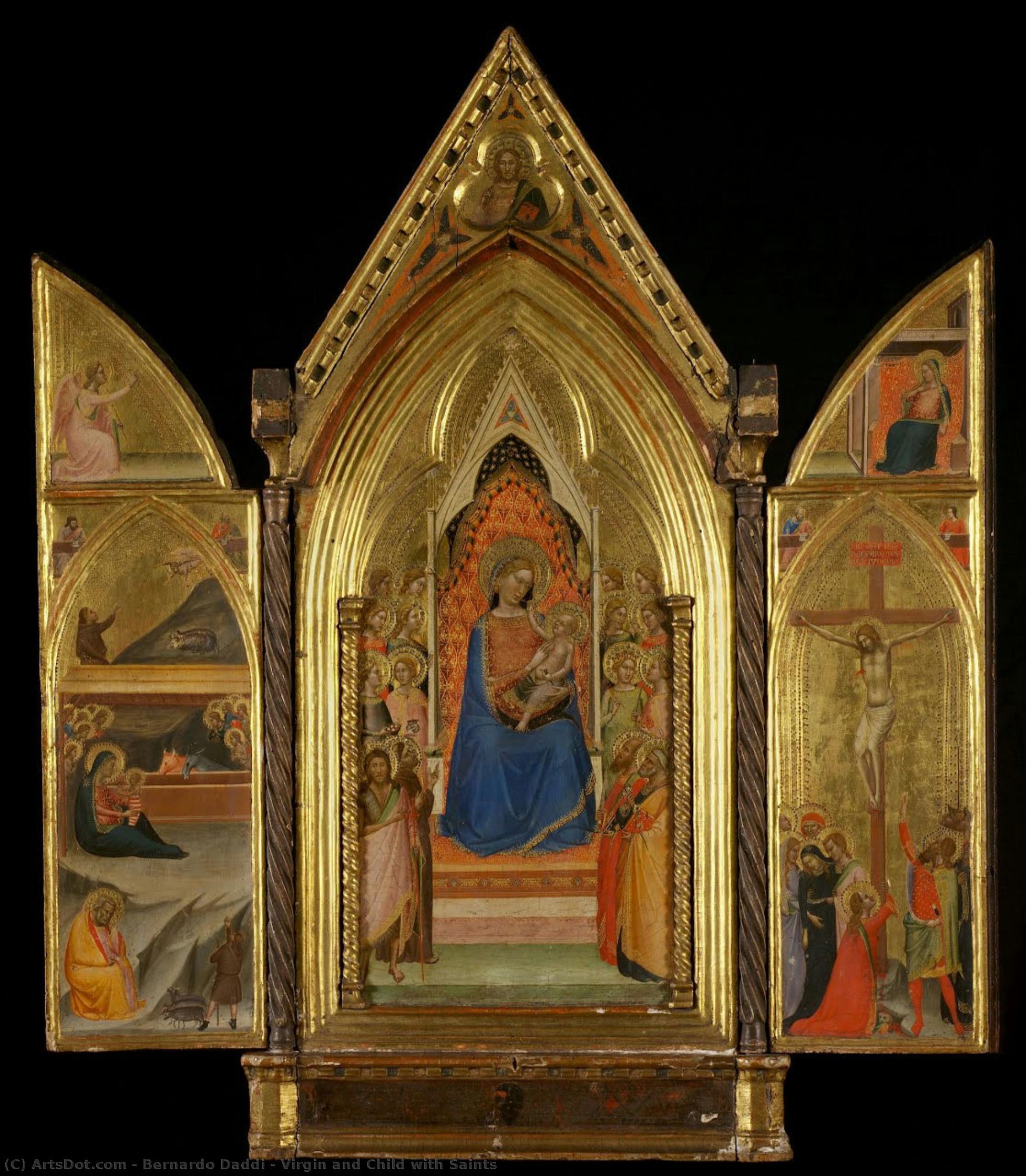
Admire Bernardo Daddi's masterpiece – 'Virgin and Child Enthroned with Saints,' a stunning Florentine triptych showcasing exquisite detail, gold leaf embellishments, and masterful realism during the Renaissance.
Bernardo Daddi (1290-1348) was a leading Florentine painter of the early Renaissance, bridging Gothic & new realism. Known for portable altarpieces, lyrical elegance, and influence from Giotto & Lorenzetti. Explore his works at ArtsDot!
Discover Impressionist & Post-Impressionist masterpieces at The Courtauld Gallery! Explore works by Van Gogh, Manet & more in a stunning London setting. A cultural sanctuary awaits.
Bernardo Daddi: Bridging Gothic and Renaissance in Florence
Bernardo Daddi’s contribution to Florentine art is remarkable not for dramatic innovation but for embodying the gradual shift from the solemn grandeur of Gothic tradition toward the humanist optimism characteristic of the burgeoning Italian Renaissance. He wasn't a revolutionary sculptor tearing down established dogma; rather, he was a craftsman whose meticulous attention to detail and masterful blending of stylistic elements solidified his position as one of Florence’s foremost painters during his lifetime—a figure who quietly ushered in an era of unprecedented artistic achievement.
Early Life and Artistic Apprenticeship
Daddi's precise birthdate remains elusive, though documentation suggests he emerged onto the Florentine art scene around 1290. His formative years were spent under the watchful eye of Giotto di Bondone, arguably the most influential artist of his time—a mentor who decisively championed a more naturalistic approach to painting, marking a pivotal departure from the stylized conventions prevalent in preceding generations. This apprenticeship instilled within Daddi a deep appreciation for observation and representation that would permeate his subsequent work, shaping him into a sculptor as well as painter.
The Triptych: A Synthesis of Styles
Daddi’s magnum opus—the “Virgin and Child Enthroned with Saints”—completed in 1338, exemplifies this harmonious fusion of Gothic and Renaissance ideals. Commissioned for private devotion, the triptych transcends mere decoration; it is a profound meditation on faith and divine grace. Measuring approximately 87 x 42 cm, the painting showcases Daddi’s unparalleled skill in capturing both spiritual solemnity and palpable human emotion. The central panel depicts Mary seated upon a throne adorned with gold leaf—a deliberate allusion to Byzantine iconography—surrounded by saints who gaze reverently upon the Virgin and Child Jesus.
Technique and Materials: A Celebration of Craftsmanship
Daddi’s technique is characterized by meticulous layering of tempera paint on wooden panels, utilizing thin sheets of pure gold to illuminate the figures and create an ethereal glow. This painstaking process demanded exceptional precision and patience—qualities that Daddi possessed in abundance. The artist skillfully employed a pyramidal composition, mirroring the architectural grandeur of Florentine churches, further enhancing the sense of stability and majesty conveyed by the artwork. Furthermore, Daddi’s use of vibrant pigments—particularly ultramarine blue imported from Egypt—demonstrates his commitment to achieving visual realism while maintaining stylistic elegance.
Symbolism and Emotional Resonance
The imagery within the triptych is laden with symbolic significance. The throne represents Mary's regal dignity and divine authority, reflecting her role as Queen of Heaven. The saints serve as intermediaries between God and humanity, embodying virtues such as compassion and piety. Most notably, the depiction of Jesus’s infancy—a motif frequently explored in Renaissance art—evokes feelings of tenderness and wonder—underscoring the transformative power of faith.
Conclusion: An Enduring Legacy
Bernardo Daddi's "Virgin and Child Enthroned with Saints" stands as a testament to his artistic genius—a masterpiece that embodies the spirit of its time while retaining an enduring emotional resonance for viewers today. His legacy extends beyond the confines of Florence; it represents a crucial step in the evolution of Western art, securing his place among the most influential sculptors and painters of the thirteenth century. It is a work that continues to inspire admiration for its exquisite craftsmanship and profound spiritual depth—a timeless reminder of the beauty and power of artistic expression.