Discover Bernardo Strozzi (1581-1644), a pivotal Italian Baroque painter & engraver. Known for rich colors, Venetian style, and works like 'Vision of St. Dominic'. Explore his legacy!
Explore Venetian art's evolution at the Gallerie dell’Accademia! Discover masterpieces by Bellini, Titian & Canaletto in Venice’s historic Scuola della Carità. A stunning journey through 500 years of artistic brilliance.
A Portrait of Dignified Resolve: Bernardo Strozzi’s Knight Giovanni Grimani
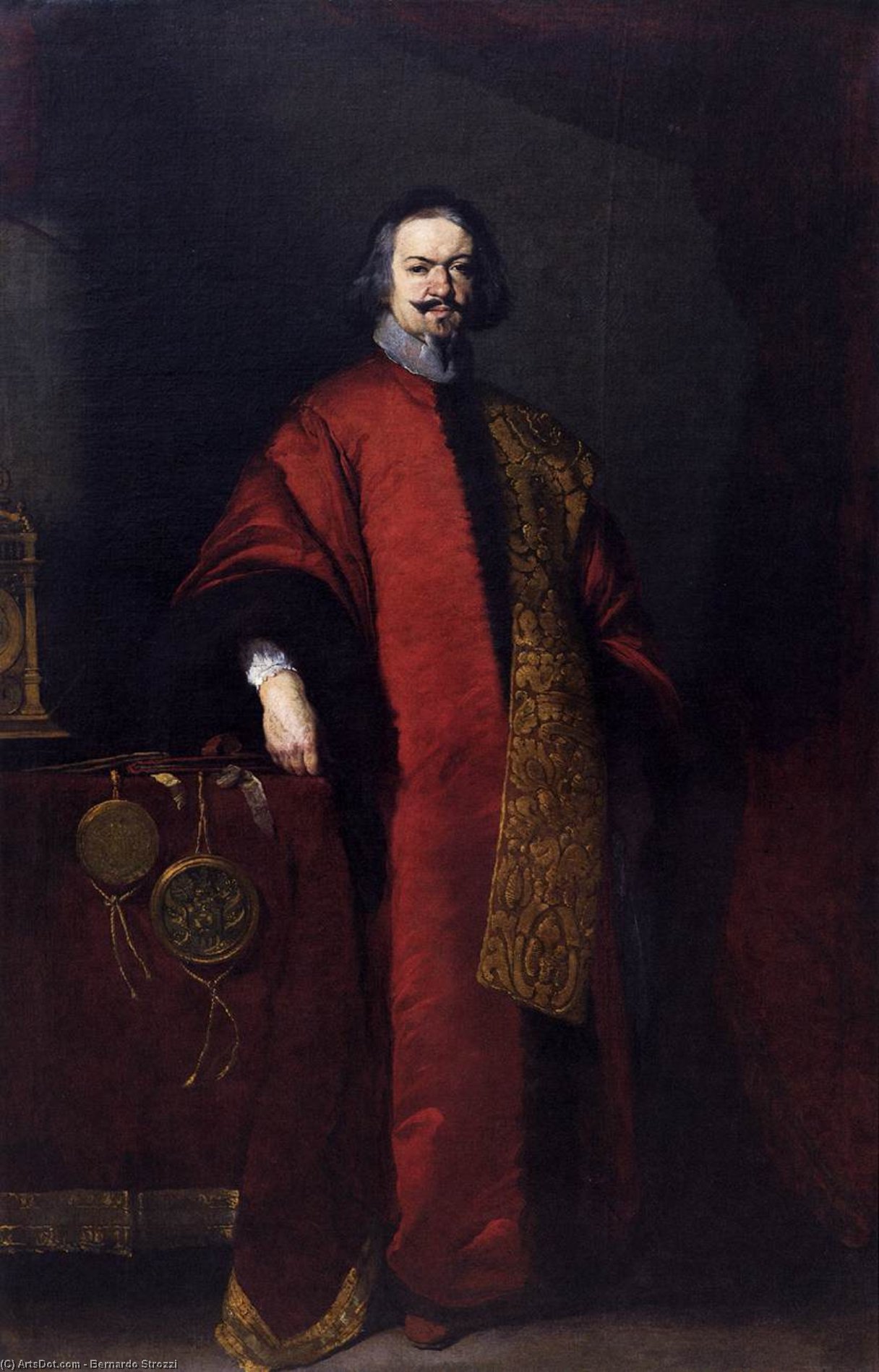
Bernardo Strozzi's “Portrait of the Knight Giovanni Grimani,” painted circa 1640, stands as a testament to the Venetian Baroque’s fascination with aristocratic grandeur and psychological depth. Executed in Tenebrism—a dramatic style characterized by stark contrasts between light and dark—the painting captures not merely an image of a noble gentleman but embodies a carefully crafted representation of power, honor, and contemplation.
- Subject Matter: The portrait depicts Giovanni Grimani, Doge (governor) of Venice during Strozzi’s formative years in the city. This prestigious commission underscores Strozzi's ambition to establish himself as a leading artist within the Venetian artistic milieu.
- Style & Technique: Strozzi employs Tenebrism with masterful precision, utilizing deep shadows that engulf most of the canvas while highlighting Grimani’s face and torso with pools of luminous light. This technique wasn't merely aesthetic; it served to heighten emotional impact and convey a sense of solemn seriousness.
- Composition: The figure is positioned centrally against a muted wall backdrop, creating a balanced yet dynamic composition. Grimani stands upright, conveying confidence and authority—a posture reinforced by the deliberate placement of his hands on a table bearing a clock or bell. These objects symbolize time and vigilance, reflecting Grimani’s role as leader and protector.
- Historical Context: Strozzi's work emerged during Venice’s golden age – a period marked by artistic innovation and political stability. The Doge Grimani’s patronage reflects the Venetian elite’s desire to commemorate their achievements and solidify their legacy through visual art.
Beyond its formal elements, “Portrait of the Knight Giovanni Grimani” resonates with profound symbolic meaning. The crimson robe—a color associated with royalty and nobility—emphasizes Grimani's status. Furthermore, the golden stole adorning his tunic symbolizes imperial dignity and spiritual devotion. As noted in scholarly research (Portrait of a Knight - STROZZI, Bernardo), “the confident pose, authoritative air, the toga with the golden stole of an imperial knight, and the honorific bulls in full view on the table exalt…”
Strozzi’s masterful use of chiaroscuro—the interplay between light and dark—creates a palpable atmosphere of contemplation. The subtle shading around Grimani's face invites viewers to engage with his inner thoughts, mirroring the solemn dignity conveyed by the entire portrait. It is a piece that speaks volumes about its subject – a man poised at the apex of power yet imbued with an awareness of mortality.
- Emotional Impact: The painting evokes feelings of respect and admiration for Grimani’s character—a figure embodying both noble bearing and spiritual contemplation. Strozzi's ability to capture this complex psychological portrait exemplifies the Venetian Baroque’s commitment to portraying human emotion with nuanced sensitivity.