El Greco’s ‘The Disrobing of Christ,’ completed in 1579, portrays Jesus being stripped by figures representing the instruments of torture—a poignant depiction of suffering and divine grace. Featuring luminous color palettes and masterful composition, it exemplifies Mannerist style and remains a cornerstone of Toledo Cathedral's artistic heritage.
Explore the portraits & historical paintings of Bernhard Strigel (1461-1528), a Swabian artist favored by Emperor Maximilian I. Known for luminous color & detailed likenesses.
Explore Berlin's history & art at the Staatliche Museen! Discover Nefertiti, ancient artifacts, masterpieces across 17 museums on Museum Island & beyond.
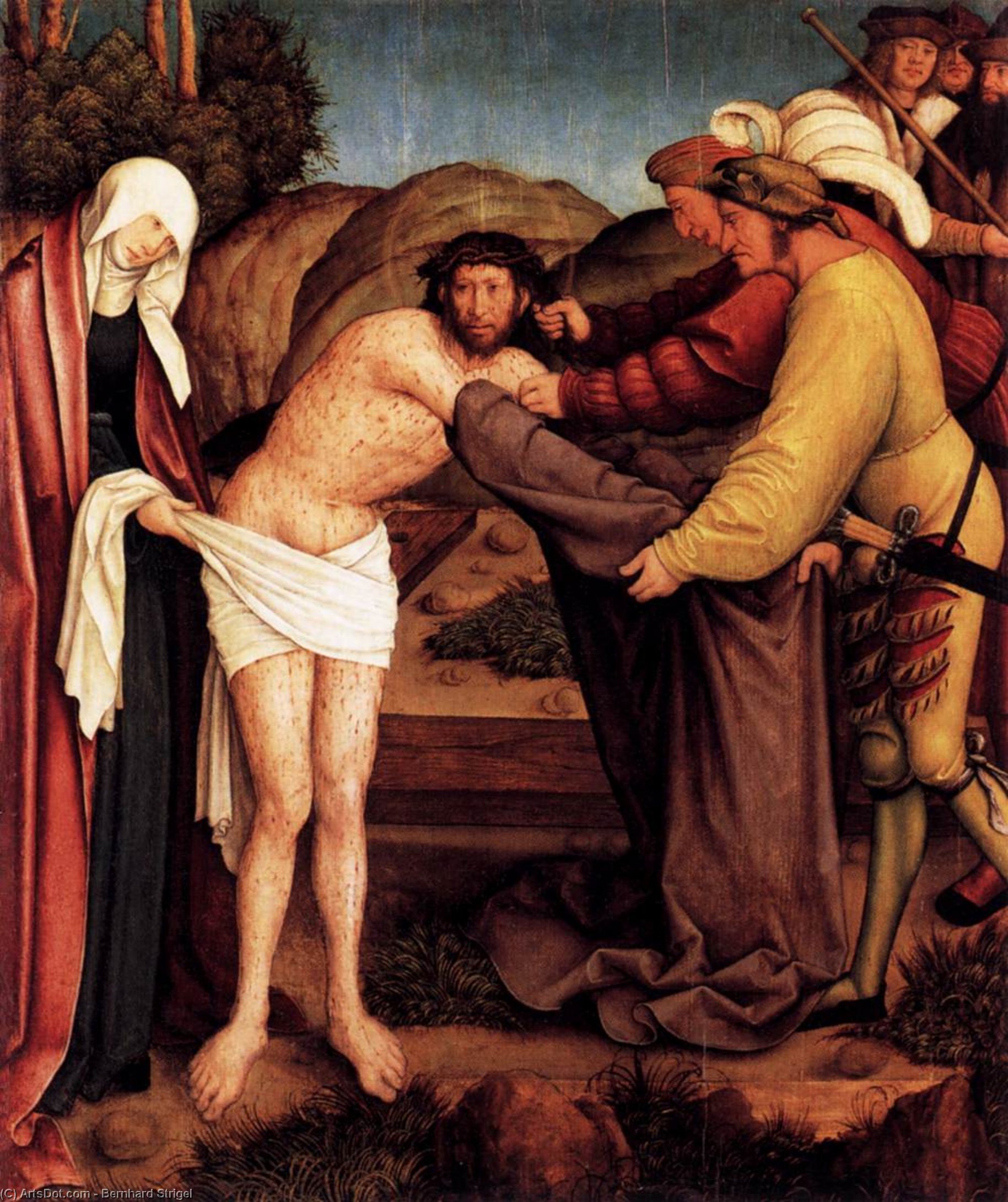
Disrobing of Christ
The painting “Disrobing of Christ,” created circa 1520 by Bernhard Strigel, stands as a cornerstone of the Swabian School’s artistic achievements during the Renaissance period in Bavaria—a testament to masterful luminosity and meticulous detail that continues to resonate with art historians today. More than just a depiction of biblical narrative, it embodies profound theological contemplation interwoven with innovative stylistic choices that cemented Strigel's place among Bavaria’s most celebrated artists under the patronage of Emperor Maximilian I.
Early Influences and Training
Strigel’s artistic genesis unfolded within the familial workshop established at Memmingen, where he diligently honed his skills alongside Zeitblom at Ulm—a formative period marked by exposure to Gothic traditions that would subsequently inform his burgeoning engagement with Renaissance ideals sweeping across Europe. This grounding in older styles is palpable in Strigel's approach to composition and perspective, subtly contrasting with the more formalized techniques emerging from Florence and Rome. The workshop’s environment fostered a disciplined aesthetic sensibility crucial for mastering the exacting demands of portraiture and historical painting—skills that would define Strigel’s prolific output throughout his career.
A Masterpiece of Luminosity and Detail
Strigel's distinctive style is characterized by an unparalleled ability to capture light and shadow, imbuing his canvases with a palpable sense of atmosphere and conveying emotional depth through nuanced coloration. Unlike many contemporaries who favored muted palettes, Strigel embraced vibrant hues—particularly reds and golds—to heighten the dramatic impact of his scenes. This masterful manipulation of color isn’t merely decorative; it serves as an integral component of his expressive vocabulary, mirroring the spiritual fervor prevalent during the Renaissance. The meticulous rendering of textures—from drapery folds to skin surfaces—further underscores Strigel's dedication to realism and elevates his paintings beyond mere representation into embodiments of artistic virtuosity.
Historical Context and Symbolism
“Disrobing of Christ” emerged from a period marked by intense religious fervor and intellectual curiosity—the High Renaissance in Bavaria coincided with the Emperor’s fervent devotion to Catholicism and fueled an ambitious program of artistic commissions aimed at glorifying Christendom. The painting's subject matter—the stripping of Christ’s garments prior to his crucifixion—holds profound symbolic significance, representing not only physical vulnerability but also spiritual purification and divine sacrifice. Strigel skillfully employs visual metaphors to convey these concepts, positioning Christ as a beacon of serenity amidst the turmoil surrounding him—a deliberate contrast intended to inspire contemplation on themes of faith and redemption. The inclusion of figures like Mary Magdalene and Nicodemus underscores the universality of human experience within the framework of Christian theology.
Emotional Impact and Legacy
The painting’s enduring appeal lies in its ability to evoke a visceral response from viewers—capturing the pathos of Christ's suffering while simultaneously conveying an aura of solemn grandeur. Strigel achieves this emotional resonance through masterful use of gesture and facial expression, animating his figures with palpable emotion. Furthermore, the composition itself—characterized by verticality and compactness—creates a sense of immediacy and draws the eye inward toward the central figure—a deliberate tactic designed to foster contemplation on spiritual matters. Bernhard Strigel’s “Disrobing of Christ” remains an exemplar of Renaissance artistic excellence—a testament to his unwavering commitment to both technical skill and expressive vision—and continues to inspire admiration for its beauty and intellectual depth.