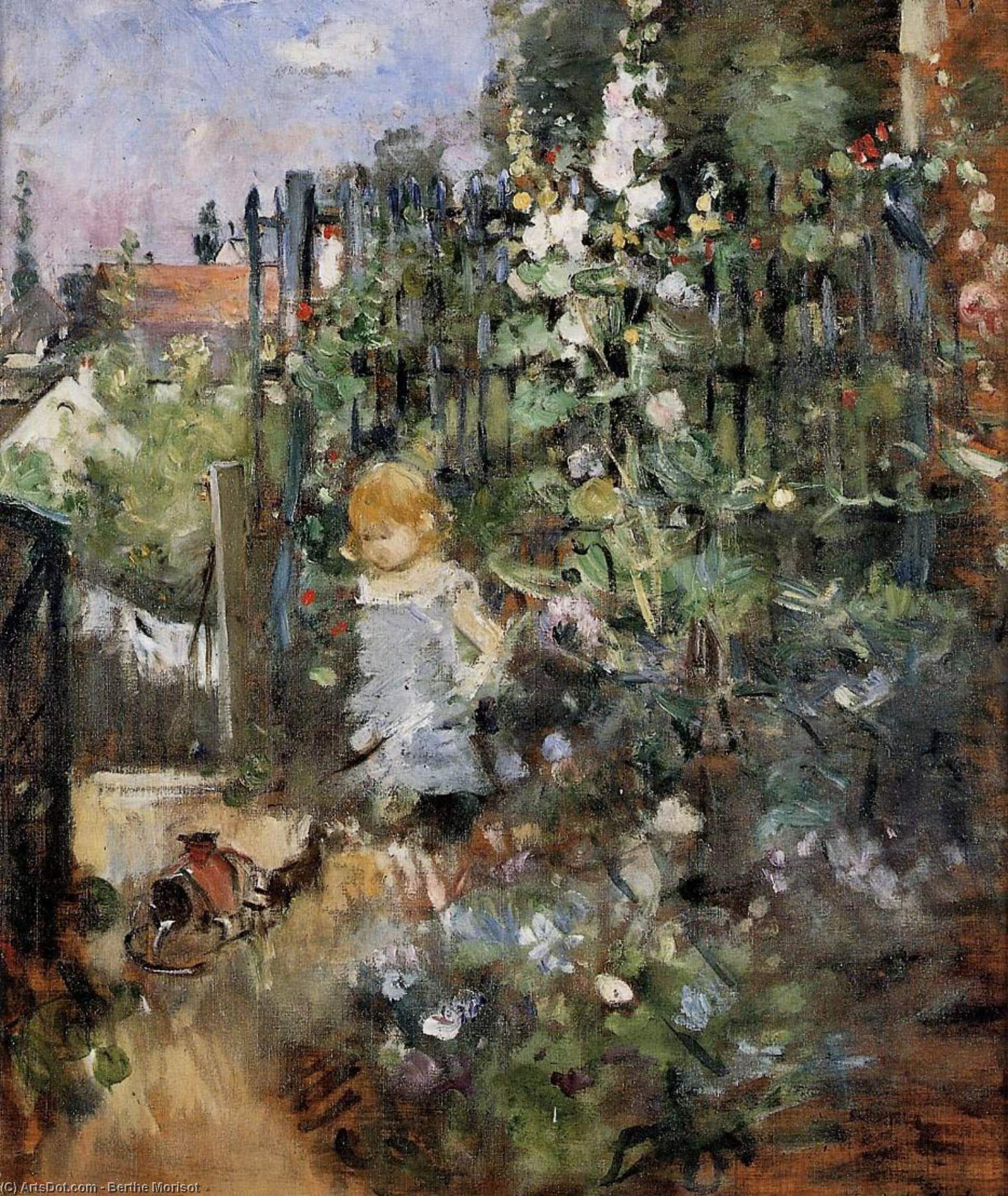
Child in the Rose Garden: A Glimpse of Impressionist Domesticity
Berthe Morisot's Child in the Rose Garden, painted in 1881, is a quintessential example of Impressionism, capturing a fleeting moment of childhood innocence within a tranquil garden setting. Housed at the Wallraf-Richartz-Museum in Cologne, Germany, this oil on canvas painting depicts a young girl standing near a fence adorned with flowers, seemingly lost in thought as she gazes beyond the frame. The presence of a dog in the foreground adds to the overall sense of serenity and domestic harmony that permeates the artwork.
The Essence of Impressionism: Morisot's Style
Berthe Morisot (1841-1895) was a celebrated French Impressionist painter renowned for her intimate depictions of domestic life, portraits, and landscapes. Her unique style is characterized by soft brushstrokes, luminous colors, and an emphasis on capturing the ephemeral qualities of light and atmosphere. Child in the Rose Garden exemplifies these characteristics beautifully. Morisot's ability to convey emotion through subtle gestures and a delicate color palette makes this painting particularly captivating.
- Light and Color: The use of pastel tones and diffused lighting creates a warm, intimate ambiance, drawing the viewer into the scene.
- Composition: The off-center placement of the girl and the strategic arrangement of flowers guide the eye through the composition, emphasizing the connection between the child and her surroundings.
- Mood: The painting evokes a sense of peace and tranquility, inviting contemplation and appreciation for the simple joys of childhood and nature.
Historical Context & Symbolism
Child in the Rose Garden was created during a period of significant artistic innovation. Impressionism emerged as a reaction against the rigid conventions of academic painting, seeking to capture the subjective experience of seeing rather than striving for photographic realism. Morisot, one of the few female artists associated with this movement ("les trois grandes dames" alongside Mary Cassatt and Eva Gonzalès), brought a unique perspective to Impressionist themes, focusing on domestic interiors and scenes of family life. The rose garden itself symbolizes innocence, beauty, and the fleeting nature of time – recurring motifs in Morisot's oeuvre.
Emotional Impact & Lasting Legacy
Child in the Rose Garden resonates with viewers due to its gentle portrayal of childhood and its evocative atmosphere. The girl’s contemplative gaze invites us to share her moment of quiet reflection, while the lush garden setting creates a sense of escape and tranquility. Morisot's masterful use of light and color transforms an ordinary scene into a timeless work of art that continues to inspire artists and art lovers alike. The painting stands as a testament to Morisot’s skill in capturing the essence of everyday life with sensitivity and grace, solidifying her place as a pivotal figure in Impressionist art.