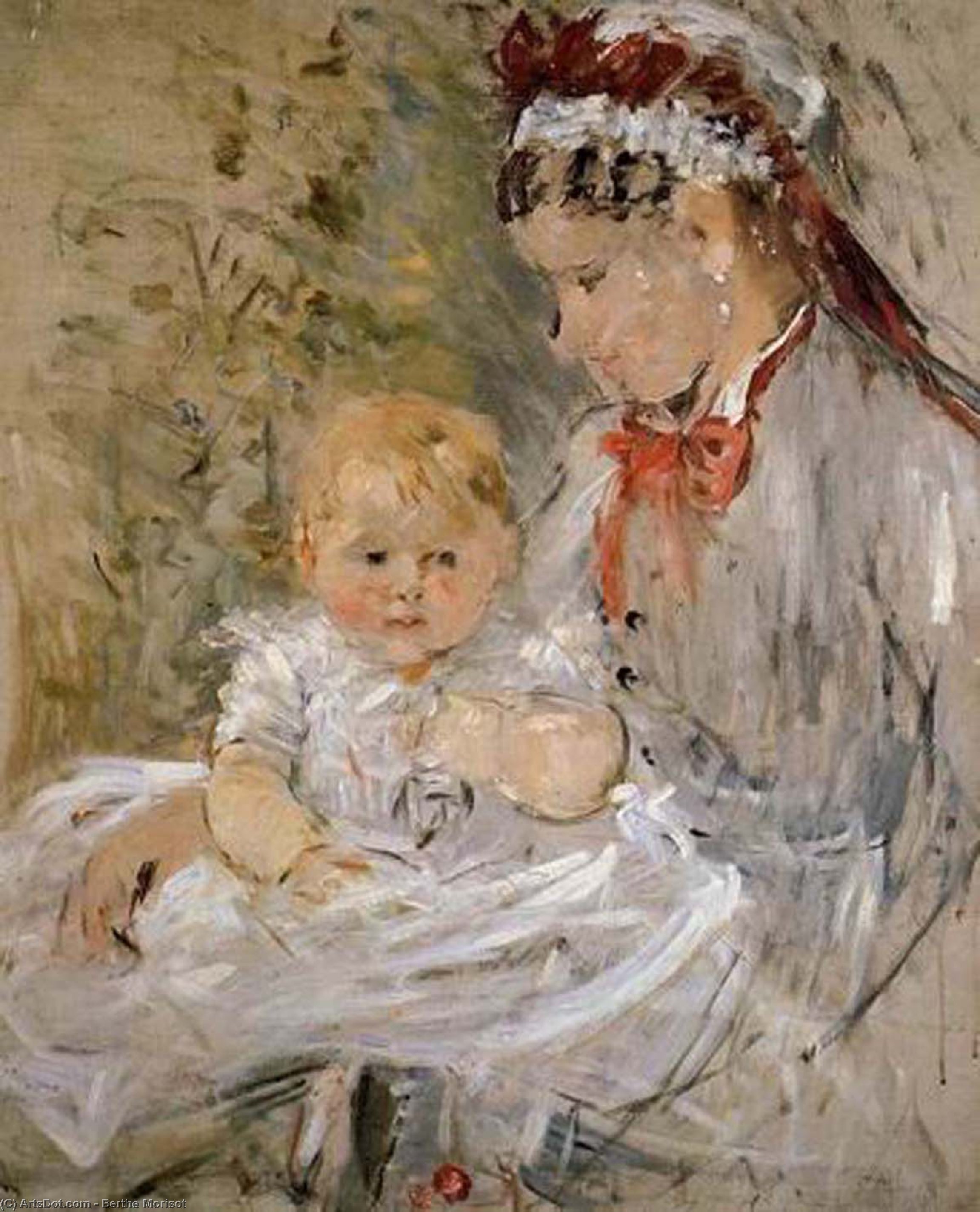
Julie with Her Nurse: A Glimpse of Intimate Domesticity
Berthe Morisot's Julie with Her Nurse, painted in 1880, is more than just a portrait; it’s a tender exploration of motherhood and domestic life within the burgeoning Impressionist movement. Measuring a delicate 29 x 24 cm, this oil on canvas masterpiece currently resides at the Ny Carlsberg Glyptotek in Copenhagen, Denmark, offering viewers a poignant glimpse into a private moment.
Composition, Style, and Technique
The composition of Julie with Her Nurse is characterized by its simplicity and elegance. Morisot masterfully arranges the figures – the mother, dressed in pristine white clothing, gently cradling her child—creating an immediate sense of warmth and protection. The child, also adorned in white, amplifies the overall serenity of the scene. While the main subjects dominate the foreground, subtle figures are visible in the background, adding depth and a hint of narrative without disrupting the intimate focus on the mother-child bond.
Morisot’s signature Impressionist style shines through her soft brushstrokes and delicate color palette. The use of light is particularly noteworthy; it bathes the scene in a gentle glow, highlighting the contours of the figures and creating a sense of tranquility. Her technique involves layering thin washes of paint, building up color and form gradually, resulting in a luminous quality that captures the fleeting effects of natural light.
Artistic Context: Impressionism and Morisot's Place
Berthe Morisot was a pivotal figure within the Impressionist movement. Unlike many of her male contemporaries who favored landscapes or grand historical scenes, Morisot focused on capturing intimate moments of domesticity and motherhood—subjects often overlooked by mainstream art at the time. Her work reflects her own experiences as a woman and an artist navigating a traditionally male-dominated world.
The late 1870s and early 1880s were a period of significant artistic experimentation, with Impressionists challenging academic conventions through their emphasis on capturing fleeting moments and the effects of light. Morisot’s Julie with Her Nurse exemplifies this spirit, offering a refreshing perspective on everyday life.
Symbolism and Emotional Impact
Beyond its aesthetic beauty, Julie with Her Nurse carries symbolic weight. The white clothing worn by both mother and child represents purity, innocence, and the idealized image of motherhood prevalent in Victorian society. The blurred background suggests a sense of privacy and seclusion, emphasizing the intimacy of the moment being depicted.
The painting evokes feelings of tenderness, serenity, and quiet contemplation. It’s a celebration of the simple joys of family life and a testament to Morisot's ability to capture the emotional depth of human connection with remarkable sensitivity. The loose brushwork and soft lighting contribute to an overall sense of warmth and tranquility, inviting viewers to share in this intimate moment.