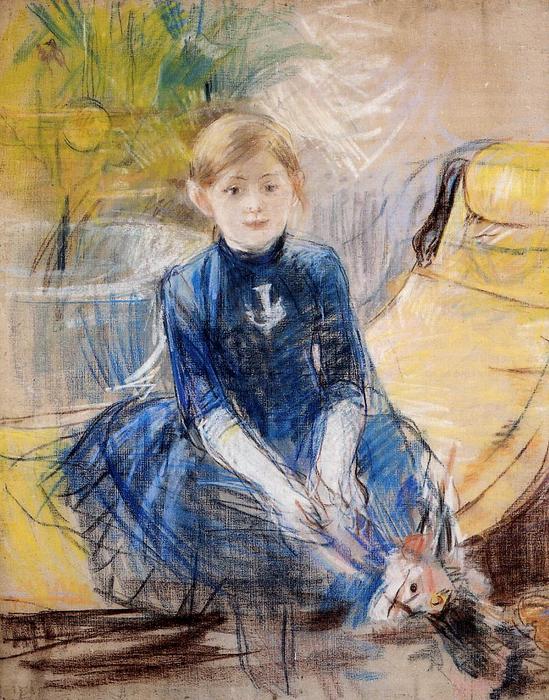
Discover "Little Girl in a Blue Dress" by Berthe Morisot! This Impressionist masterpiece captures a serene moment with light, color, and delicate detail. Explore the beauty of Belle Époque France.
Berthe Morisot: A pioneering Impressionist painter known for intimate domestic scenes and evocative light. Explore her unique style & legacy alongside Édouard Manet.
Discover the Impressionist masterpieces of Claude Monet at the Musée Marmottan Monet in Paris! Explore its unique collection and captivating history, from Napoleonic art to water lilies.
Little Girl in a Blue Dress: A Moment Frozen in Impressionist Light
Berthe Morisot’s “Little Girl in a Blue Dress,” painted in 1886, transcends mere depiction; it embodies the very spirit of Impressionism—a movement dedicated to capturing fleeting impressions of reality rather than striving for photographic accuracy. This serene portrait resides within the Musée Marmottan Monet in Paris, France, alongside numerous other masterpieces by Claude Monet, cementing Morisot’s place as a cornerstone of French artistic heritage and offering visitors a profound glimpse into the aesthetic sensibilities of Belle Époque society.
The Impressionist Vision: Light and Atmosphere
Morisot's approach to painting is immediately discernible through her masterful manipulation of light and color—characteristics quintessential to Impressionism. Unlike academic painters who meticulously blended pigments to achieve tonal harmony, Morisot embraced visible brushstrokes, allowing the interplay of sunlight filtering through the window onto the girl’s pale skin and clothing to dominate the composition. The artist skillfully utilizes a palette dominated by muted blues and greens, mirroring the natural surroundings—specifically potted plants—creating an environment that feels both tranquil and inviting. This deliberate choice reflects Morisot's belief in portraying life as it truly appears, prioritizing sensory experience over idealized representation.
A Study in Detail: Technique and Texture
The painting’s remarkable realism stems from Morisot’s meticulous attention to detail. Observe the delicate rendering of the girl’s dress—a simple blue garment rendered with subtle variations in tone and texture achieved through layering thin washes of paint. Similarly, the artist painstakingly captures the textures of the potted plants, conveying their organic forms and adding depth to the scene. These techniques underscore Morisot's commitment to portraying the tangible world with honesty and precision, demonstrating her mastery of Impressionist technique. The brushstrokes themselves are loose and expressive, contributing to the overall feeling of spontaneity and immediacy—a hallmark of the movement’s ethos.
Symbolism Within Everyday Life
Beyond its technical brilliance, “Little Girl in a Blue Dress” carries symbolic weight. The girl herself represents innocence and vulnerability, embodying the idealized feminine figure prevalent in Impressionist art. Her gaze directs towards the viewer, establishing a connection between the artist and the audience—a deliberate tactic intended to foster empathy and invite contemplation. Furthermore, the presence of two dogs symbolizes companionship and loyalty, reinforcing the painting’s theme of domestic tranquility. The inclusion of plants speaks to themes of growth, renewal, and harmony with nature – ideas central to the broader philosophical currents of the era.
Emotional Resonance: Capturing a Fleeting Moment
Ultimately, Morisot succeeds in conveying an emotional resonance that transcends mere visual representation. “Little Girl in a Blue Dress” captures a moment of quiet contemplation—a snapshot of childhood joy amidst the beauty of the natural world. The painting’s soft hues and luminous light evoke feelings of warmth, serenity, and nostalgia, transporting viewers back to a bygone era. It serves as a poignant reminder that art can illuminate not only what we see but also how we feel, solidifying Morisot's legacy as an artist who profoundly understood the human condition.