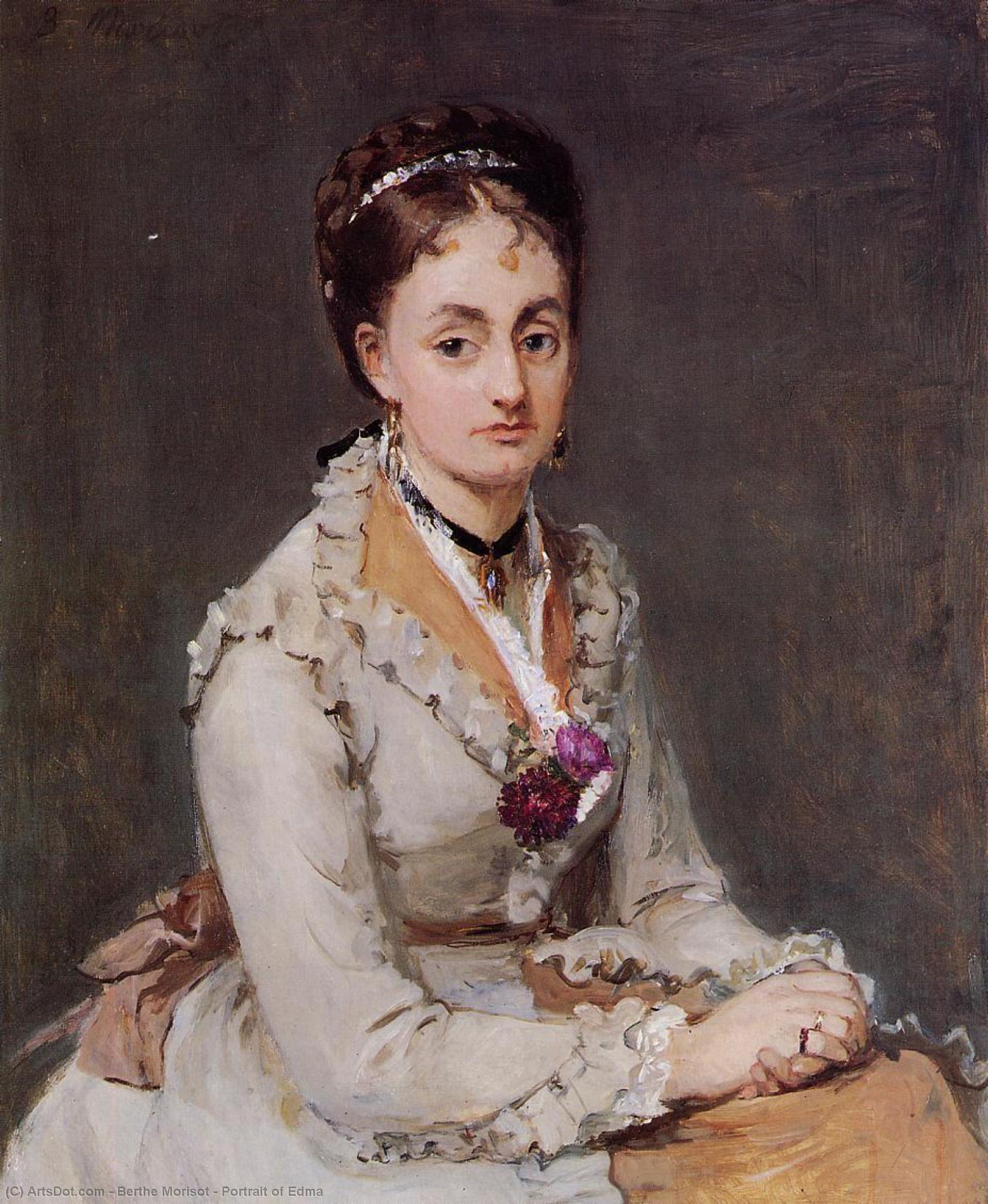
Portrait of Edma
Berthe Morisot’s “Portrait of Edma Pontillon,” completed in 1871, stands as a cornerstone of Impressionism—a movement that irrevocably altered the course of art history. More than just a depiction of a woman seated before her easel, it embodies the spirit of modern domestic life and captures a fleeting moment of intimacy with remarkable sensitivity.
- Artist: Berthe Morisot (1841 – 1895)
- Year Created: 1871
- Style: Impressionism
- Location: Musée d’Orsay, Paris, France
Morisot's masterful technique—characterized by loose brushstrokes and delicate pastel hues—immediately distinguishes “Portrait of Edma” from the academic conventions prevalent at the time. She eschewed meticulous detail in favor of conveying atmosphere and emotion, prioritizing light and color to illuminate the subject’s inner world.
The painting portrays Edma Pontillon, Morisot's sister-in-law, seated comfortably on a couch adorned with cushions patterned in ruby red, sky blue, and fawn brown. Her gaze is directed slightly off-camera, conveying thoughtfulness and quiet contemplation—a deliberate choice that speaks to the Impressionist fascination with capturing psychological nuance.
Beyond its aesthetic beauty, “Portrait of Edma” holds symbolic significance. The inclusion of a book symbolizes knowledge and intellectual pursuits, aligning with Morisot’s broader exploration of themes related to femininity and domesticity. Furthermore, the muted palette—primarily creams, whites, and browns—creates a tranquil ambiance that invites viewers into Edma's private sphere.
Considered one of Morisot’s finest achievements, “Portrait of Edma” exemplifies the Impressionist ethos of immediacy and observation. It remains an enduring testament to Morisot’s artistic vision and her ability to transform a simple domestic scene into a profound meditation on human experience. Its subtle beauty continues to inspire admiration and serves as a poignant reminder of the transformative power of art.
- Key Techniques: Loose brushstrokes, pastel hues, chiaroscuro (subtle shading)
- Notable Symbolism: The book represents knowledge; the muted palette conveys tranquility.
- Emotional Impact: Evokes feelings of intimacy, contemplation, and quiet beauty.