A Symphony of Light and Intimacy
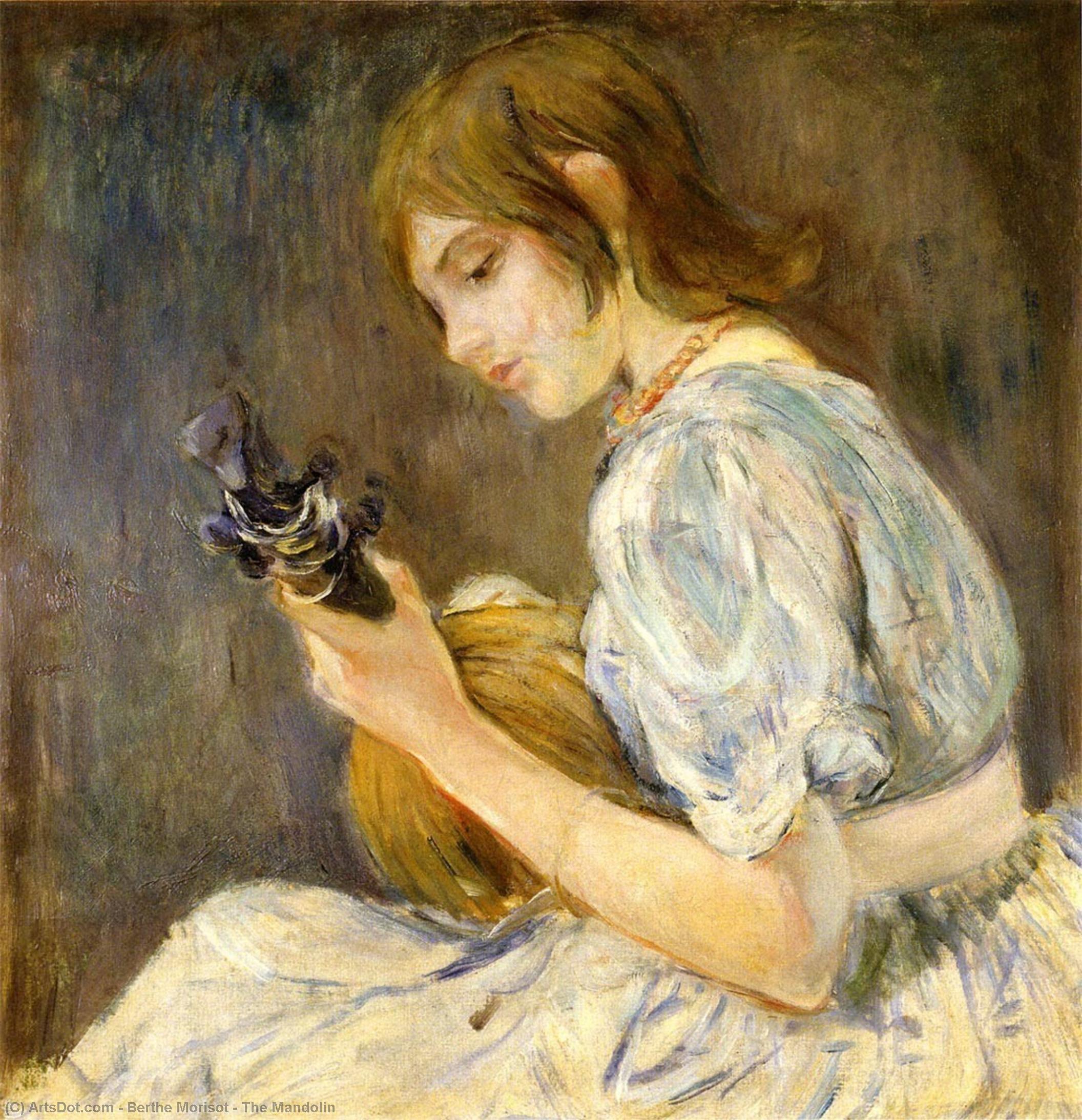
In the delicate brushstrokes of Berthe Morisot’s The Mandolin, we find ourselves transported to a private, melodic moment captured within the fleeting essence of the Impressionist era. The painting presents a captivating portrait of a woman, her form gracefully entwined with the wooden curves of her instrument. As she cradles the mandolin, her gaze drifts away from the music, suggesting a profound internal monologue or perhaps a momentary distraction by the world around her. This sense of captured movement—a breath held, a note suspended—is the hallmark of Morisot’s genius. The presence of figures in the soft-focus background adds a layer of social texture, creating a scene that feels less like a posed studio portrait and more like an intimate glimpse into a lively, breathing Parisian afternoon.
The technique employed in this masterpiece is a testament to the revolutionary spirit of 1889. Morisot utilizes a fluid, almost ethereal application of paint, where edges blur and light seems to dance across the canvas. Rather than relying on harsh outlines, she uses patches of color and rhythmic strokes to define the woman's long, flowing hair and the elegant shimmer of her necklace. This approach allows the subject to merge harmoniously with her environment, embodying the Impressionist obsession with the transient nature of light. For the discerning collector or interior designer, this piece offers a sophisticated interplay of texture and luminosity, making it an ideal focal point for spaces that require a touch of classical elegance blended with modern, airy movement.
Symbolism and the Impressionist Soul
Beyond its visual beauty, The Mandolin serves as a profound exploration of femininity and the domestic sphere through an artistic lens. The mandolin itself acts as more than just a musical prop; it symbolizes the harmony between art and life, and the rhythmic pulse of human emotion. Morisot, a pioneer who navigated the complexities of being a woman in a male-dominated movement, imbues her subjects with a quiet strength and intellectual depth. There is a subtle tension in the way the subject interacts with her surroundings—a balance between the private world of melody and the public presence of the figures in the background.
For those looking to adorn a curated collection or a high-end residential space, this reproduction offers an emotional resonance that transcends mere decoration. It invites the viewer to slow down, to listen to the silent music within the frame, and to appreciate the delicate beauty of a moment preserved forever in oil. The painting’s palette, characterized by its soft tones and luminous highlights, brings a sense of calm and cultured sophistication to any room, serving as a timeless window into the heart of French Impressionism.