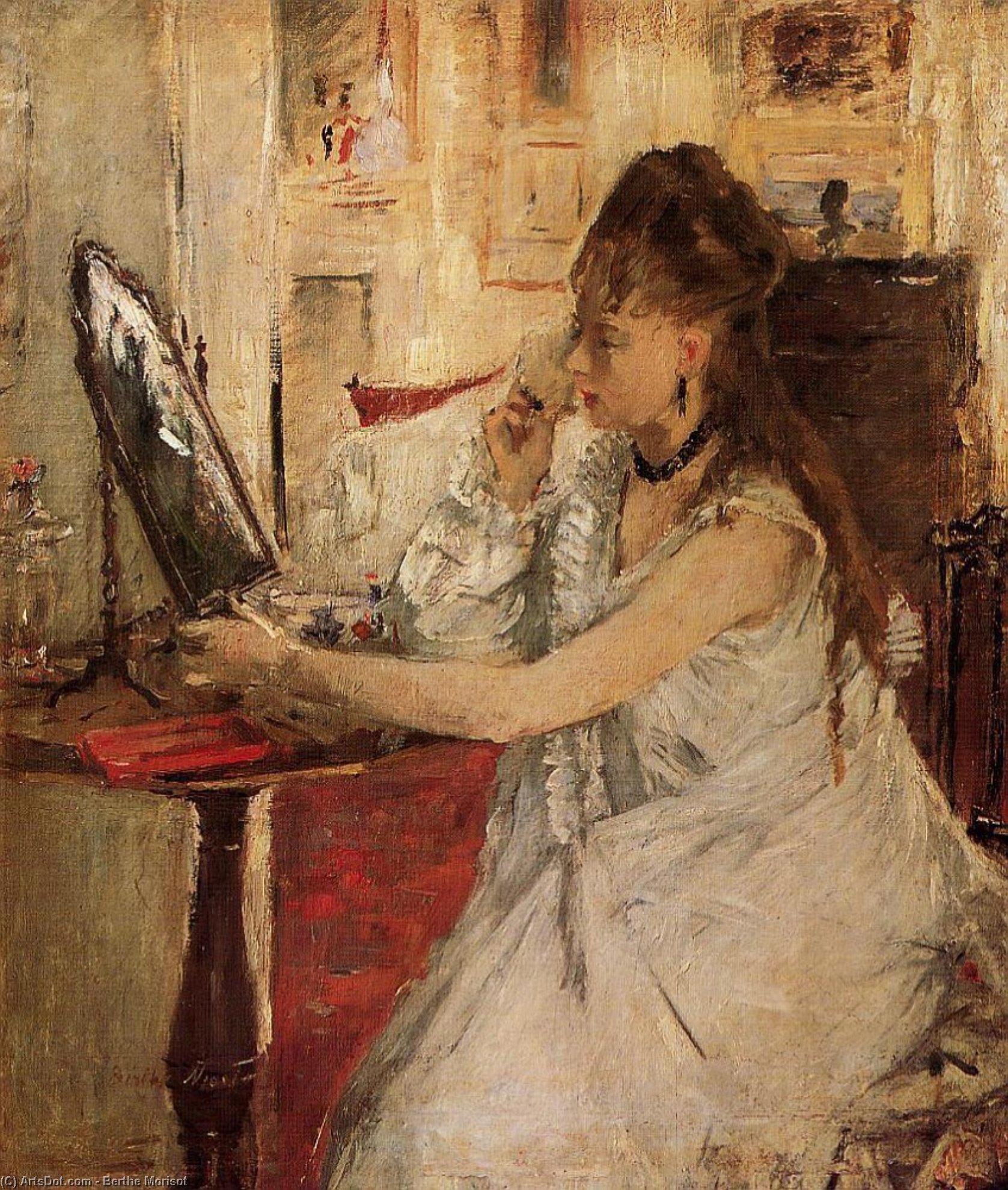
A Moment Frozen in Light: Berthe Morisot’s *Young Woman Powdering Her Face*
Berthe Morisot's *Young Woman Powdering Her Face*, painted in 1877, isn’t merely a portrait; it’s a delicate distillation of Impressionist philosophy and the quiet intimacy of domestic life. Housed within the hallowed halls of the Musée d'Orsay in Paris, this oil on canvas offers a rare glimpse into the private world of a woman navigating the complexities of 19th-century femininity – a world rendered with an exquisite sensitivity that continues to resonate today. The painting immediately draws the eye to its subject: a young woman seated at a table, bathed in a soft, diffused light that seems to emanate from within the scene itself. She’s engaged in the simple act of applying powder to her face, a commonplace ritual elevated by Morisot's masterful observation and artistic skill.
Morisot’s genius lies not just in depicting this everyday moment but in capturing its essence – the subtle play of light on skin, the delicate texture of fabric, and the quiet contemplation within the subject’s gaze. The composition is remarkably balanced, drawing the viewer into a space that feels both intimate and slightly removed. Notice how the arrangement of objects—the bottles of powder, the cup, the two chairs—creates a sense of order while simultaneously suggesting a private, almost meditative atmosphere. The inclusion of these seemingly mundane items speaks to Morisot’s ability to find beauty in the ordinary, a hallmark of her artistic vision.
Impressionism and the Dance of Light
As a prominent figure within the Impressionist movement, Berthe Morisot shared a core belief with her contemporaries: that capturing fleeting moments of light and color was paramount. *Young Woman Powdering Her Face* exemplifies this philosophy perfectly. Morisot’s technique is characterized by small, broken brushstrokes—a deliberate departure from the smooth, polished surfaces favored by earlier generations of painters. These strokes aren't meant to create a photographic representation but rather to evoke the sensation of light itself, shimmering and shifting across the canvas.
The painting’s palette is restrained yet luminous – primarily soft blues, pinks, and creams—reflecting the diffused natural light that filters through the window. Morisot skillfully uses color not just to depict reality but to create an emotional atmosphere. The gentle glow illuminating the woman's face conveys a sense of serenity and vulnerability, while the darker tones in the background subtly emphasize her presence. The brushwork itself contributes to this effect; the loose, visible strokes suggest movement and immediacy, as if we’ve caught a glimpse of a private moment frozen in time.
A Window into Victorian Womanhood
Beyond its purely aesthetic qualities, *Young Woman Powdering Her Face* offers a poignant commentary on the social constraints placed upon women during the late 19th century. The act of applying powder to one’s face was a ritualistic practice designed to enhance beauty and conform to societal expectations. Morisot subtly captures this tension – the woman's quiet contemplation suggests both an awareness of these pressures and a desire for self-expression within those confines.
Furthermore, Morisot’s choice to depict a domestic scene—a private moment within the home—was itself a significant departure from the grand historical or mythological subjects favored by many male artists of the time. Her focus on women and their lives provided a unique perspective on everyday life, challenging traditional artistic conventions and paving the way for future generations of female artists. The painting speaks to the quiet dignity and resilience of women navigating a rapidly changing world.
Symbolism and Emotional Resonance
While seemingly simple in its subject matter, *Young Woman Powdering Her Face* is rich with symbolic meaning. The mirror reflects not just the woman’s physical appearance but also her inner self—a space for introspection and self-awareness. The bottles of powder represent both beauty and societal expectations, while the quiet stillness of the scene suggests a moment of respite from the demands of daily life.
Ultimately, Morisot's masterpiece is an invitation to pause and contemplate the beauty in the ordinary, the complexities of human experience, and the enduring power of art to capture fleeting moments of truth. A hand-painted reproduction offers a remarkable opportunity to bring this exquisite work into your home, allowing you to appreciate its subtle nuances and timeless appeal for years to come.