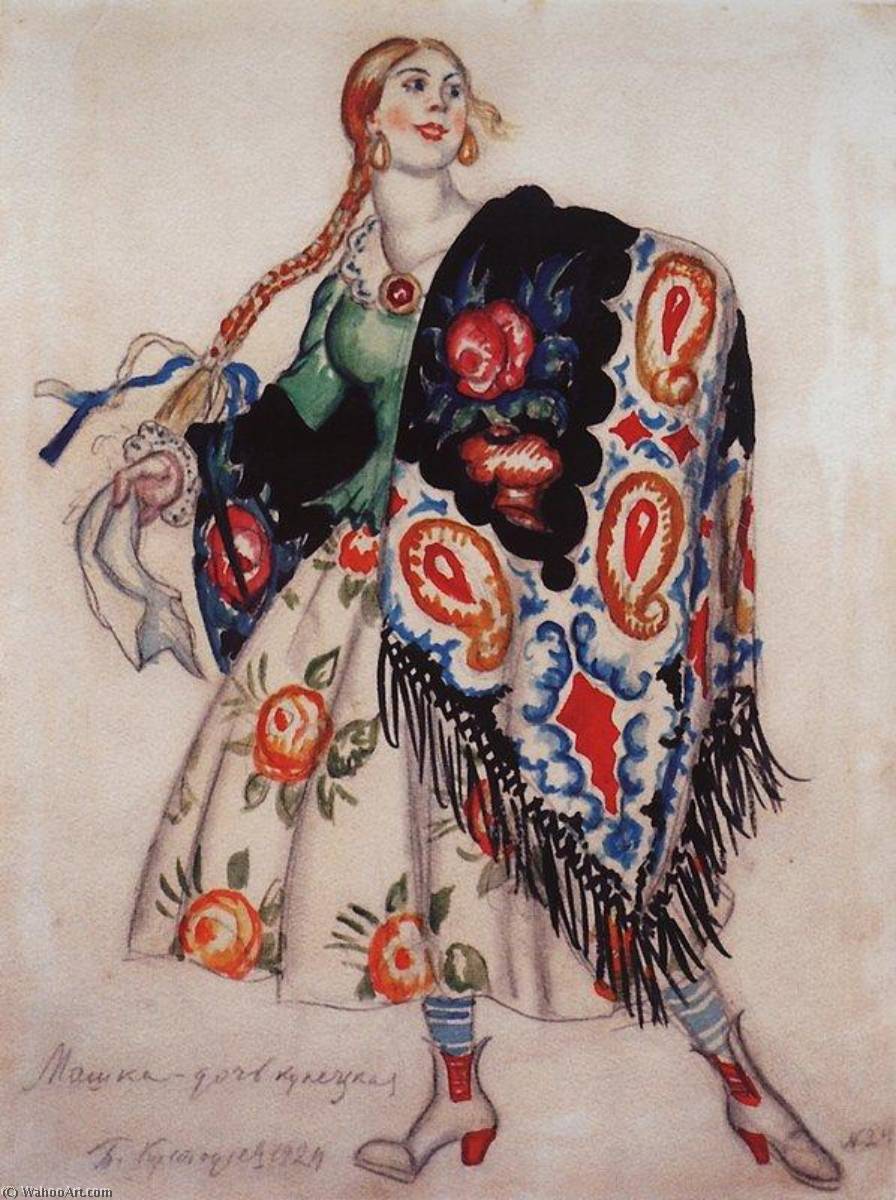
Boris Kustodiev's "Masha" captures a young woman dancing with grace and charm, reflecting Russian folk traditions & vibrant colors from 1924.
Boris Kustodiev (1878-1927) was a renowned Russian painter celebrated for his vibrant depictions of Russian life, merchant culture, and genre scenes. Explore his colorful realism & stage designs!
Delve into Russia's theatrical heritage at the A.A. Bakhrushin State Central Theatre Museum – housing over 1.5 million exhibits showcasing costumes, sets & memorabilia from iconic performances.
A Dance of Light and Spirit: Boris Kustodiev’s “Masha”
Boris Mikhailovich Kustodiev's "Masha," painted in 1924, isn’t merely a portrait; it’s a vibrant distillation of Russian soul – a shimmering tableau capturing the essence of provincial life, folklore, and the enduring spirit of its people. Born in Astrakhan amidst economic hardship, Kustodiev’s early experiences profoundly shaped his artistic vision, imbuing his work with an authentic portrayal of merchant culture and the simple joys of rural existence. This particular painting, a cornerstone of his oeuvre, exemplifies his signature style: a rich, almost theatrical realism layered with symbolic depth and a captivating sense of movement. The scene unfolds within a warmly lit interior, suggesting a private moment of domestic tranquility – yet, even in this apparent serenity, an underlying current of playful energy pulsates through the composition.
The Figure and Her Dance
At the heart of “Masha” stands the young woman herself, radiating youthful exuberance. Dressed in a flowing, crimson gown that seems to ripple with movement, she’s caught mid-step, her arms gracefully extended as if embracing an unseen partner. The scarf knotted around her neck adds a touch of rustic charm and hints at a connection to traditional Russian dress. Her long hair cascades down her back, framing a face alight with curiosity and delight. But it's not just a static pose; Kustodiev masterfully captures the *feeling* of dance – the slight tilt of her head, the subtle curve of her lips, the suggestion of momentum that invites the viewer to step into the scene alongside her. The bird perched on the left side of the painting adds an element of whimsy and perhaps a touch of good fortune, while the handbag near her feet grounds the image in a familiar domestic setting.
Watercolor’s Embrace: Technique and Style
Kustodiev's masterful use of watercolor is central to the painting’s captivating quality. The fluid washes create an ethereal atmosphere, softening the edges and lending a dreamlike quality to the scene. He employs a bold palette – deep reds, vibrant blues, and earthy greens – that evokes both warmth and richness. The layering of colors isn't haphazard; it’s carefully considered, building depth and creating a sense of luminosity. Notice how he uses light to sculpt the forms, highlighting Masha’s face and dress while subtly suggesting the textures of the surrounding environment. The brushstrokes themselves are loose and expressive, contributing to the painting’s overall feeling of spontaneity and joy. This technique, combined with his penchant for theatrical staging, firmly places Kustodiev within the broader context of Russian realist art, yet he imbues it with a uniquely personal and captivating style.
Symbolism and the Soul of Russia
Beyond its surface beauty, “Masha” is rich in symbolic meaning. The dance itself represents not just physical movement but also the spirit of life – a celebration of joy, connection, and the simple pleasures of existence. The birds are often associated with freedom and good fortune in Russian folklore, suggesting that Masha’s dance brings blessings to those around her. The setting—a modestly furnished interior—reflects the values of hard work, hospitality, and family life that were central to rural Russia at the time. Kustodiev's meticulous attention to detail – from the patterned fabrics to the arrangement of objects – reveals a deep understanding of Russian culture and traditions. Ultimately, “Masha” is more than just a portrait; it’s a poignant meditation on the enduring spirit of a nation, captured in a single, unforgettable moment. It speaks to a timeless yearning for connection, joy, and the beauty found within everyday life – qualities that continue to resonate with viewers today.