Discover Brother Lesueur (Eustache Le Sueur), a 17th-century French painter known for his detailed depictions of animals & biblical scenes. Explore his captivating works!
Explore the Louvre Museum in Paris! Home to iconic masterpieces like the Mona Lisa & Venus de Milo, journey through art history from ancient Egypt to Renaissance icons. Plan your visit today!
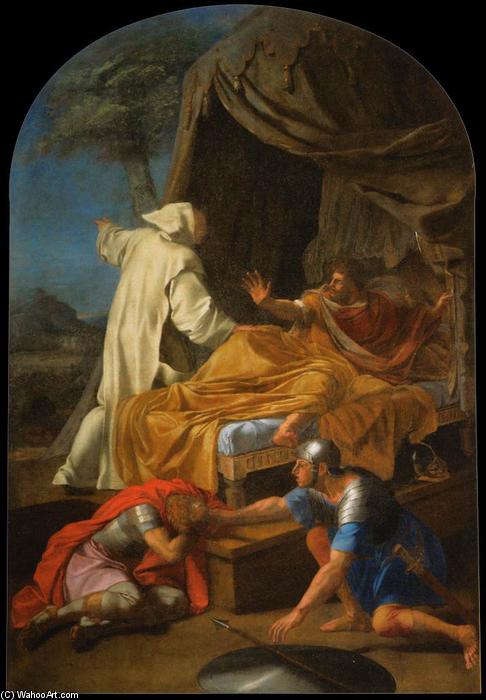
A Singular Visionary: Eustache Le Sueur’s “St Bruno Appearing to Comte Roger”
Eustache Le Sueur (1617 – 1655) stands apart from his contemporaries in the Baroque period—a painter who defied artistic conventions by dedicating himself wholeheartedly to the observation and meticulous representation of the natural world. Where many artists focused on grand mythological narratives or opulent portraits, Le Sueur embarked upon an ambitious project: transforming his studio into a laboratory of sorts, driven by an unwavering commitment to scientific accuracy alongside artistic brilliance. This pioneering approach cemented his legacy as one of France’s foremost zoologists and arguably the father of modern animal painting—a distinction that continues to resonate within the annals of art history.
His early life remains somewhat elusive, documented primarily through records indicating he apprenticed under Nicolas Boutet de Valois, a sculptor renowned for his allegorical sculptures commissioned by Louis XIII. This formative experience instilled in Le Sueur not merely technical skill but a profound appreciation for detail and precision—qualities that would become hallmarks of his artistic endeavors. It was this dedication to observation that propelled him beyond the stylistic trends of his time, establishing him as an innovator whose influence extends far beyond the realm of painting itself.
The Artwork: A Portrait Steeped in Religious Symbolism
“St Bruno Appearing to Comte Roger,” completed in 1645, exemplifies Le Sueur’s distinctive style—a masterful blend of realism and decorative embellishment characteristic of the Baroque era. Measuring 193 x 130 cm, this monumental canvas depicts St Bruno, a Benedictine monk revered for his piety and scholarship, engaged in conversation with Comte Roger, a noble figure representing the patronage of the arts and intellectual pursuits. The scene unfolds within a tent setting—a deliberate choice that harkens back to biblical narratives depicting divine encounters—underscoring the importance of spiritual contemplation amidst worldly concerns.
The painting’s composition is carefully orchestrated, drawing the viewer's eye towards the central figures while incorporating subtle visual cues that enrich its narrative depth. A shield or decorative item positioned prominently near the center serves as a focal point, mirroring the protective symbolism associated with Saint Bruno and reinforcing the overarching theme of faith and nobility. The artist’s meticulous attention to detail—evident in the rendering of St Bruno's robes and Comte Roger’s attire—demonstrates Le Sueur’s unwavering commitment to scientific accuracy, reflecting his broader fascination with capturing the intricacies of animal life.
Technique and Artistic Innovation
Le Sueur employed oil paint on canvas, utilizing a technique that allowed for nuanced tonal gradations and luminous effects—a hallmark of Baroque painting. His brushstrokes are deliberate yet fluid, conveying both textural richness and expressive dynamism. Unlike many artists of his time who prioritized idealized representations, Le Sueur opted for a realistic portrayal of human subjects, capturing their expressions and gestures with remarkable sensitivity. This approach distinguishes “St Bruno Appearing to Comte Roger” from conventional portraiture, elevating it to the status of a profound meditation on faith, intellect, and social hierarchy.
The painting’s visual impact is undeniably powerful—a testament to Le Sueur's ability to infuse his artwork with emotional resonance. The subdued palette—dominated by earthy tones—creates an atmosphere of solemn contemplation, mirroring the spiritual significance of the depicted scene. Furthermore, the artist skillfully utilizes chiaroscuro—the dramatic interplay between light and shadow—to sculpt the figures’ forms and heighten their expressive intensity. This masterful manipulation of tonal values contributes to the painting's enduring beauty and reinforces its symbolic message.
A Legacy Beyond Painting
“St Bruno Appearing to Comte Roger” represents more than just a stunning artistic achievement; it embodies Le Sueur’s groundbreaking contribution to zoological art—a field that would profoundly influence subsequent generations of artists. As documented extensively in online resources like WikiArt and WGA, this painting stands as an exemplar of Baroque artistry infused with scientific rigor. Its meticulous detail and expressive dynamism continue to inspire admiration among collectors and interior designers alike, securing Le Sueur’s place as a visionary artist whose legacy transcends the boundaries of his era.