A Window into 17th Century England: Godfrey Kneller’s “The Chinese Convert”
Godfrey Kneller's "The Chinese Convert," painted in 1687, is more than just a portrait; it’s a captivating window into the cultural currents of late Stuart England and a poignant testament to the burgeoning exchange between East and West. Commissioned by King James II during the visit of Michael Shen Fu-Tsung, a prominent Catholic scholar and convert from China, this oil on canvas offers a rare glimpse into a world rarely depicted in European art at the time – one brimming with exoticism, religious fervor, and a nascent appreciation for non-Western cultures.
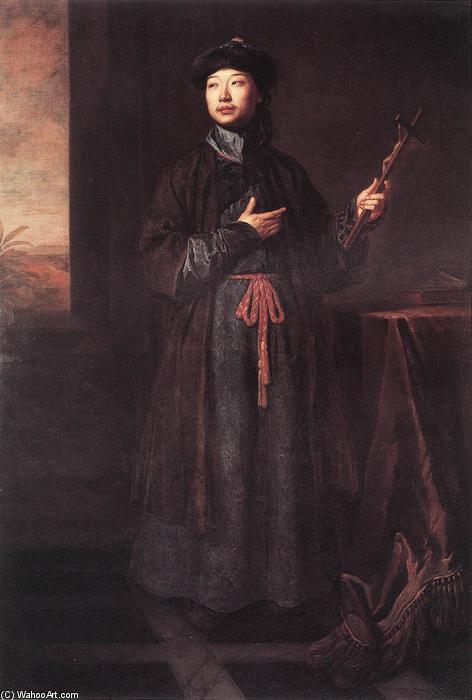
The painting immediately draws the eye to Shen’s dignified presence. Dressed in elaborate traditional Chinese attire—a dark robe accented with lighter hues and secured by a vibrant red sash—he stands as a figure of profound serenity. His gaze, direct and unwavering, engages the viewer, inviting contemplation on his journey and the circumstances that brought him to England. The subtle yet deliberate inclusion of a crucifix held delicately in his right hand speaks volumes about his conversion, subtly blending Eastern spirituality with Christian symbolism – a visual representation of a complex and transformative experience.
The Master’s Technique: Baroque Detail and Psychological Insight
Kneller's skill as a portraitist is immediately evident. He masterfully employs the techniques characteristic of the English Baroque style, honed during his years serving Charles II and George I. The composition adheres to established conventions – a full-length pose, carefully arranged drapery, and a balanced use of light and shadow—yet Kneller infuses it with a remarkable level of detail and psychological depth. Note the meticulous rendering of Shen’s clothing, the subtle textures of his robes, and the delicate brushstrokes that capture the nuances of his facial expression. The background, rendered in muted tones, serves to highlight the figure, creating a sense of intimacy and drawing attention to the subject's profound significance.
Crucially, Kneller doesn’t simply depict Shen as an exotic curiosity. He captures a man of quiet dignity and intellectual intensity. The subtle smile on Shen’s face suggests a peaceful acceptance of his new faith, while his direct gaze conveys a sense of self-assuredness and inner strength. This is not merely a representation of a foreign subject; it's a portrait that seeks to reveal the character and spirit of an individual undergoing a profound personal transformation.
Historical Context: A Bridge Between Worlds
The creation of “The Chinese Convert” occurred during a period of significant historical change. England was grappling with religious upheaval, navigating the complexities of the Glorious Revolution, and engaging in expanding trade relations with Asia. The arrival of Shen Fu-Tsung coincided with a growing interest in Eastern cultures—fueled by exploration, trade, and diplomatic missions—and a desire to understand and incorporate elements of foreign traditions into European society. Kneller’s portrait reflects this broader cultural dialogue, offering a visual record of a pivotal moment in the exchange between East and West.
The painting's provenance is equally fascinating. Initially residing in King James II’s bedroom, it became part of the Royal Collection, a testament to its historical importance and artistic merit. Its continued presence at Windsor Castle underscores its enduring value as a symbol of cultural exchange and a reminder of England’s evolving relationship with the wider world.
Symbolism and Legacy: A Timeless Portrait
Beyond its technical brilliance, “The Chinese Convert” is rich in symbolism. The juxtaposition of Eastern attire and Christian iconography speaks to the complexities of religious conversion and the blending of cultural traditions. Shen’s posture—composed and dignified—suggests a quiet triumph over adversity, while his direct gaze challenges viewers to consider their own perspectives on difference and acceptance.
Today, “The Chinese Convert” remains a powerful and evocative work of art, offering a rare glimpse into a fascinating historical period and a testament to the enduring power of portraiture to capture not only physical likeness but also the essence of human experience. It serves as a poignant reminder of the importance of cultural understanding and the transformative potential of faith.