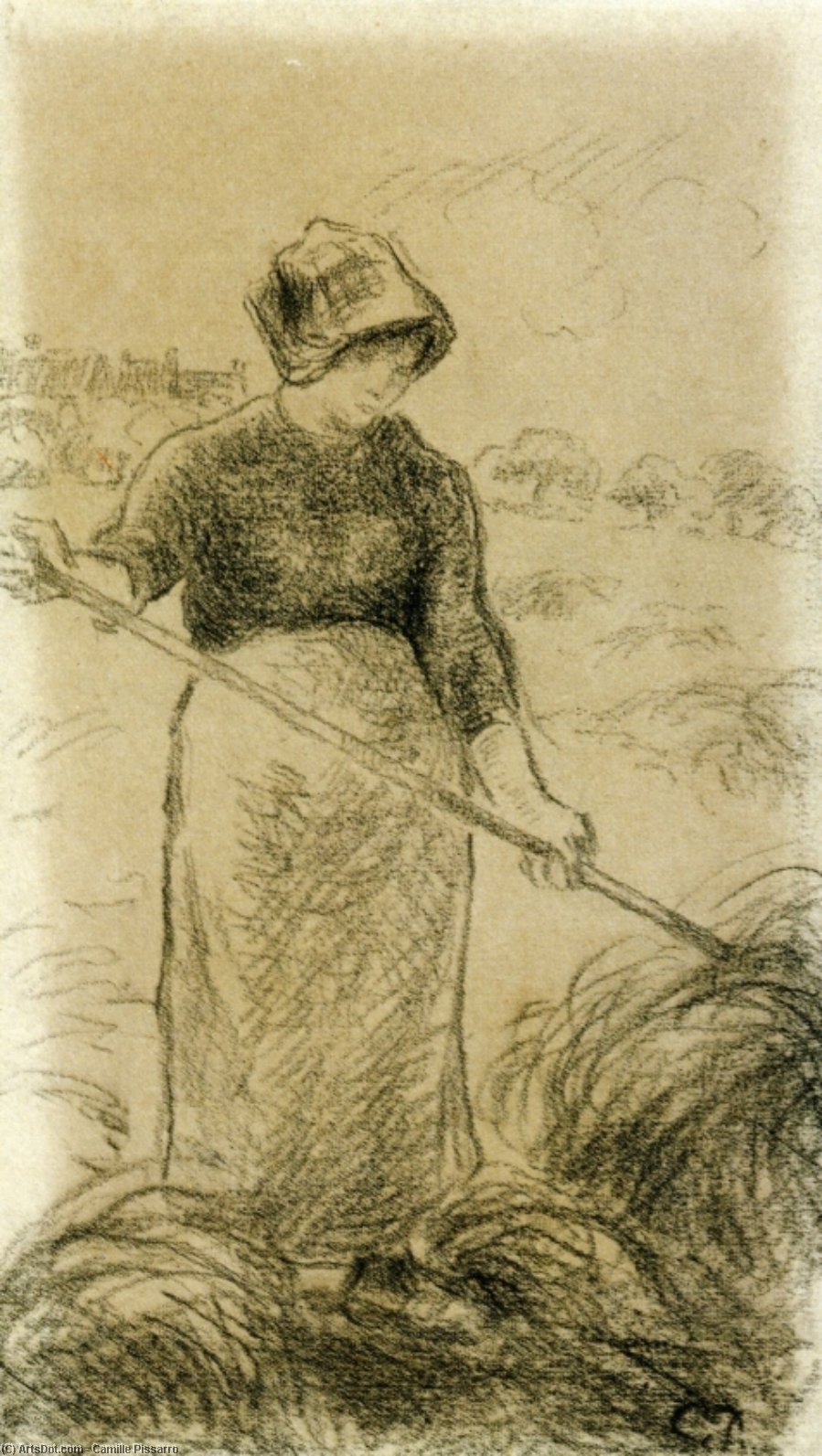
Experience Camille Pissarro’s iconic 1880 Impressionist painting, Haymaker, a charcoal depiction of a rural scene with a woman and cows. Own a piece of art history and capture the beauty of this timeless work.
A Moment Frozen in Light: Camille Pissarro's "Haymaker"
Camille Pissarro’s “Haymaker,” painted in 1880, is more than just a depiction of rural labor; it’s a poignant meditation on the relationship between humanity and nature, rendered with the characteristic Impressionistic sensitivity that cemented Pissarro's place as a pivotal figure in art history. Measuring a modest 21 x 12 cm, this charcoal masterpiece invites us into a fleeting moment – a woman diligently working her field alongside a small herd of cows, bathed in the soft play of light. The painting’s power resides not just in its subject matter but in Pissarro's masterful manipulation of texture and tone, creating an atmosphere thick with both warmth and quiet contemplation.
Impressionistic Technique and Composition
- Charcoal as a Key: The choice of charcoal is particularly significant. It lends the work a remarkable immediacy, a sense of direct observation that aligns perfectly with the Impressionist movement’s focus on capturing transient effects of light and atmosphere. The lack of broad brushstrokes contributes to a remarkably detailed depiction of the scene.
- Balanced Perspective: Pissarro expertly employs a balanced composition, positioning the woman as the central figure – a symbol perhaps of resilience and industry – while the surrounding cows create a sense of depth and movement. This isn’t merely a snapshot; it's a carefully constructed tableau designed to draw the viewer into the heart of the scene.
- Light and Shadow: The subtle gradations of charcoal, skillfully used to represent light and shadow, evoke a palpable sense of warmth and realism. It is this attention to detail that elevates the work beyond simple representation, transforming it into an evocative portrayal of rural life.
Historical Context and Pissarro’s Vision
"Haymaker" was created during a crucial period in Pissarro's career – a time when he was deeply committed to documenting the lives of ordinary people, particularly those engaged in agricultural work. This commitment stemmed from his belief that art should reflect the realities of everyday life, and his depictions of rural scenes offered a counterpoint to the increasingly fashionable Salon paintings focused on grand historical or mythological subjects. Pissarro’s connection to Le Havre and its surrounding countryside profoundly influenced his artistic vision, as evidenced by works like “The Haymakers of Éragny,” further solidifying his dedication to portraying the authentic beauty of rural France.
Symbolism and Emotional Resonance
Beyond its technical brilliance, "Haymaker" carries a quiet emotional weight. The woman’s posture suggests both diligence and solitude, inviting us to consider the challenges and rewards of a life connected to the land. The presence of the cows – symbols of abundance and pastoral tranquility – reinforces this sense of harmony. The inclusion of two birds adds an element of delicate beauty and fleeting grace to the scene, further enhancing its evocative power. This painting is not just a record of a moment; it’s a carefully crafted invitation to contemplate the enduring connection between humanity and the natural world.
Owning a Piece of Impressionist History
Handmade oil painting reproductions of Pissarro's "Haymaker" are now available, offering art enthusiasts the opportunity to bring this iconic work into their homes or offices. These meticulously crafted reproductions capture the essence of the original, allowing you to experience the beauty and emotional depth of Pissarro’s vision firsthand. Consider this a chance to own a tangible link to one of the most influential movements in art history – a testament to Camille Pissarro's enduring legacy.