Camille Pissarro
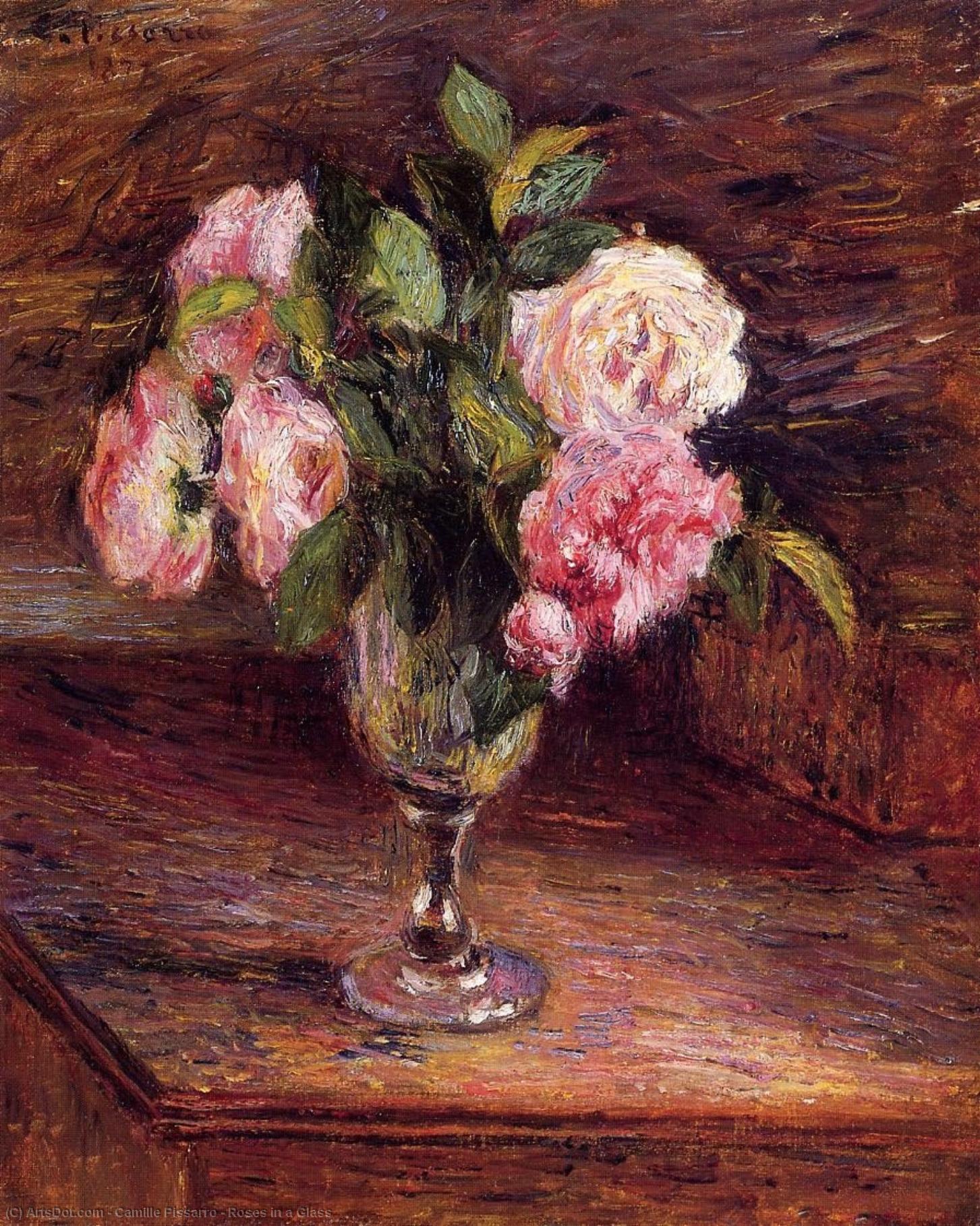
Admire Camille Pissarro's Impressionist masterpiece 'Roses in a Glass,' capturing the delicate beauty of pink roses within a glass vase – a timeless piece housed at Musée des Beaux-Arts André Malraux.
Explore Camille Pissarro's art: Impressionist & Neo-Impressionist landscapes and scenes of daily life. A pivotal figure influencing Van Gogh, Cézanne & more.
A Window Into Impressionistic Beauty: Exploring Camille Pissarro’s Roses in a Glass
The painting “Roses in a Glass,” created by Camille Pissarro in 1877, stands as a quintessential embodiment of Impressionism – an artistic movement that sought to capture fleeting moments of light and color rather than meticulously recreating reality. More than just a depiction of flowers, it’s a meditation on perception itself, inviting viewers into the artist's sensory experience and transporting them back to the vibrant atmosphere of late 19th-century France.
The Essence of Impressionism: Light and Atmosphere
Pissarro’s approach aligns perfectly with the core tenets of Impressionism. Rejecting academic conventions that prioritized detailed realism, he embraced loose brushstrokes and a palette dominated by luminous hues—primarily pinks and creams—to convey the ephemeral quality of sunlight filtering through glass onto roses. The artist skillfully utilizes chiaroscuro – the interplay between light and shadow – not to sculpt form but rather to create depth and texture, mimicking how our eyes perceive color variations under changing illumination conditions. This technique wasn't merely stylistic; it reflected a profound shift in artistic thinking, prioritizing emotional resonance over photographic accuracy.
A Detailed Examination of Technique
The painting’s surface is characterized by visible brushstrokes that dance across the canvas, creating an impression of movement and spontaneity. Pissarro employed layering techniques—applying thin glazes of color over underlayers—to build up tonal gradations and achieve a remarkable luminosity. The artist meticulously observed the subtle nuances of color within the roses themselves, capturing their delicate blush tones and highlighting the translucence of the glass vase. This painstaking attention to detail is juxtaposed with the overall impression of effortless grace, demonstrating Pissarro’s mastery of manipulating pigment to evoke emotion.
Historical Context: Paris at the Dawn of Modernity
“Roses in a Glass” emerged during a period of transformative change in Parisian society and culture—the Belle Époque (“Beautiful Era”). This era witnessed rapid industrialization, urbanization, and advancements in scientific understanding, challenging traditional artistic values. Impressionism arose as a reaction to these developments, championed by artists like Monet, Renoir, and Degas who sought to depict the everyday life of ordinary people amidst the burgeoning excitement of modernity. The Musée des Beaux-Arts André Malraux in Le Havre proudly houses numerous works by Pissarro, offering visitors an opportunity to immerse themselves in the artistic spirit of this pivotal moment in art history.
Symbolism Beyond Floral Representation
While seemingly simple on a surface level, “Roses in a Glass” carries symbolic weight. Roses have long been associated with beauty, love, and remembrance—themes frequently explored by Impressionist artists. The glass vase serves as a conduit for light, symbolizing clarity of vision and intellectual contemplation. Furthermore, the inclusion of a chair and bench suggests a domestic setting, inviting viewers to consider themes of comfort, tranquility, and personal reflection. Pissarro’s deliberate composition elevates the floral subject beyond mere ornamentation, transforming it into an emblem of artistic ideals.
Emotional Resonance: Capturing Transient Beauty
Ultimately, “Roses in a Glass” succeeds in conveying a profound sense of serenity and wonder. The artist's masterful use of light and color captures the fleeting beauty of nature—a principle central to Impressionist philosophy. Viewing this painting evokes feelings of warmth, nostalgia, and appreciation for the simple pleasures of life. It’s a testament to Pissarro’s ability to translate visual experience into emotional expression, ensuring that “Roses in a Glass” continues to inspire audiences generations after its creation. Explore more captivating artworks like Camille Pissarro's on ArtsDot.com – where artistic masterpieces come alive!