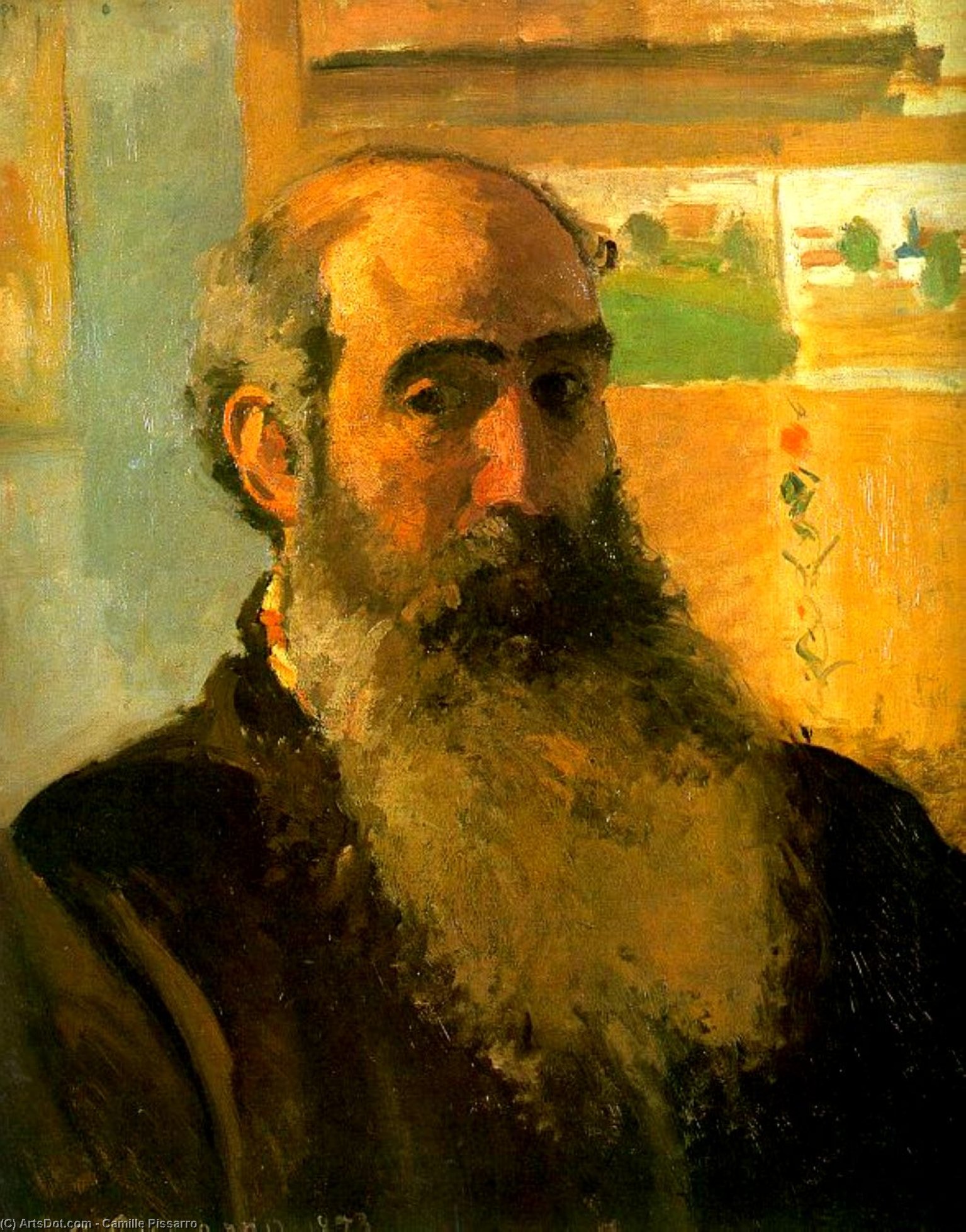
Captured in Impressionist style by Camille Pissarro, this serene self-portrait embodies quiet contemplation amidst dappled light and subtle color palettes—a timeless masterpiece to adorn your walls and explore at ArtsDot.com
Explore Camille Pissarro's art: Impressionist & Neo-Impressionist landscapes and scenes of daily life. A pivotal figure influencing Van Gogh, Cézanne & more.
A Window Into Impressionistic Soul: Exploring Camille Pissarro’s Self Portrait
The year 1873 represents more than just a date on a calendar; it marks the genesis of a movement that would forever alter the course of art history – Impressionism. And at the forefront of this revolutionary artistic endeavor stood Camille Pissarro, a Danish-French painter whose unwavering dedication to observation and luminous color continues to resonate with audiences today. His Self Portrait, housed in the Musée d’Orsay, isn't merely an image of a man; it’s a meticulously crafted distillation of his artistic philosophy and a poignant glimpse into the artist’s inner world.
The Painter’s Vision: Impressionism Defined
Pissarro’s approach to painting distinguished him from many of his contemporaries. Rather than striving for photographic realism—a preoccupation prevalent in academic art circles—he sought to capture fleeting moments of light and atmosphere, prioritizing subjective experience over objective representation. This commitment to Impressionism is palpable throughout the Self Portrait. Notice how Pissarro eschews harsh contrasts and instead employs subtle gradations of color to depict the textures of his clothing and skin. The diffused sunlight filtering through the window casts a gentle glow upon his face, conveying a sense of tranquility and contemplative reflection—a characteristic found repeatedly in his landscapes and cityscapes. He was profoundly influenced by Eugène Boudin and Johan Bartholomeus Jongkind, artists who championed plein air painting – working outdoors directly from nature – establishing a precedent for future Impressionist painters.
Technical Mastery: Brushstrokes as Emotion
The execution of the Self Portrait exemplifies Pissarro’s masterful technique. Using short, broken brushstrokes—a hallmark of Impressionism—he builds up layers of pigment to create an illusion of depth and vibrancy. These strokes aren't random; they are carefully considered choices designed to convey emotion and capture the ephemeral qualities of light. The artist’s meticulous attention to detail is evident in the rendering of his facial features, particularly his expressive eyes which gaze directly at the viewer with a quiet intensity. Furthermore, the inclusion of two figures in the background—likely family members—adds another layer of narrative complexity, hinting at Pissarro's personal life and grounding the portrait within a domestic sphere.
Historical Context: A Reflection of Artistic Change
Painted during a period of significant artistic upheaval, the Self Portrait speaks to the broader transformation occurring within the art world. Impressionism was challenging the conventions of academic painting—which favored idealized depictions and meticulous detail—and advocating for a new aesthetic centered on capturing the immediacy of sensory experience. The painting’s acceptance into the Musée d'Orsay underscores its enduring significance as an emblem of this pivotal moment in artistic history. It stands alongside other masterpieces from the era, demonstrating the collective desire to embrace innovation and explore uncharted territories of visual expression.
Emotional Resonance: Beyond Representation
Ultimately, Camille Pissarro’s Self Portrait transcends mere representation; it embodies the spirit of Impressionism itself. The painting invites contemplation—encouraging viewers to consider not just what is seen but how it feels. The serene gaze of the artist, combined with the soft hues and textured brushstrokes, evokes a sense of peace and introspection. It serves as a reminder that art can communicate profound truths about human experience – capturing not only appearances but also inner states of mind. This enduring quality ensures that Pissarro’s Self Portrait continues to captivate audiences and inspire artists alike, cementing its place as an iconic work within the canon of Impressionist art.