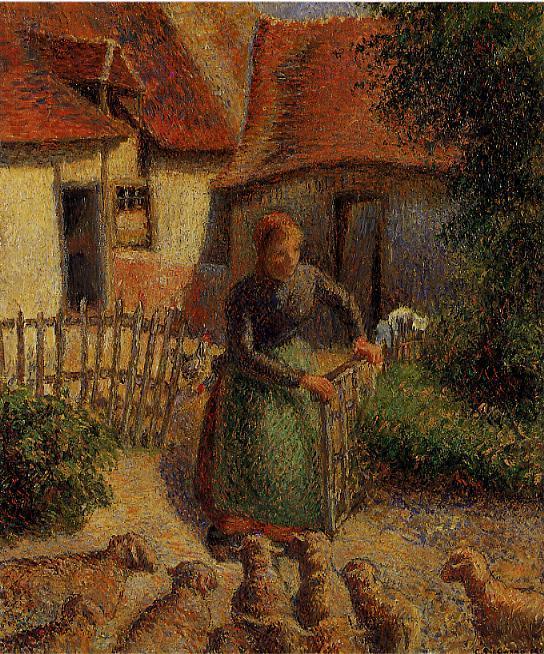
Shepherdess Bringing in the Sheep: A Pastoral Vision by Camille Pissarro
“Shepherdess Bringing in the Sheep,” painted in 1886 by Danish-French Impressionist and Neo-Impressionist master Camille Pissarro, is a captivating depiction of rural life. This oil on canvas exemplifies Pissarro's ability to capture the tranquility and beauty of the natural world, offering viewers a glimpse into a simpler time.
Composition and Subject Matter
The painting centers around a woman skillfully guiding her sheep in a picturesque countryside setting. She stands near a rustic fence, surrounded by her flock, seemingly engaged in a gentle interaction with them. A delicate flower held in her hand adds a touch of grace to the scene. The background reveals other figures, subtly suggesting a community and adding depth to the composition. Notably, a loyal dog rests at the bottom-left corner, further emphasizing the rural atmosphere. Pissarro masterfully uses perspective to create a sense of spaciousness and distance within the landscape.
Impressionistic Technique and Style
“Shepherdess Bringing in the Sheep” is a prime example of Impressionism, characterized by its emphasis on capturing fleeting moments of natural light and color. Pissarro’s brushstrokes are visible yet harmonious, creating a textured surface that evokes the feeling of sunlight filtering through foliage. The use of chiaroscuro, the contrast between light and shadow, adds depth and volume to the figures and landscape. The palette is dominated by warm earth tones – yellows, oranges, and browns – which contribute to a sense of warmth and harmony, evoking the feeling of a sun-drenched afternoon.
Historical Context and Influence
Camille Pissarro (1830-1903) was a pivotal figure in the Impressionist movement. He served as a mentor and friend to many prominent artists, including Paul Cézanne, Georges Seurat, and Paul Gauguin. His work helped to shape the development of modern art by emphasizing observation of nature and the exploration of light and color. This painting reflects a period when artists were moving away from traditional academic styles towards capturing more subjective experiences of the world.
Symbolism and Emotional Impact
Beyond its aesthetic beauty, “Shepherdess Bringing in the Sheep” carries symbolic weight. The shepherdess represents connection to nature, tradition, and the rhythms of rural life. The sheep symbolize innocence and tranquility. The painting evokes a sense of peace and serenity, inviting viewers to escape into a world of pastoral harmony. It speaks to the enduring appeal of simple living and the beauty found in everyday moments.