A Moment of Quiet Craftsmanship: Camille Pissarro's "Shoemakers"
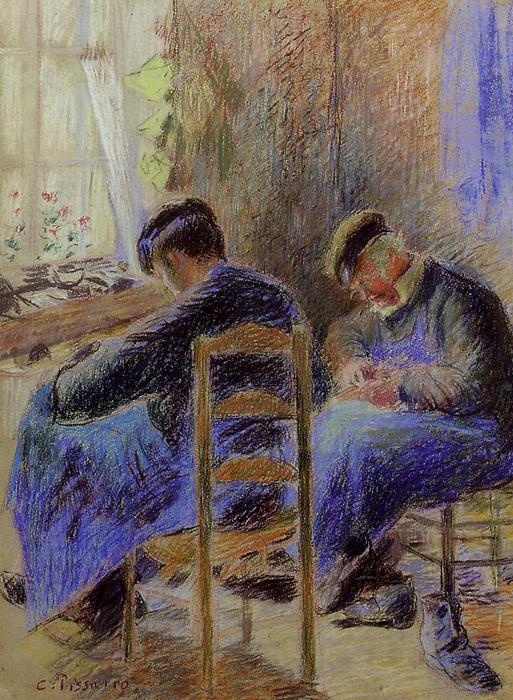
Camille Pissarro’s “Shoemakers,” painted in 1878, offers a deceptively simple yet profoundly evocative glimpse into the heart of everyday life during the Impressionist era. This pastel, depicting two men diligently working at their trade, transcends mere representation to capture a mood – one of focused concentration, quiet industry, and perhaps even a touch of melancholy. Pissarro, a pivotal figure in the development of Impressionism, was renowned for his meticulous observation of the world around him, translating fleeting moments and atmospheric effects onto canvas with remarkable sensitivity. “Shoemakers” exemplifies this approach, showcasing his ability to imbue ordinary scenes with profound artistic resonance.
- Subject Matter: The painting’s subject is remarkably unadorned – two shoemakers at their work. This deliberate choice elevates the scene, transforming a commonplace activity into something worthy of artistic contemplation. Pissarro wasn't interested in grand historical narratives or idealized portraits; instead, he sought to capture the essence of human experience within the context of his immediate surroundings.
- Technique: Executed in pastel on paper, “Shoemakers” demonstrates Pissarro’s masterful control over this medium. Pastels offer a unique ability to blend colors directly on the surface, creating soft edges and luminous effects that are characteristic of Impressionism. The artist skillfully utilizes layering and scumbling techniques to build up texture and depth, capturing the worn surfaces of the tools and the subtle variations in light and shadow.
Historical Context: Impressionism and the Parisian Workshop
“Shoemakers” was created during a period of significant artistic change in France. The rise of Impressionism challenged traditional academic painting styles, advocating for direct observation of nature and the depiction of fleeting moments. Pissarro, along with fellow Impressionists like Monet and Renoir, embraced this new approach, seeking to capture the effects of light and atmosphere rather than meticulously rendering every detail. This pastel reflects the burgeoning interest in depicting urban life – particularly the working class – which was a key theme within the movement. The Parisian workshop, with its bustling activity and diverse clientele, provided Pissarro with endless opportunities for observation and inspiration.
- Social Commentary: While not overtly political, the painting subtly reflects the social realities of 19th-century Paris. The shoemakers represent a segment of the working population – skilled artisans contributing to the city’s economy.
- Impressionistic Style: Pissarro's use of broken color and loose brushwork aligns perfectly with the Impressionist aesthetic, prioritizing the subjective experience of seeing over objective representation.
Symbolism and Emotional Impact
Beyond its technical merits, “Shoemakers” possesses a quiet emotional depth. The two men, lost in their work, evoke a sense of solitude and introspection. The carefully arranged tools – scissors, knives, and books – suggest a dedication to craft and knowledge. The muted color palette—dominated by browns, grays, and subtle blues—contributes to the painting’s somber mood. The placement of objects like the spoon and books adds layers of meaning, perhaps hinting at sustenance, learning, or contemplation. It's a scene that invites viewers to pause and reflect on the rhythms of daily life and the quiet dignity of manual labor.
Collecting and Displaying Your Reproduction
A hand-painted reproduction of Camille Pissarro’s “Shoemakers” offers an accessible way to bring this remarkable artwork into your home or office. ArtsDot.com provides meticulously crafted reproductions using archival materials, ensuring the longevity and beauty of the image. Consider framing the reproduction in a simple wooden frame to complement its understated elegance, or opt for a more contemporary presentation to create a striking visual statement. This piece is ideal for creating a calming atmosphere in a study, hallway, or living room – a testament to the enduring power of Impressionist art.