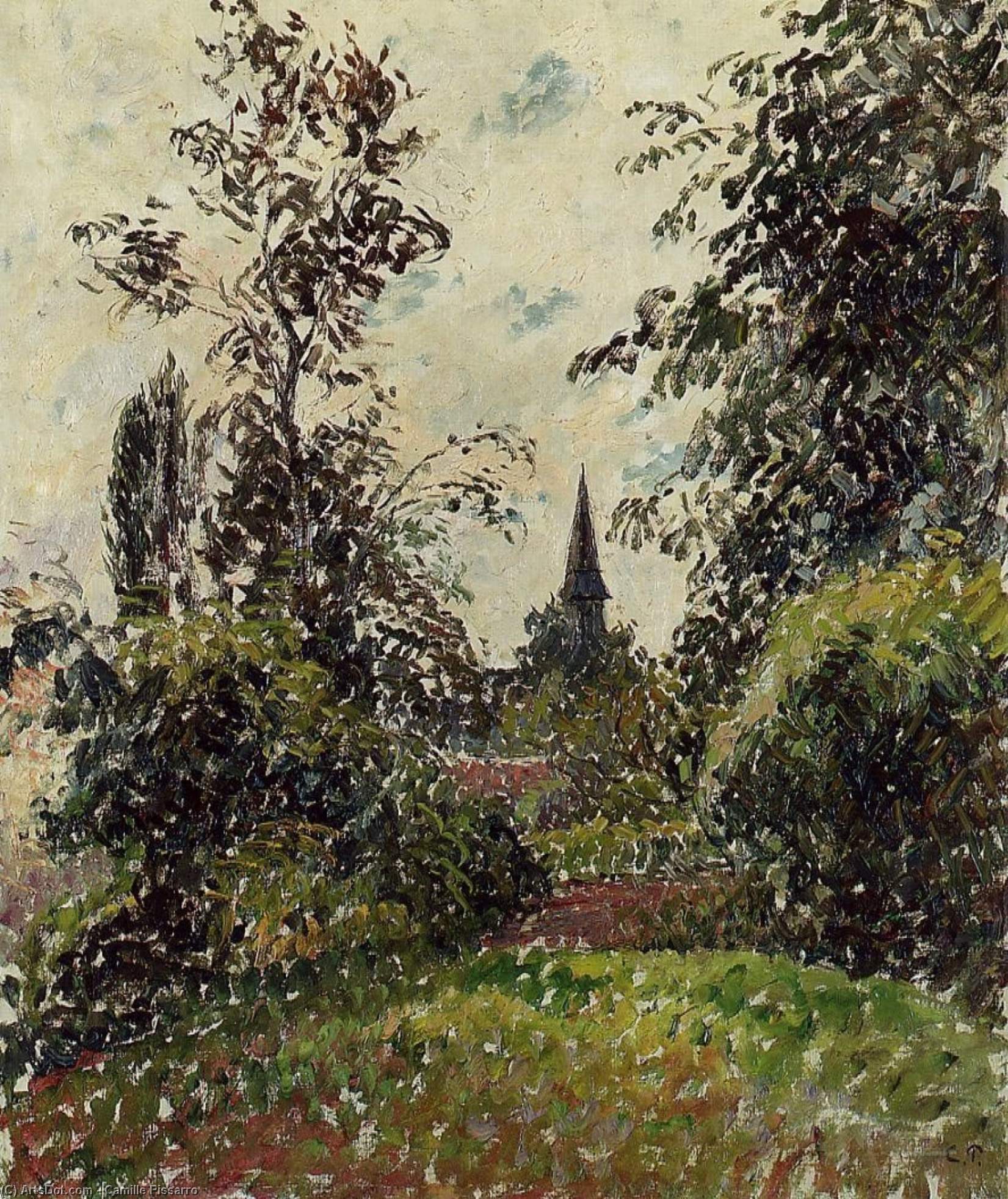
Experience the serene beauty of Camille Pissarro's Impressionist masterpiece, 'The Bazincourt Steeple.' Explore its masterful use of light and texture to depict a tranquil rural landscape.
Explore Camille Pissarro's art: Impressionist & Neo-Impressionist landscapes and scenes of daily life. A pivotal figure influencing Van Gogh, Cézanne & more.
A Window Into Rural Tranquility: Exploring Camille Pissarro’s “The Bazincourt Steeple”
Camille Pissarro's "The Bazincourt Steeple" isn’t merely a depiction of a church; it’s an embodiment of Impressionism’s core philosophy – capturing the fleeting beauty of everyday life and the transformative power of light. Painted in 1895, this serene landscape offers more than just visual pleasure; it invites contemplation on themes of faith, community, and the enduring connection between humanity and nature. Located in Bazincourt, France, a village nestled within the Aisne department, the painting portrays a simple steeple dominating a verdant hillside dotted with trees—a scene remarkably familiar yet imbued with an artist’s profound sensitivity to atmospheric conditions.
The Impressionist Technique: Embracing Ephemeral Light
Pissarro's masterful execution exemplifies the revolutionary techniques championed by Impressionists like Monet and Renoir. Rather than striving for photographic realism, he employed short, broken brushstrokes—a hallmark of his style—to render the dappled sunlight filtering through the foliage. These strokes aren’t blended smoothly; instead, they overlap and interact, creating a shimmering effect that mimics how light actually dances across surfaces. The artist meticulously observed the subtle gradations of color present in each moment, translating these observations directly onto canvas. This deliberate rejection of academic conventions signaled a dramatic shift away from traditional artistic pursuits, prioritizing subjective experience over objective representation.
Historical Context: A Moment of Artistic Transition
“The Bazincourt Steeple” emerged during a pivotal period in art history—the burgeoning Impressionist movement. Following the Franco-Prussian War and fueled by advancements in scientific understanding of light and color, artists were increasingly questioning established artistic dogma. The Salon des Refusés of 1895, where Pissarro’s painting debuted alongside works rejected by the official Salon jury, served as a catalyst for legitimizing Impressionist aesthetics. This controversial exhibition challenged the conservative tastes of Parisian society and solidified Impressionism's position as a dominant force in European art. The painting reflects the broader societal optimism of the Belle Époque—a time marked by industrial progress, cultural flourishing, and a renewed interest in exploring the natural world.
Symbolic Resonance: Faith and Rural Harmony
Beyond its technical brilliance, “The Bazincourt Steeple” carries symbolic weight. The steeple itself represents faith and spiritual aspiration, anchoring the composition amidst the expansive landscape. Its upward gaze symbolizes hope and transcendence, mirroring the serene beauty of the surrounding countryside. The trees—particularly those clustered around the church—represent resilience and permanence, contrasting with the fleeting nature of sunlight and atmosphere. Together, these elements convey a harmonious balance between human endeavor and divine grace – a sentiment deeply rooted in rural French culture during Pissarro’s time.
Emotional Impact: A Balm for the Soul
Looking at “The Bazincourt Steeple” is akin to stepping into a tranquil sanctuary. The painting evokes feelings of peace, serenity, and nostalgia—a testament to Pissarro's ability to capture not just what he saw but also how he felt. Its muted palette—dominated by greens, blues, and yellows—creates an atmosphere of understated elegance and invites viewers to linger on its surface. It’s a painting that speaks to the human desire for connection with nature and reminds us of the enduring beauty found in simple, everyday scenes – a timeless masterpiece that continues to inspire admiration and contemplation today.