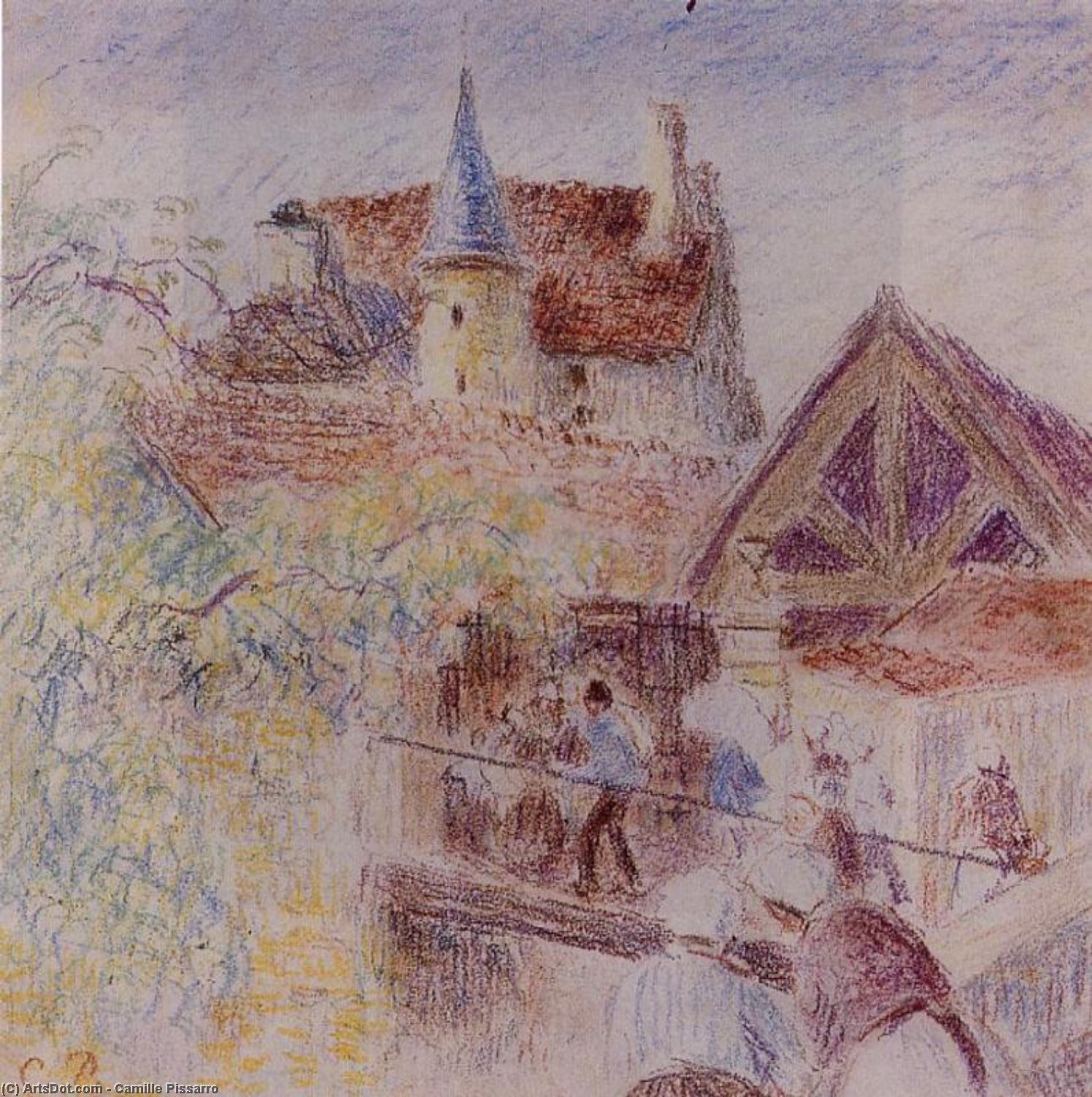
Experience Camille Pissarro’s ‘The Farm, Osny,’ a vibrant Impressionist landscape depicting daily life in a charming village with a castle backdrop, perfect for art lovers and collectors.
Camille Pissarro’s ‘The Farm, Osny’: A Snapshot of Rural Life and Impressionist Harmony
The Farm, Osny, painted in 1884 by Camille Pissarro, offers a remarkably intimate glimpse into the heart of rural France – a scene brimming with quiet industry and the subtle beauty of everyday life. This landscape work, executed in Pissarro’s signature Impressionist style, transcends mere representation; it's an evocation of atmosphere, light, and human connection. The painting depicts a small village nestled amongst rolling fields, dominated by a substantial castle that anchors the composition and provides a sense of historical weight.
- Subject Matter: The scene is fundamentally about rural life – farmers tending to their land, villagers engaged in leisurely activities, and the presence of livestock. Pissarro’s focus isn't on grand narratives but on capturing the authentic rhythms of a community.
- Composition & Technique: Characteristic of Pissarro’s mature style, ‘The Farm, Osny’ employs broken brushstrokes and a vibrant palette to render light and color with remarkable immediacy. The artist skillfully uses juxtaposed patches of color – greens, blues, browns – to create a shimmering effect, particularly noticeable in the reflections on the water and the subtle variations in the foliage.
Historical Context: Pissarro and the Rise of Impressionism
Painted during a pivotal period for Impressionism, ‘The Farm, Osny’ reflects Pissarro's evolving artistic philosophy. Having been a key figure in the development of the movement alongside Monet and Renoir, Pissarro moved away from the more overtly painterly styles of his early career towards a greater emphasis on capturing fleeting moments and atmospheric effects. This work exemplifies this shift – prioritizing observation and direct perception over meticulous detail. The late 1880s saw Impressionism gaining widespread acceptance, and Pissarro’s continued dedication to portraying landscapes with such sensitivity helped solidify the movement's place in art history.
Born Jacob Abraham Camille Pissarro on July 10, 1830, in Charlotte Amalie, St. Thomas – then part of the Danish West Indies, now the US Virgin Islands – his origins were as diverse and vibrant as the scenes that would later define his artistic vision.
Symbolism and Emotional Impact
Beyond its realistic depiction, ‘The Farm, Osny’ carries a subtle symbolic weight. The castle, towering over the village, represents not just architectural grandeur but also the enduring presence of history and tradition. The figures engaged in their daily tasks evoke a sense of tranquility and connection to the land – themes central to the Romantic sensibility that influenced Impressionism. The painting's emotional impact lies in its ability to transport the viewer to this idyllic scene, fostering a feeling of peace and appreciation for the simple beauty of rural life. It’s a testament to Pissarro’s skill in translating visual experience into a deeply felt artistic statement.
Art Decoration & Reproduction Considerations
This hand-painted reproduction captures the essence of Pissarro's original work with exceptional fidelity, offering an opportunity to bring this iconic landscape into your home or office. The meticulous attention to detail and vibrant color palette ensure that the artwork will be a captivating focal point, adding a touch of Impressionist elegance to any space. Consider framing options to complement the painting’s inherent beauty and enhance its visual impact.