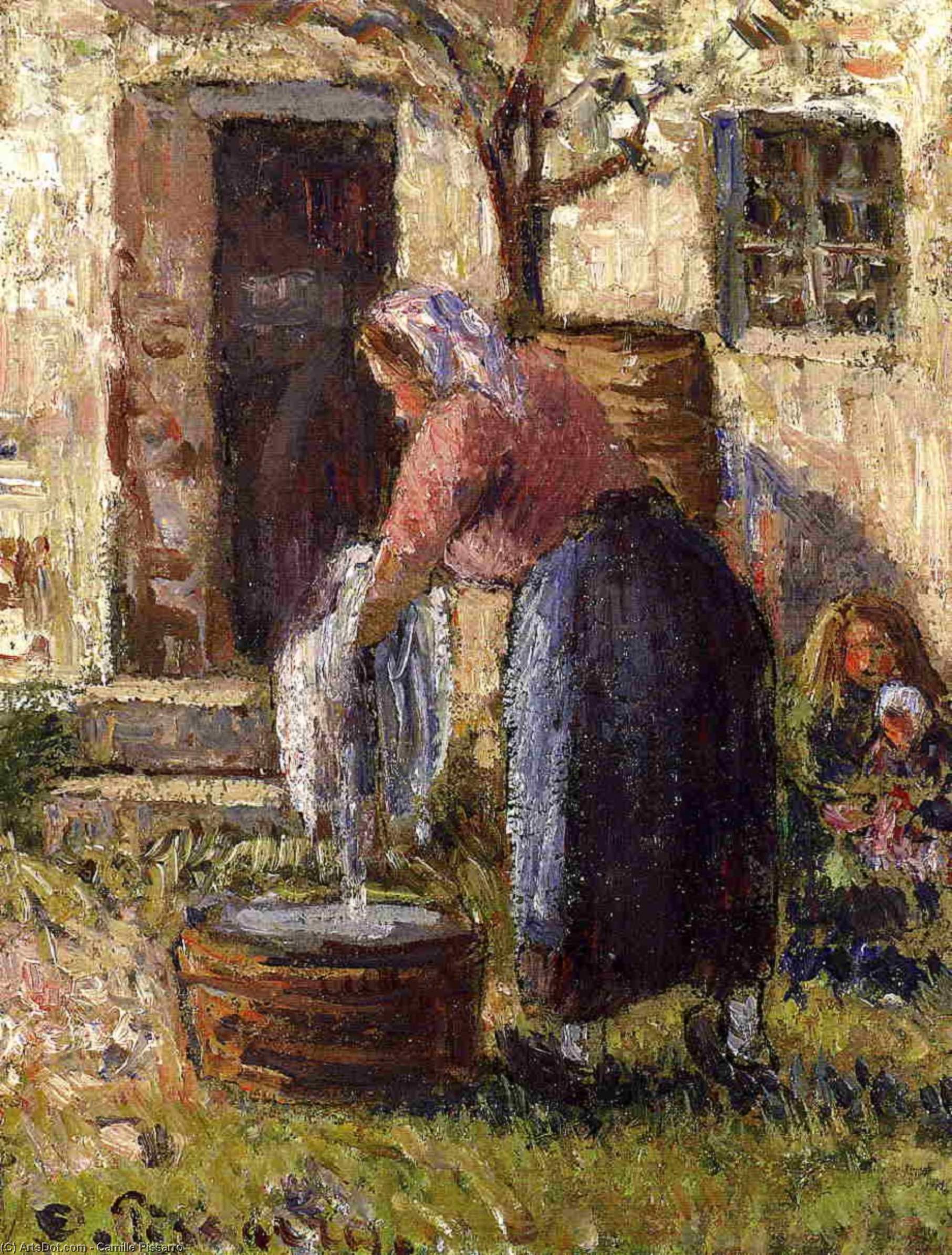
Camille Pissarro’s ‘The Laundry Woman,’ painted around 1898, exemplifies Impressionism with loose brushstrokes and muted blues reflecting the tranquility of daily life. Featuring a woman tending to laundry outdoors alongside architectural details, it showcases Pissarro's ability to portray ordinary moments beautifully. Discover more about this iconic artwork on ArtsDot.
Delve into Camille Pissar
A Snapshot of Domestic Life: Camille Pissarro’s “The Laundry Woman”
Camille Pissarro's "The Laundry Woman," painted in 1898, stands as a quintessential example of Impressionism—a movement that sought to capture the fleeting beauty of everyday life and the effects of light on color. More than just depicting a simple chore, Pissarro elevates this commonplace scene into an emblem of rural tranquility and familial warmth, reflecting the core tenets of his artistic philosophy.
Style and Technique: Impressionistic Brilliance
Executed in oil on canvas with loose, expressive brushstrokes—a hallmark of Pissarro’s technique—the painting eschews meticulous detail for a vibrant portrayal of atmosphere. The artist prioritizes capturing the ephemeral qualities of light filtering through foliage onto the woman's clothing and surroundings. Notice how the dappled sunlight illuminates the barrel filled with laundry, creating shimmering highlights that dance across the surface of the canvas.
Historical Context: Embracing Modernity Amidst Tradition
Painted during a period of significant artistic experimentation, “The Laundry Woman” aligns itself squarely within the burgeoning Impressionist movement. Artists like Cézanne and Monet were pushing boundaries against academic conventions, favoring subjective perception over objective representation. Pissarro’s decision to portray rural life—a subject often considered sentimental by critics of the time—was a deliberate challenge to prevailing artistic tastes, asserting the importance of observing and recording the world as it appeared to the artist’s eye.
Color Palette and Symbolism: Serenity Captured in Hue
The muted palette dominated by blues and greens contributes significantly to the painting's serene mood. These colors evoke the tranquility of the countryside, mirroring the quiet dignity of the woman performing her daily tasks. The inclusion of potted plants—one on either side of the frame—further reinforces this sense of domestic harmony and connection with nature. They symbolize fertility and growth, subtly enriching the narrative beyond its surface depiction.
Emotional Impact: A Moment Frozen in Time
"The Laundry Woman" transcends mere visual representation; it invites contemplation about the rhythms of rural existence and the beauty inherent in ordinary moments. Pissarro’s masterful brushwork conveys a palpable sense of movement—the woman's bending posture, the subtle rustle of leaves—creating an immersive experience for the viewer. Ultimately, this painting serves as a poignant reminder that art can find profound resonance in capturing the simplest aspects of human life and transforming them into enduring expressions of beauty.