A Moment of Rural Tranquility: Camille Pissarro's "The Path from Halage, Pontoise"
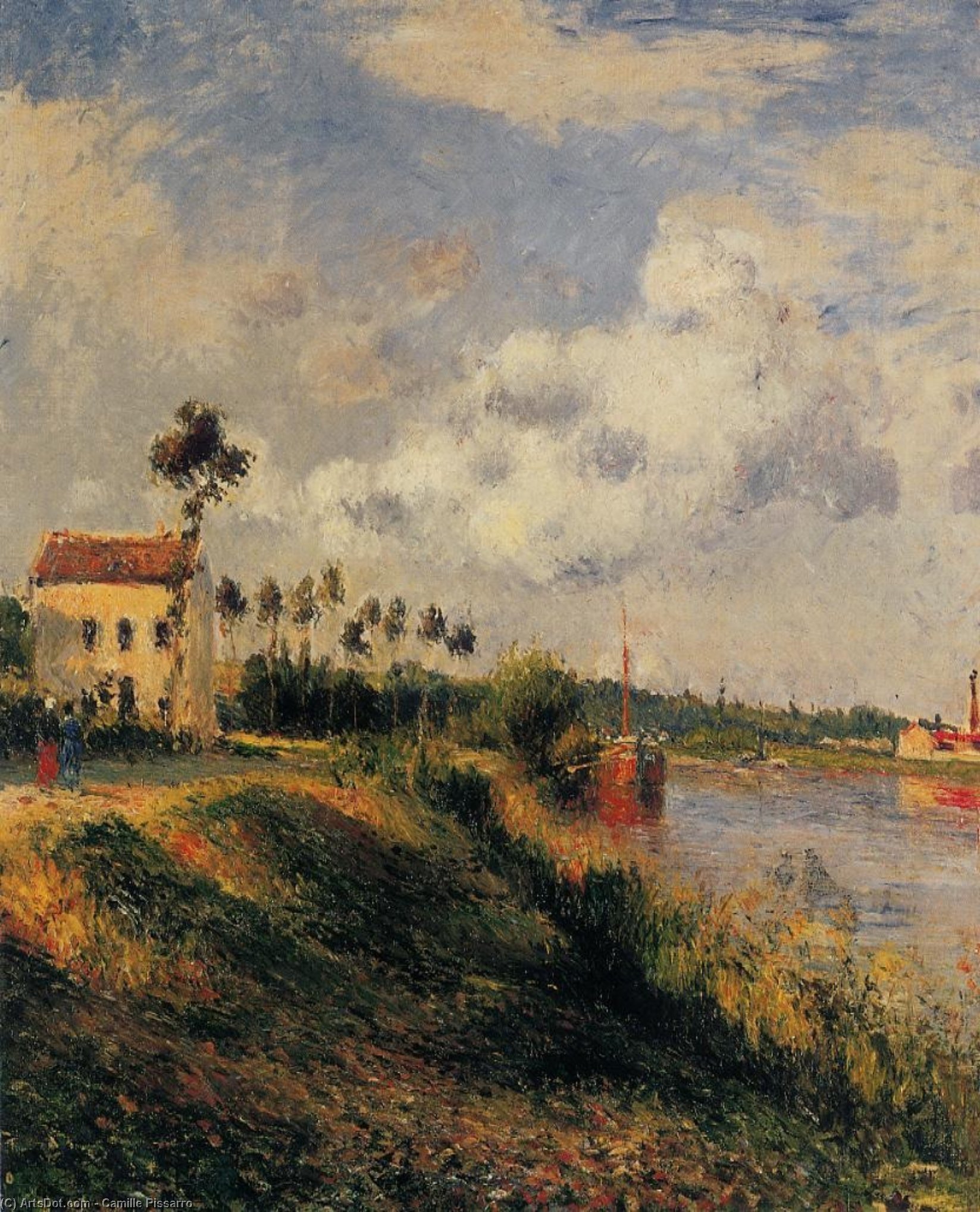
Camille Pissarro’s “The Path from Halage, Pontoise,” painted in 1879, offers a poignant glimpse into the heart of rural France – a scene brimming with quiet observation and the subtle beauty of everyday life. This work, characteristic of Pissarro's mature style, exemplifies his dedication to capturing fleeting moments and atmospheric effects, solidifying his pivotal role as one of Impressionism’s founding fathers. The painting depicts a small village nestled within the landscape of Pontoise, a region known for its agricultural traditions and picturesque waterways. It is not merely a representation of a place but an evocation of a mood – serenity, simplicity, and a deep connection to the natural world.
- Subject Matter: The composition centers around a modest dwelling with a pathway leading away from it, flanked by a small fishing boat on a tranquil canal. The inclusion of figures—a solitary individual near the left foreground and another further along the path—adds a human element, suggesting a narrative of daily life and interaction within this rural community.
- Style & Technique: Executed in Pissarro’s signature style, “The Path from Halage, Pontoise” showcases his mastery of *plein air* painting. Notice the loose brushstrokes, applied with a confident yet delicate touch, capturing the play of light and shadow across the scene. The artist employs broken color – small, distinct strokes of pigment – to build up tonal values and create an impressionistic effect, prioritizing the visual sensation over precise detail.
Historical Context: Pissarro and the Rise of Impressionism
Painted in 1879, “The Path from Halage, Pontoise” sits squarely within the burgeoning movement of Impressionism. Following the establishment of the Salon des Refusés in 1863, a reaction against the rigid academic standards of the official Salon, artists like Pissarro began to explore new ways of representing the world around them. Influenced by the Barbizon school’s focus on landscape painting and the theories of Eugène Duranty, Pissarro sought to capture the effects of light and atmosphere with unprecedented immediacy. This work reflects a shift away from historical or mythological subjects towards scenes of contemporary life, particularly those found in rural France – a deliberate choice intended to resonate with a broader audience.
- The Influence of Monet & Renoir: Pissarro’s approach shares similarities with that of Claude Monet and Pierre-Auguste Renoir, both key figures in the Impressionist movement. However, Pissarro's work often retains a greater sense of restraint and objectivity compared to the more overtly emotional or subjective styles favored by some of his contemporaries.
- A Bridge Between Realism and Impressionism: While firmly rooted in Impressionistic principles, “The Path from Halage, Pontoise” also reveals traces of Pissarro’s earlier realist training. The careful observation of detail—particularly in the depiction of the house and the boat—demonstrates his commitment to accurate representation, albeit filtered through an impressionistic lens.
Symbolism and Emotional Impact
Beyond its technical brilliance, “The Path from Halage, Pontoise” possesses a quiet emotional resonance. The scene evokes a sense of nostalgia for a simpler time, a longing for the tranquility of rural life. The solitary figure on the path suggests contemplation or perhaps a journey – both physical and metaphorical. The muted color palette—dominated by greens, blues, and browns—contributes to the painting’s serene atmosphere. The scattered clouds in the sky add depth and complexity to the composition, reinforcing the sense of atmospheric perspective. This artwork isn't just about depicting a village; it’s about capturing an *experience* – one of peace, connection, and appreciation for the beauty of the natural world.
Note:** This description is based on available information regarding the artwork and artist. Specific details about the painting's dimensions and provenance may vary.*