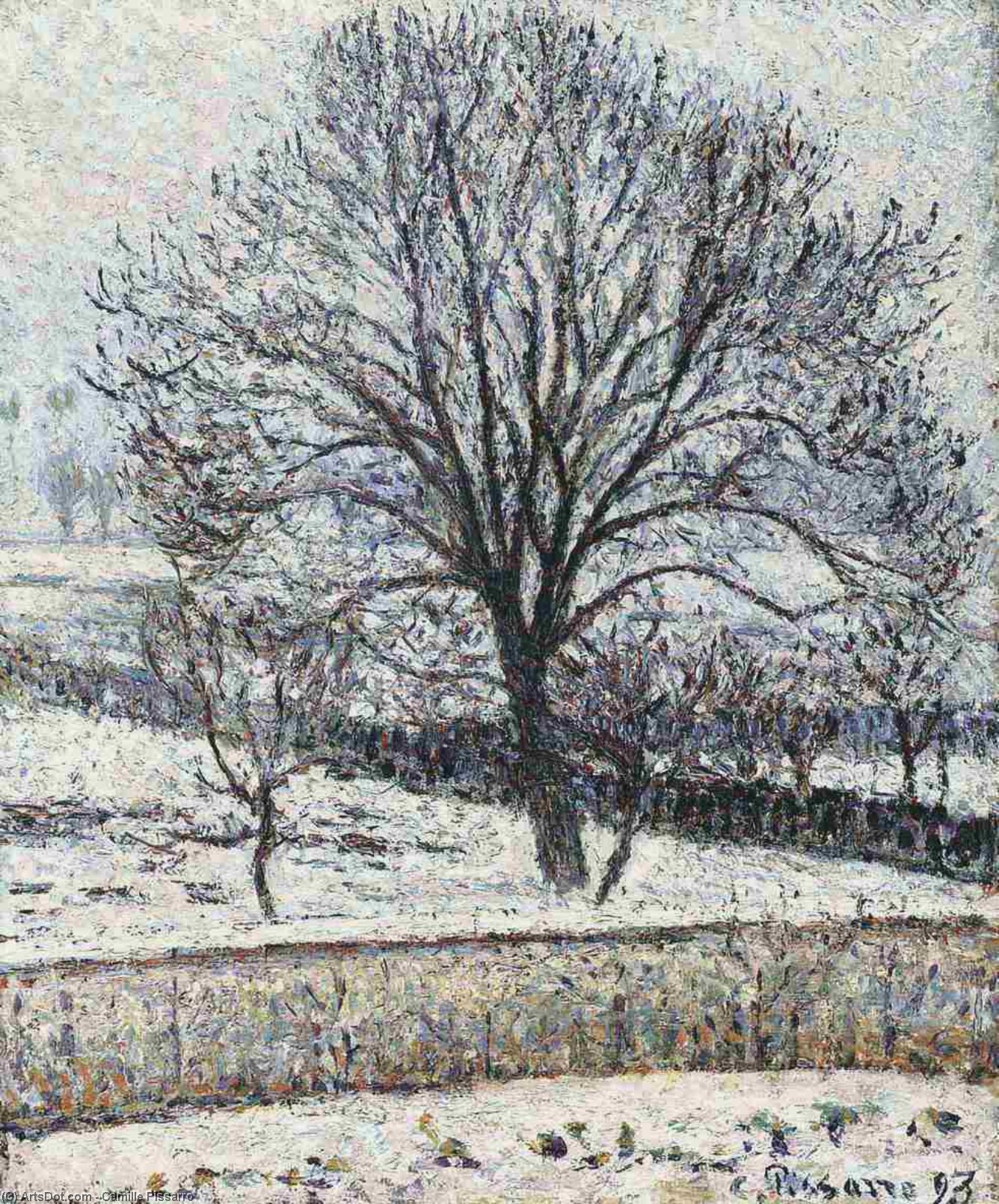
Immerse yourself in the serene beauty of Camille Pissarro’s Impressionist masterpiece, ‘The Thaw,’ capturing a tranquil winter landscape bathed in diffused light—a timeless reflection on nature's stillness. Explore this iconic artwork and discover more at ArtsDot.
Explore Camille Pissarro's art: Impressionist & Neo-Impressionist landscapes and scenes of daily life. A pivotal figure influencing Van Gogh, Cézanne & more.
A Moment Frozen in Light: Exploring Camille Pissarro’s “The Thaw”
“The Thaw,” Eragny by Camille Pissarro isn't merely a depiction of winter; it’s an embodiment of Impressionism’s core philosophy – capturing the ephemeral beauty of fleeting moments. Painted in 1893, this unassuming canvas measuring 54 x 46 cm holds within its textured surface a profound stillness that speaks volumes about Pissarro’s artistic vision and his unwavering dedication to observing nature's subtleties. Located in Le Havre, France, and housed within the Musée des Beaux-Arts André Malraux, “The Thaw” exemplifies the artist’s masterful ability to translate atmospheric conditions onto canvas.
Style and Technique: Impressionistic Brilliance
Pissarro’s stylistic approach is undeniably Impressionist. Rejecting academic conventions that prioritized precise detail and idealized representations, he embraced visible brushstrokes—a hallmark of the movement—to convey not just what he saw but how he *felt*. The artist skillfully utilizes oil paint on canvas, layering pigments with deliberate abandon to achieve a luminous effect. These broken strokes aren’t haphazard; they are meticulously placed to mimic the dappled sunlight filtering through snow-laden branches, creating an illusion of depth and movement that defies static observation. This technique prioritizes capturing the transient qualities of light—the way it dances across surfaces—over achieving photographic accuracy.
Historical Context: The Birth of Impressionism
“The Thaw” emerged during a pivotal period in art history – the genesis of Impressionism. Following the Salon des Refusés of 1863, where Pissarro’s work was rejected by the official Académie Française due to its perceived lack of polish, he spearheaded a rebellion against artistic dogma. Artists like Monet, Renoir, and Sisley joined forces to champion a new aesthetic centered on plein air painting—working outdoors directly from nature—and prioritizing color and light over meticulous realism. This rejection of traditional methods signaled a dramatic shift in artistic sensibilities, paving the way for groundbreaking innovations that would reshape European art.
Symbolism Beyond the Landscape
While seemingly simple at first glance, “The Thaw” carries symbolic weight. The snow itself represents purity, tranquility, and perhaps even vulnerability—a stark contrast to the vibrancy of springtime. Yet, it’s not merely decorative; it serves as a backdrop for Pissarro's exploration of light and atmosphere. The solitary tree, positioned prominently in the foreground, symbolizes resilience and endurance amidst adversity – mirroring Pissarro’s own unwavering commitment to artistic integrity despite facing criticism from established institutions.
Emotional Resonance: A Quiet Reflection
Ultimately, “The Thaw” transcends its visual description to evoke a powerful emotional response. It invites contemplation—a pause amidst the hustle and bustle of daily life—encouraging viewers to appreciate the understated beauty of winter’s landscape. The muted color palette contributes to this sense of serenity, fostering a feeling of peaceful solitude and prompting reflection on the cyclical nature of seasons and existence. Like other works by Pissarro such as “Cottage at Pontoise in the Snow” and “The street of the Citadelle, Pontoise,” "The Thaw" remains an enduring testament to Impressionism's ability to capture not just what is seen but what is felt—a timeless masterpiece that continues to inspire awe and admiration.