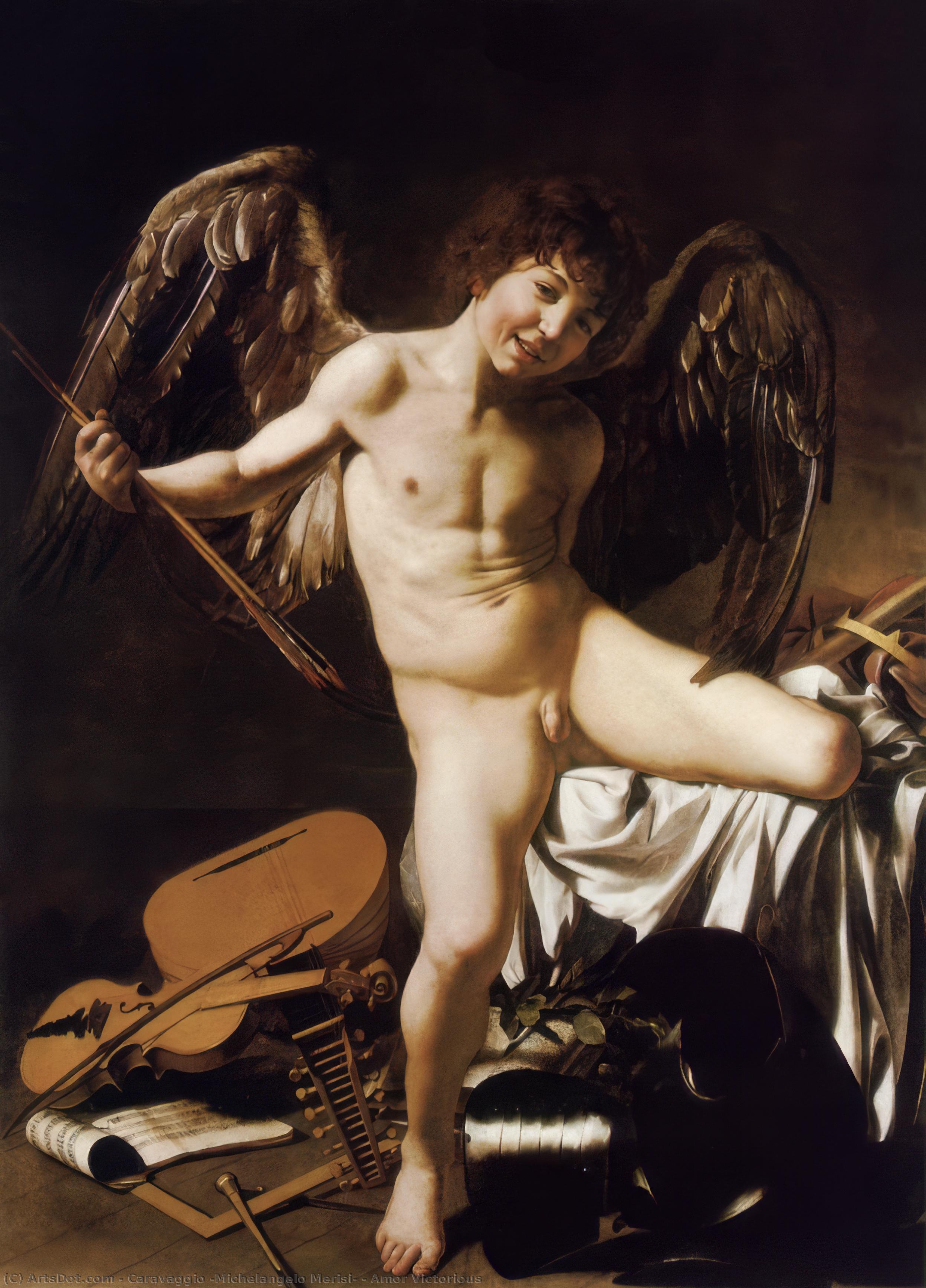
A Triumph of Love: Unveiling Caravaggio’s *Amor Victorious*
Caravaggio's *Amor Victorious*, painted in 1602, is a breathtaking embodiment of the Baroque period – a moment in art history defined by drama, realism, and intense emotion. Measuring 156 x 113 cm, this oil on canvas currently resides at the Gemäldegalerie in Berlin, captivating viewers with its audacious depiction of Cupid’s dominion.
The Allegory Unfolded: A God Above All
This is not your typical cherubic Cupid. Caravaggio presents a powerfully built, almost boyish god of love standing triumphantly amidst the discarded symbols of earthly pursuits.
Love conquers all, as proclaimed by Virgil’s line that inspired the work, and here, it's visually asserted. At Cupid’s feet lie a lute, violin, musical score, books representing science, a military helmet, and regal emblems of governance – all rendered powerless before his might. The composition is dynamic, triangular in form, drawing the eye upwards to Cupid’s confident stance. His slightly crooked grin and tousled hair lend him an approachable humanity, a deliberate departure from idealized representations common at the time.
Masterful Technique: Chiaroscuro & Realism
Caravaggio's signature technique – *tenebrism*, a dramatic use of light and shadow (chiaroscuro) – is on full display. A strong, unseen light source illuminates Cupid’s body, highlighting his musculature and creating a palpable sense of depth. This stark contrast intensifies the emotional impact and draws attention to every detail, from the texture of the instruments to the glint in Cupid's eye. The artist’s commitment to realism is striking; he doesn’t shy away from portraying Cupid as a physically robust figure, grounding the allegorical subject matter in tangible reality.
Historical Context & Patronage
Commissioned by the discerning collector Vincenzo Giustiniani, *Amor Victorious* quickly became a prized possession within his collection. The painting’s immediate acclaim speaks to its innovative approach and powerful message. It emerged during a period of intense artistic rivalry in 17th-century Rome, with Caravaggio often challenging established conventions. Interestingly, the pose of Cupid bears a striking resemblance to Michelangelo's *Victory*, suggesting Caravaggio’s admiration for Renaissance masters while simultaneously forging his own distinct style.
Symbolism & Interpretation
Beyond its literal depiction, *Amor Victorious* invites deeper interpretation. While some historical analyses have proposed controversial readings related to the artist’s personal life, modern scholarship largely dismisses these claims. The painting's core message remains clear: love transcends all earthly concerns and holds dominion over intellect, power, and artistic expression.
It is a celebration of passion, desire, and the irresistible force that shapes human experience.
Emotional Resonance & Lasting Legacy
*Amor Victorious* isn’t merely a beautiful painting; it's an emotionally charged statement. The work evokes feelings of both exhilaration and vulnerability – the power of love is undeniable, yet its influence can be disruptive and transformative. As a cornerstone of Baroque art, Caravaggio’s masterpiece continues to inspire artists and captivate audiences centuries later. Its dramatic composition, masterful technique, and enduring symbolism make it an invaluable addition to any collection or interior space seeking a touch of timeless elegance and profound emotional depth.
Considerations for Collectors & Designers
- Color Palette: The rich warm tones – browns, reds, and golds – create a sense of intimacy and passion, making it suitable for dining rooms, libraries or bedrooms.
- Stylistic Harmony: Pairs beautifully with Baroque furniture, dramatic lighting schemes, and richly textured fabrics.
- Focal Point: Its dynamic composition makes it an ideal focal point in a room, drawing the eye and sparking conversation.
- Reproduction Quality: When considering a reproduction, prioritize high-resolution printing on canvas to capture the nuances of Caravaggio’s brushwork and chiaroscuro effect.